

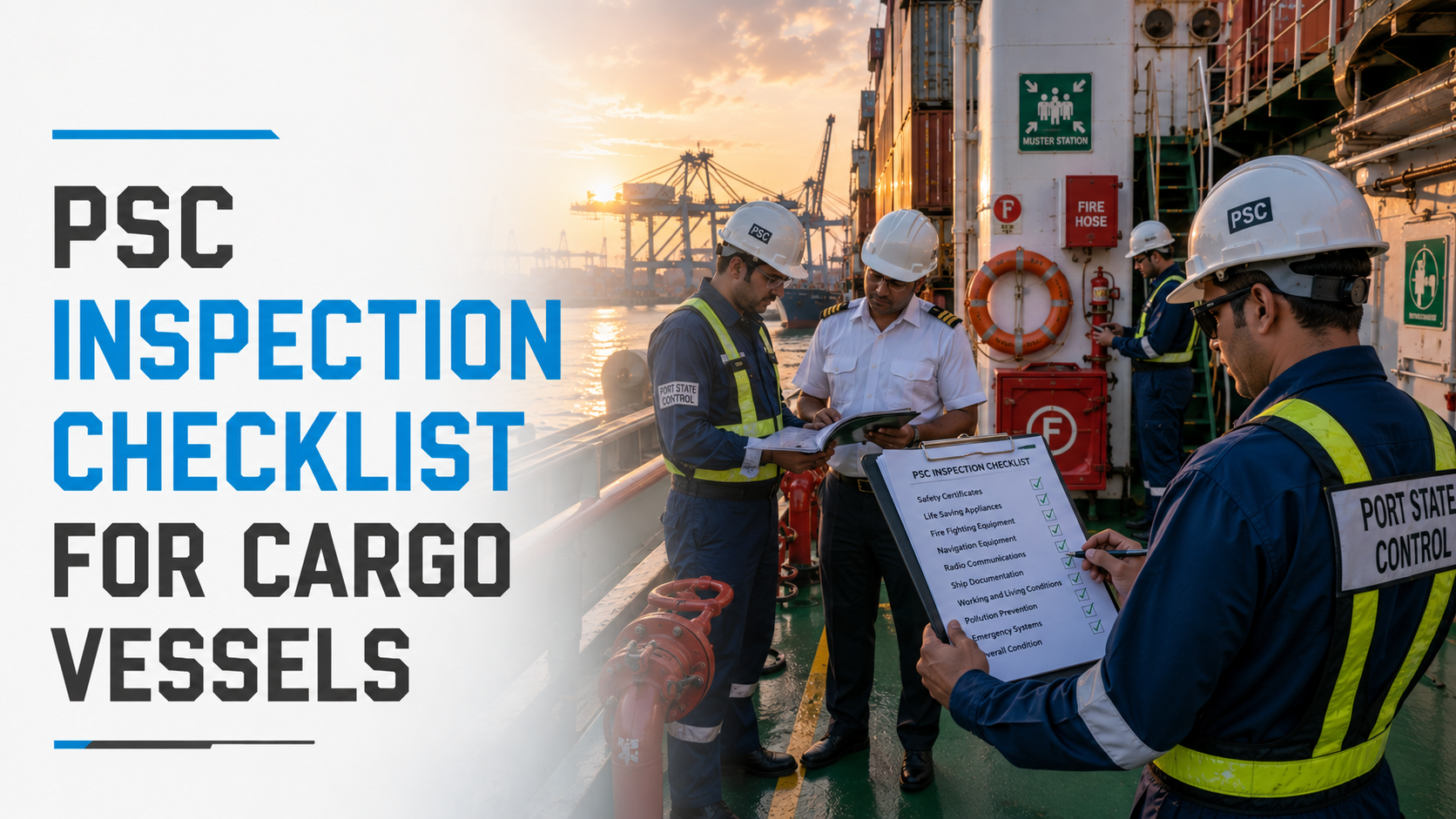
A failed port state control inspection can cost a shipping company tens of thousands of dollars in charter penalties, port fees, and demurrage. It’s not just bad for the crew. For cargo vessel operators, maintaining a thorough PSC inspection checklist is the frontline defense against detentions, reputational damage, and regulatory non-compliance.
This guide goes over every important part of a vessel inspection checklist. It also shows you the most common PSC problems on cargo ships and how to get ready before the inspectors come, no matter if you follow the Paris MoU, the Tokyo MoU, or the USCG rules.
Key Takeaways
- In 2024, the USCG did 8,710 exams on its own, and risk-based targeting means that vessels with a lot of problems are checked more often, not less often.
- Fire safety is where most things go wrong. It has been the most common type of PSC deficiency for four years in a row, making up about 18% of all findings around the world.
- ISM compliance isn’t just a matter of filling out forms. Inspectors talk to crew to make sure they understand the SMS. About sixteen percent of all PSC deficiencies are due to audits and unresolved non-conformities.
- Your last line of defense is a 72-hour pre-arrival audit. The seven-category vessel safety checklist should be used to find and fix problems before the ship gets to port, not during inspection.
PSC Inspection by the Numbers (2024)
The scale of port state control inspection activity makes preparation non-negotiable:
- The USCG conducted 8,710 PSC exams in 2024, up from 8,278 in 2023.
- ABS kept track of 16,508 inspections around the world. Of those, 9,677 vessels had at least one problem, which is a detention rate of 4.03%.
- The Tokyo MoU 2024 report noted that underperforming ships nearly doubled year-on-year.
For the fourth year in a row, fire safety problems were the most common type of PSC problem. A proactive ship inspection checklist is not just a nice-to-have; it’s a must for saving money.
What Is a Port State Control Inspection?
A port state control inspection is when a foreign ship is checked by the maritime authority of the port country to make sure it follows the rules set by SOLAS, MARPOL, STCW, and MLC 2006. Unlike a flag state inspection conducted by the vessel’s own country of registration, PSC operates as an independent second layer of enforcement across all major trading regions.
Documents Required During a PSC Inspection
Inspectors request documents first. Ensure all of the following are valid, properly endorsed, and instantly accessible:
Statutory Certificates: SOLAS Safety Equipment Certificate, International Load Line Certificate, MARPOL IOPP Certificate, MARPOL IAPP Certificate, International Ship Security Certificate (ISSC), and Class Certificates.
Operational & Crew Documents: Minimum Safe Manning Certificate, Crew List with STCW endorsements, medical certificates (within 2 years), Oil Record Book (Parts I & II), Garbage Record Book, Ballast Water Record Book, ISM Document of Compliance (DOC), and Safety Management Certificate (SMC).
PSC Inspection Checklist for Cargo Vessels
This vessel safety checklist covers the seven areas PSC officers examine most closely.
Firefighting Appliances
All extinguishers serviced within 12 months, fire detection system tested in all zones, CO₂ system cylinder weights verified, fire doors self-closing and unobstructed, emergency fire pump operational; fire hoses and nozzles in good condition; fire drills documented weekly with signed crew participation.
Life-Saving Appliances
Lifeboats were lowered to the embarkation deck within the past month; lifeboat and life raft servicing are current; hydrostatic release units are within the certification date; there are sufficient immersion suits with 10% spare; EPIRB and SART are registered and within battery expiry; the muster list is updated; abandon ship drills are documented.
ISM Code Requirements
Internal SMS audit completed within the required period; all non-conformities closed with documented corrective actions; annual management review by the DPA completed; crew familiarized with SMS procedures; emergency response plans accessible and drill-tested.
Navigation Equipment
Charts corrected to the latest Notice to Mariners; ECDIS chart data current; radar and gyrocompass deviation checked; AIS transmitting correct vessel particulars; GMDSS and VDR/S-VDR annual performance certificates valid; watchkeeping arrangements STCW-compliant.
MARPOL Compliance
Oil Record Book complete with no unexplained gaps; OWS operational with 15 ppm alarm functional; Garbage Management Plan displayed; fuel oil changeover records complete for ECA zones; sewage treatment system operational; Ballast Water Record Book up-to-date.
Emergency Preparedness Drills
Emergency generator auto-start tested monthly, emergency steering drill conducted from steering gear compartment, man-overboard drill completed, equipment for responding to oil spills accessible, all crew mustered within required timeframe, and medicine chest checked against inventory.
Crew Certification & MLC 2006
All STCW certificates are valid with flag state endorsements; medical certificates are within 2 years; rest hour records for the past 3 months show MLC compliance.
Seafarer Employment Agreements signed; accommodation, mess rooms, and sanitary facilities are clean and well-maintained.
Most Common PSC Deficiencies on Cargo Ships
2024 data from ABS, ClassNK, and the USCG reveals consistent patterns:
| Deficiency Area | % of Findings |
| Fire Safety Systems | 18% |
| ISM Documentation | 16% |
| Life Saving Appliances | 15% |
| Navigation Equipment | 12% |
| MARPOL / Environmental | 10% |
| Crew Certification & MLC | 9% |
| Emergency Systems | 8% |
How to Prepare for a PSC Inspection on a Cargo Vessel?
Here is how to prepare for a PSC inspection on a cargo vessel:
- Conduct an internal audit 72 hours before arrival, covering all seven checklist categories above.
- Verify no certificates expire within 30 days; confirm all STCW endorsements are in order.
- The generator auto-start, the emergency fire pump, and the steering gear should all be tested.
- Update all record books with no gaps; ensure rest hour tables are signed by master and crew.
- Brief all crew on PSC procedures: what to expect, how to answer questions, and who escorts the inspector.
- Prepare a quick-access folder with certificates, crew list, last PSC report, and class survey status.
- Source certified marine safety equipment required on ships from a reputable supplier
Aasuthosh Marine is a reliable ship chandler in India. They provide SOLAS-compliant life-saving and fire-fighting equipment to cargo ships in Indian ports. This helps operators fill in any gaps in the safety checklist for the vessel before inspectors arrive. Unsure what does a ship chandler do? Learn how the right handler supports PSC readiness end-to-end.
Conclusion
A strict PSC inspection checklist that includes life-saving and fire-fighting equipment, ISM code requirements, MARPOL compliance, and crew certification is what separates ships that leave on time from those that have to pay a lot to be held up. Build it into your SMS, review it before every port call, and back it with certified equipment. For cargo vessels calling at Indian ports, Aasuthosh Marine provides the marine safety equipment required on ships to keep your vessel inspection-ready every time.
Frequently Asked Questions
What is a Port State Control inspection?
A formal check by port country officials to see if a foreign ship follows SOLAS, MARPOL, STCW, and MLC 2006, without any oversight from the flag state.
What documents are required during a PSC inspection?
All statutory certificates, ISM DOC and SMC, crew list with STCW endorsements, medical certificates, Oil/Garbage/Ballast Water Record Books, rest hour records, and the last PSC report.
What are the most common PSC deficiencies on cargo vessels?
Fire safety (18%), ISM documentation gaps (16%), and life saving appliance defects (15%) top the list, based on 2024 global PSC data.
How can cargo vessels prepare for a PSC inspection?
Run a 72-hour pre-arrival audit, verify all certificates, test emergency equipment, update record books, brief the crew, and ensure all marine safety equipment is certified and inspection-ready.