

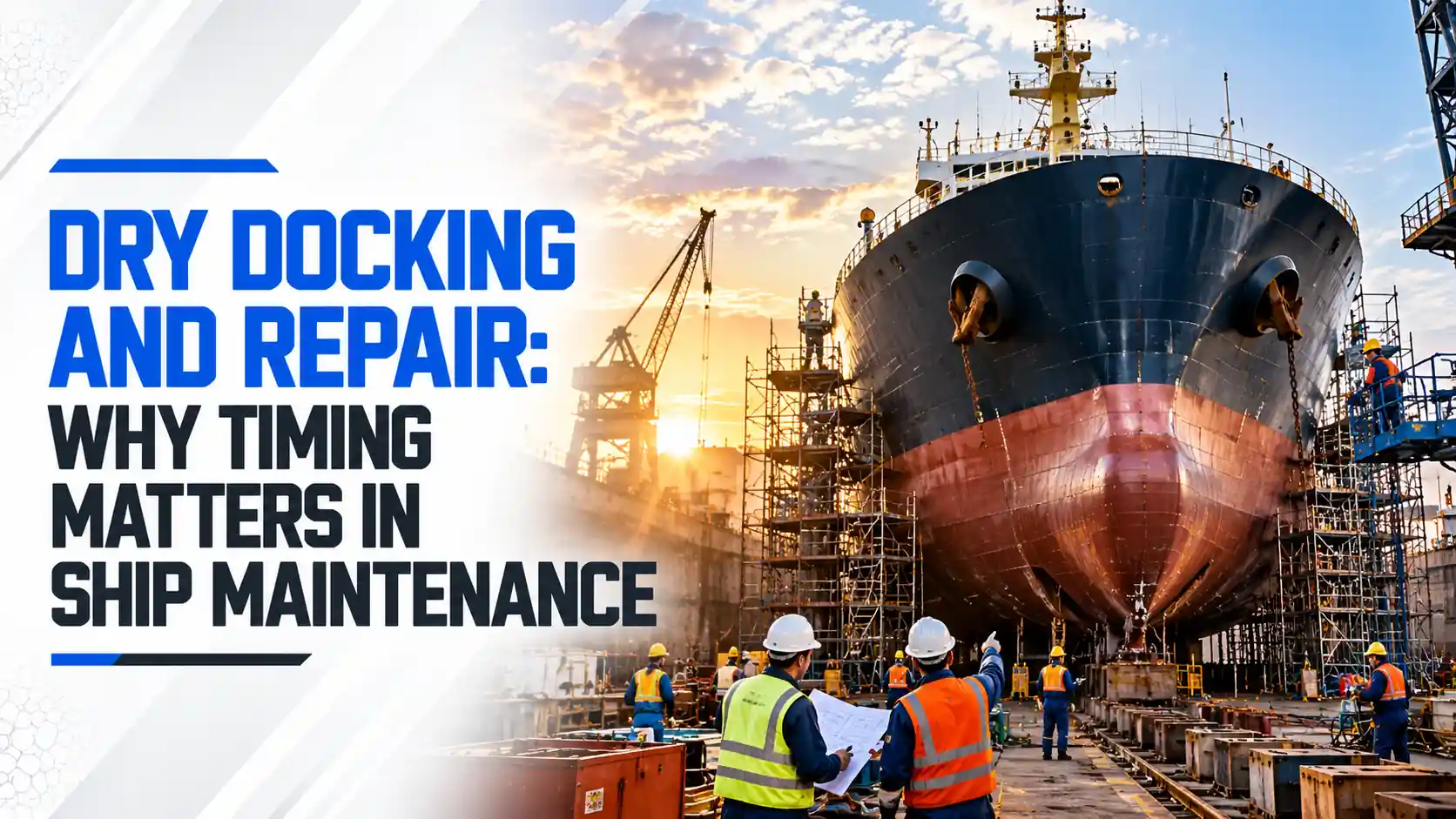
Dry docking is one of the most significant planned maintenance events in a vessel’s operational calendar. Scheduled at regular intervals to meet class society requirements and flag state regulations, it gives operators access to the hull, underwater fittings, and propulsion components that cannot be inspected or repaired while the vessel remains afloat. Getting the timing right makes the difference between a controlled maintenance event with predictable costs and an operationally disruptive emergency forced by a classification deficiency or a port state control detention.
What Is Dry Docking?
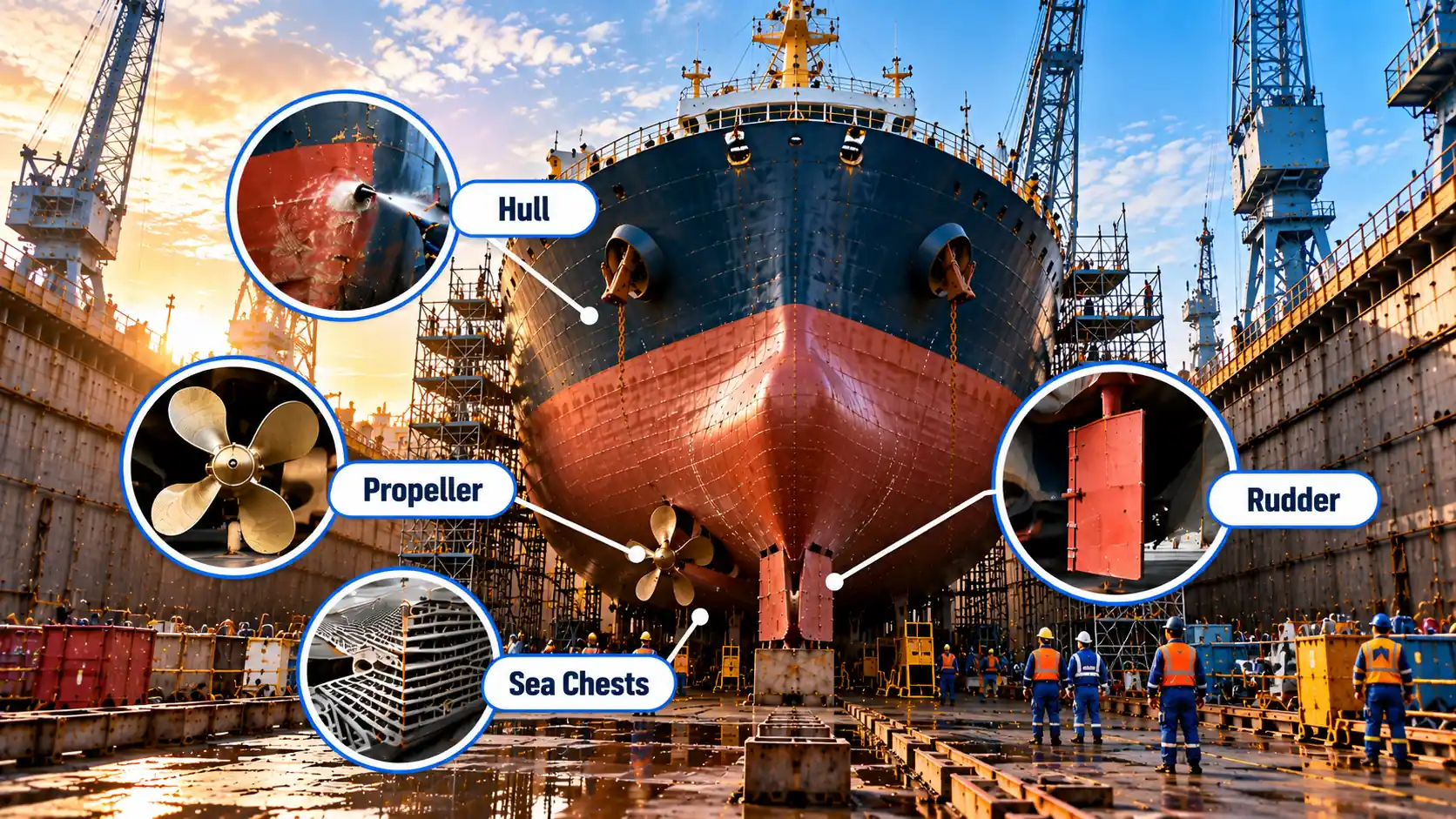
Dry docking is the process of bringing a vessel out of the water, into a graving dock, a floating dock, or a slipway, to allow inspection and repair of the hull, propeller, rudder, sea chests, and other underwater components inaccessible from afloat. Class societies require commercial vessels to undergo dry docking every two and a half to five years, depending on vessel type, trading area, and the applicable survey cycle. Dry docking periods also allow hull cleaning, anti-corrosion coating renewal, and structural repairs that improve operational efficiency and extend the vessel’s working life.
Common Repairs Carried Out During Dry Docking
Hull work forms the core of most dry docking programmes. Ship Repair Services in India during a scheduled docking typically include hull plating inspection and steel renewal where wastage is found, ultrasonic thickness measurements, welding and fabrication work, sea chest cleaning, valve maintenance, piping repairs, and the application of anti-fouling and anti-corrosion coatings to reduce drag and protect the hull between dockings.
Propulsion components require equal attention. Underwater Ship Repairs carried out before a dry docking can identify propeller, rudder, and stern tube conditions in advance, allowing the repair scope to be defined more accurately and reducing the risk of unplanned work extending the dock stay. During docking, propeller and rudder inspections, tail shaft examination, stern tube servicing, and anode replacement are standard inclusions that protect propulsion efficiency and corrosion resistance.
Why Timing Matters in Ship Maintenance
Hull fouling increases fuel consumption and emissions progressively from the moment a vessel is launched. Corroded or damaged propeller blades reduce propulsion efficiency. Worn stern tube seals create pollution risk. These are problems that worsen over time and become significantly more expensive to address the longer they are left. Dry docking on schedule prevents minor deficiencies from developing into major structural or mechanical failures that require far more extensive intervention.
Aligning dry docking with trading schedules also keeps revenue loss predictable. A structured Ship Maintenance Services plan that incorporates dry docking intervals into the vessel’s long-term maintenance programme allows operators to negotiate shipyard slots in advance, pre-order spares, and coordinate the work scope without the cost premium that comes with urgent or unplanned dockings.
What Happens When Dry Docking Is Delayed
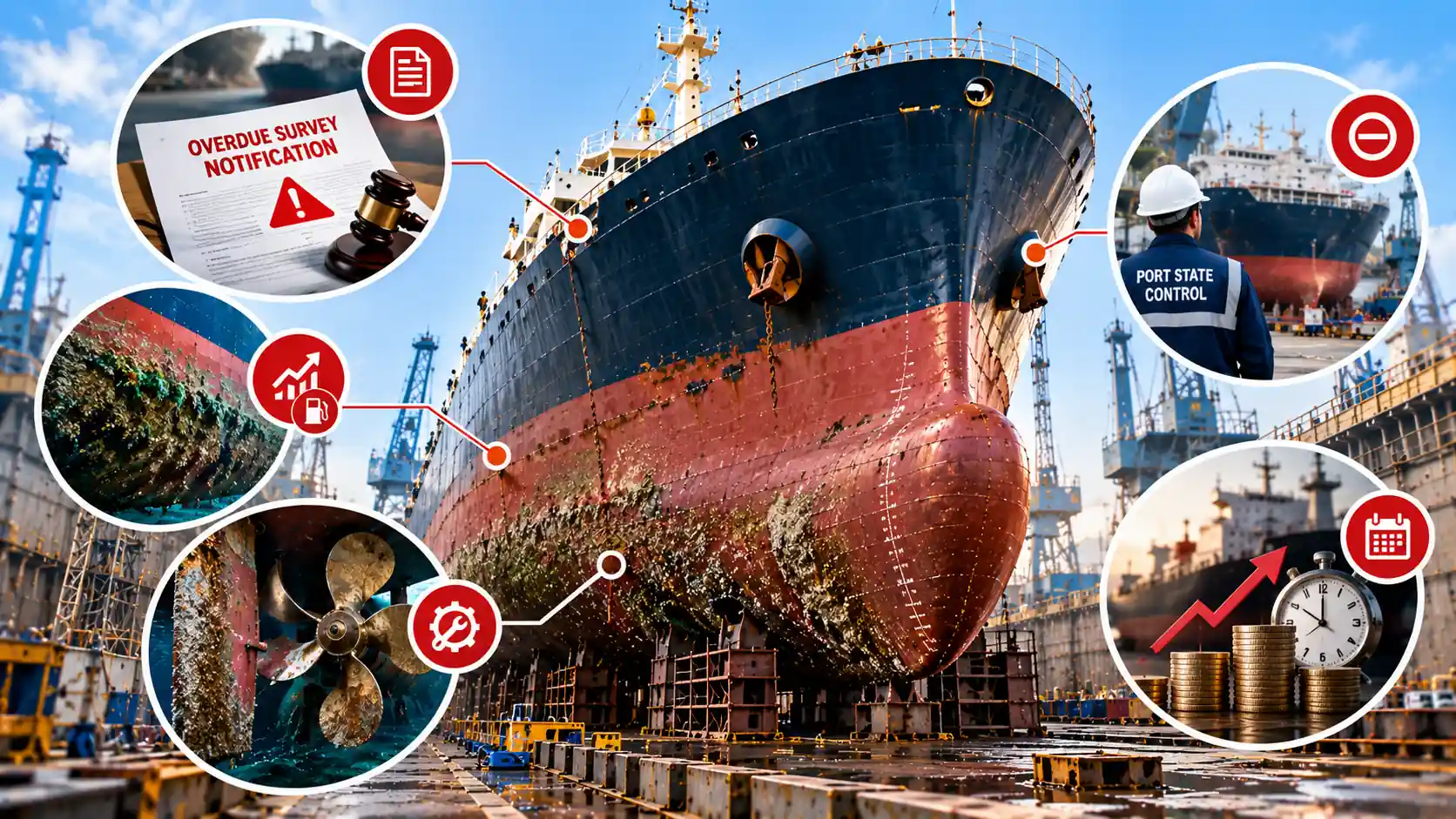
Delayed dry docking carries compounding risks. Class societies issue overdue survey notifications that can restrict a vessel’s trading areas or trigger port state control action, in some cases resulting in detention. Hull condition deteriorates faster without periodic coating renewal, increasing resistance and fuel costs. Structural defects that were manageable at the originally scheduled docking can develop into issues requiring far more extensive repairs, at significantly higher cost and with a longer period out of service.
How to Plan Dry Docking Efficiently
Early preparation reduces the duration and cost of a dry docking event. Ordering critical spare parts and repair materials well in advance through Spares Clearing and Consolidation at port eliminates the lead times that commonly extend dock stays beyond their planned duration. Having components available and cleared through customs before the vessel arrives in the shipyard keeps the work programme on schedule and avoids delays waiting on overseas suppliers.
Coordinating vessel ship supply services, including provisions, deck and engine stores, and safety equipment, alongside the repair programme allows operators to complete multiple maintenance requirements during a single port call rather than splitting them across separate port visits.
Dry Docking Support at Indian Ports
For vessels calling at Indian ports before or after a dry docking period, working with a Ship Chandler in Kandla & All Indian Ports that handles both repair coordination and vessel supply simplifies port call logistics. Kandla, Mundra, and Sikka are regularly used staging ports for bulk carriers, tankers, and offshore vessels transiting to or from shipyards along the Indian coast, and access to integrated services reduces the number of providers an operator needs to coordinate during the pre-docking or post-docking period.
Conclusion
Dry docking is a planned obligation that directly affects vessel safety, operating costs, and long-term reliability. Operators who schedule dockings on time, prepare thoroughly, and work with service providers who understand the demands of tight port call windows complete their maintenance programmes more efficiently and with fewer surprises. Aasutosh Marine provides ship repair, spare parts, chandling, and vessel supply services to operators at Kandla, Mundra, Sikka, and other major Indian ports. Contact Aasutosh Marine to discuss your vessel’s upcoming dry docking and maintenance requirements.
Frequently Asked Questions
Why is dry docking important for ship maintenance?
Dry docking and repair allow inspection and maintenance of hull, propulsion, and underwater components that cannot be accessed while a vessel is afloat. Regular dry docking maintains structural integrity, hull performance, and compliance with class and flag state survey requirements.
How often should commercial vessels undergo dry docking?
Most commercial vessels must dry dock every two and a half to five years, depending on their class notation, trading area, and the survey cycle applicable to their vessel type. Some continuous survey programmes allow individual components to be inspected on a rolling basis, which can extend the interval between full dockings for qualifying vessels.
What repairs are commonly performed during dry docking?
Standard dry docking repairs include hull plating inspection and steel renewal, anti-fouling and anti-corrosion coating application, sea chest cleaning, valve and piping maintenance, propeller and rudder inspection, stern tube examination, anode replacement, and any structural work identified during the hull survey. Machinery maintenance and equipment overhauls are frequently coordinated to coincide with the docking period.
What happens if a ship’s dry docking is delayed?
Delayed dry docking can lead to class survey overdue notifications, restricted trading area certificates, and potential port state control detentions. Hull condition and propulsion efficiency deteriorate faster without scheduled maintenance, and deferred defects typically require more extensive and costly repairs when addressed during a forced or emergency docking.
How can shipowners reduce downtime during dry docking?
Early planning, pre-ordering of spare parts and repair materials, thorough pre-docking condition assessments, and a clearly defined work scope submitted to the shipyard in advance all reduce the risk of unplanned work extending the dry dock period. Coordinating vessel supply and stores alongside the repair programme during the same port call also reduces the total time required alongside.