

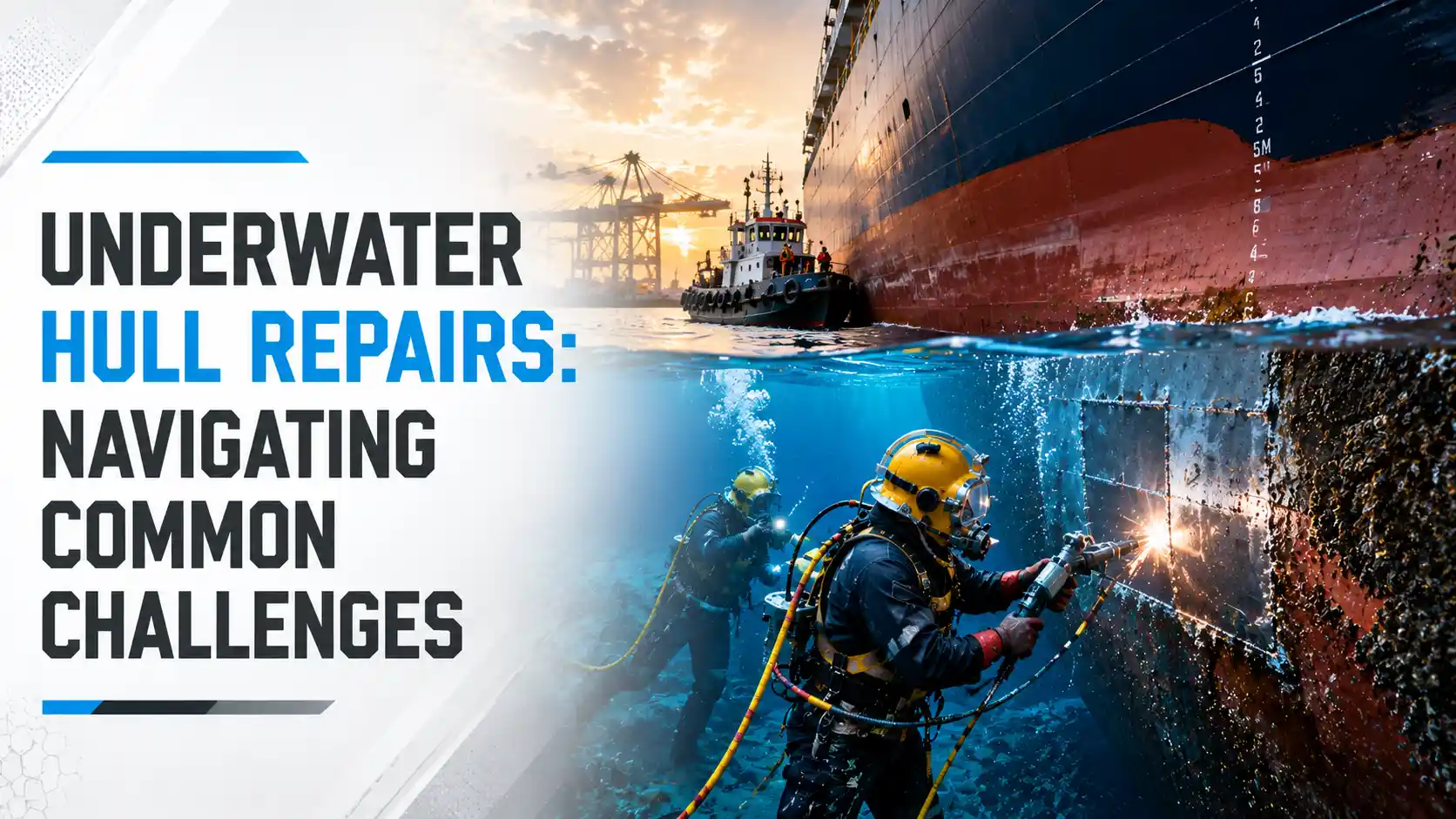
A ship’s hull takes a constant beating. Saltwater, marine growth, debris strikes, and the mechanical stress of continuous operation all wear down the steel below the waterline. When damage or fouling shows up, operators face a choice: pull the vessel into dry dock, or bring in a team that can fix the problem while the ship stays afloat. Underwater hull repairs are increasingly the preferred route, but they come with a distinct set of technical and operational challenges that separate a routine job from a costly mistake.
This guide walks through what underwater hull repairs involve, the obstacles repair teams face on nearly every job, and what ship owners should look for in a contractor before work begins.
Key Takeaways
- Underwater hull repairs let vessels stay operational and avoid the cost and delay of unplanned dry docking.
- Poor water visibility is one of the most consistent challenges divers face, requiring specialized lighting and tactile technique.
- Weather, tides, and port traffic can interrupt or delay dive windows unpredictably.
- Recessed components like sea chests and rudder pintles are technically difficult to access underwater.
- Classification society approval and documentation are essential; skipping this step risks a failed survey.
- Diver safety and quality verification demand certified, experienced teams, not general repair crews.
- Underwater welding is a distinct specialized skill combining diving certification with structural expertise.
- Emergency hull repairs depend heavily on how fast a contractor can mobilize and respond.
- Underwater repairs reduce dry docking frequency but don’t fully replace it for major structural work.
What Are Underwater Hull Repairs?
Underwater hull repair services cover the inspection, cleaning, welding, and structural repair work carried out on a vessel’s submerged hull while it remains in the water. Trained commercial divers, working alongside marine engineers, handle everything from patching minor plate damage to sealing leaks and restoring propeller performance, all without the time and cost of scheduling a dry dock slot. Aasutosh Marine offers a full range of Underwater Hull Repairs built around this exact approach, keeping vessels operational instead of sidelined at a dock.
This is different from a full ship hull repair carried out on land, where the vessel is completely out of the water and every surface is accessible in open air. Underwater work demands specialized equipment, precise diver training, and repair techniques engineered to hold up in a marine environment from day one.
Why Ship Owners Choose This Route Over Dry Docking?
Dry docking remains necessary for major structural overhauls and full hull recoating, but it isn’t always practical for smaller repairs or urgent situations. Underwater Ship Repairs let a vessel stay in port, keep to its schedule, and avoid the mobilization costs of an unplanned dock booking. For commercial ship hull repairs on tight turnaround schedules, this dry dock alternative often makes the difference between a minor delay and a missed contract.
That said, choosing underwater work over dry docking isn’t automatic. It depends heavily on the type and extent of damage, and this is where the real challenges begin.
Common Challenge #1: Water Clarity and Visibility
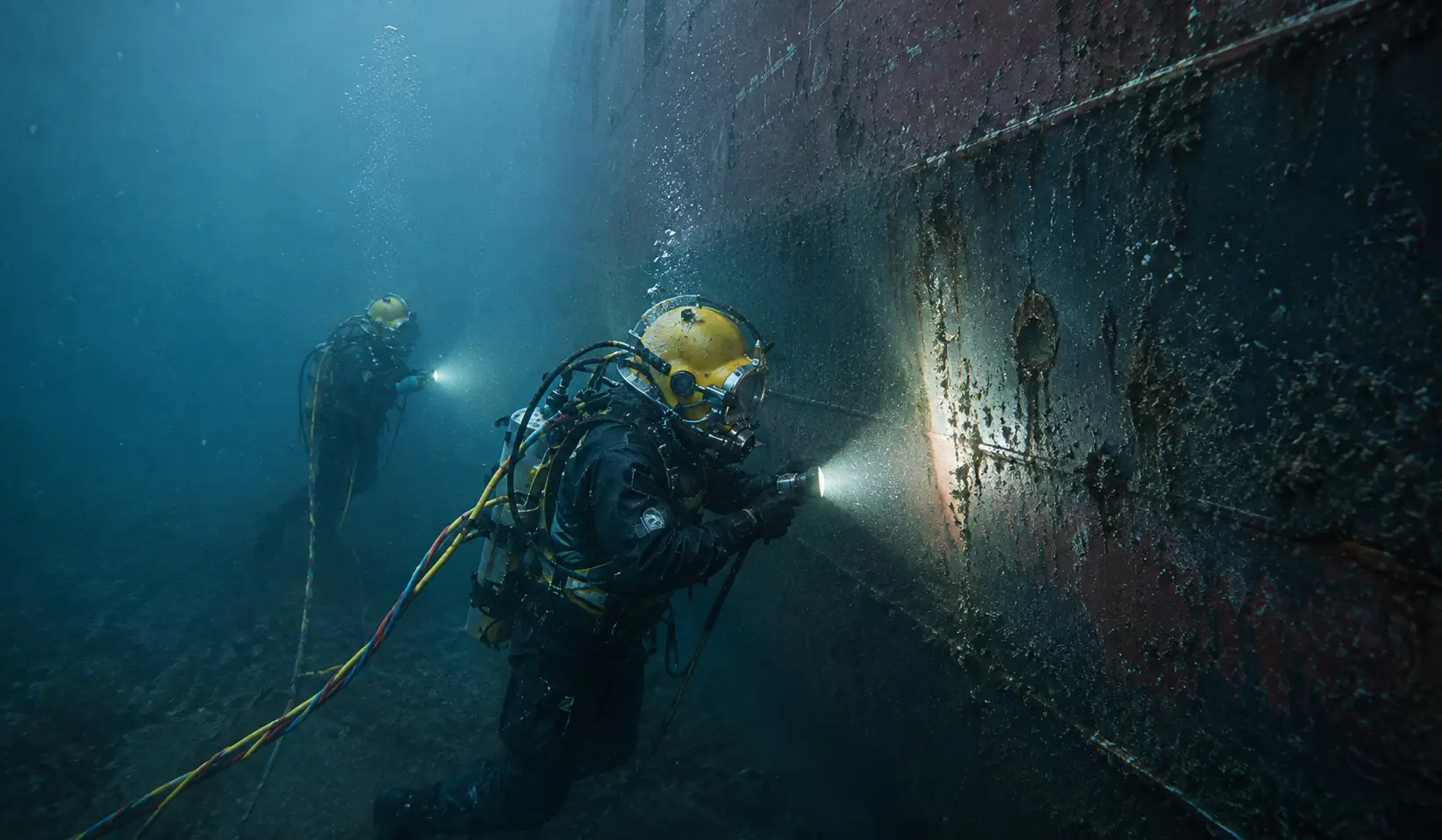
Divers frequently work in murky harbor water with near-zero visibility, relying on touch and experience as much as sight. Port waters near busy terminals are often clouded by silt, industrial runoff, and vessel traffic, which makes precise inspection and welding significantly harder than working in a controlled dry dock environment. Skilled underwater repair contractors compensate with underwater lighting, tactile inspection techniques, and video documentation equipment built for low-visibility conditions.
Common Challenge #2: Weather, Tides, and Currents
Strong currents, tidal shifts, and rough weather can shut down a dive entirely or force repair teams to work in short, interrupted windows. This is especially true at high-traffic ports where wake from passing vessels adds unpredictable movement. Experienced teams plan around tidal charts and forecasts, but emergencies don’t always allow for ideal timing, which is why flexibility and local port knowledge matter as much as technical skill.
Also Read: What is Underwater Welding and How Does it Work?
Common Challenge #3: Structural Access and Complex Damage
Sea chests, rudder pintles, shaft brackets, and other recessed structural components are difficult to reach even in open air. Underwater, with limited visibility and buoyancy to manage, accessing these areas for marine hull repair work takes both specialized tooling and physical dexterity that only comes with years of hands-on diving experience.
Common Challenge #4: Certification and Classification Approval
Every underwater weld, patch, or structural fix on a commercial vessel typically needs to meet classification society standards before it’s accepted as compliant. Repair teams must document their work thoroughly, follow class-approved procedures, and often coordinate directly with a surveyor who may need visual confirmation, sometimes via live video feed, before signing off. Skipping this step, or working with a contractor unfamiliar with classification requirements, risks a failed survey or a repair that has to be redone.
Common Challenge #5: Diver Safety and Quality Verification
Confirming weld quality and structural integrity underwater is inherently harder than on land, where a repair can be visually inspected in daylight. Divers must also manage real physical risk: cold water, entanglement hazards, restricted air supply, and proximity to a vessel’s hull and propulsion systems. This is precisely why certified, experienced teams matter more here than almost anywhere else in marine maintenance.
Underwater Welding Services: A Specialized Skillset
Underwater welding services sit at the technical core of most hull repair jobs. Wet welding techniques allow certified divers to join or patch steel directly underwater, using specialized electrodes designed to maintain a stable arc despite the surrounding water. It’s a demanding skill that combines commercial diving certification with structural welding expertise, and it’s not something a general repair crew can pick up on the job.
Emergency Hull Repairs: When Speed Matters Most
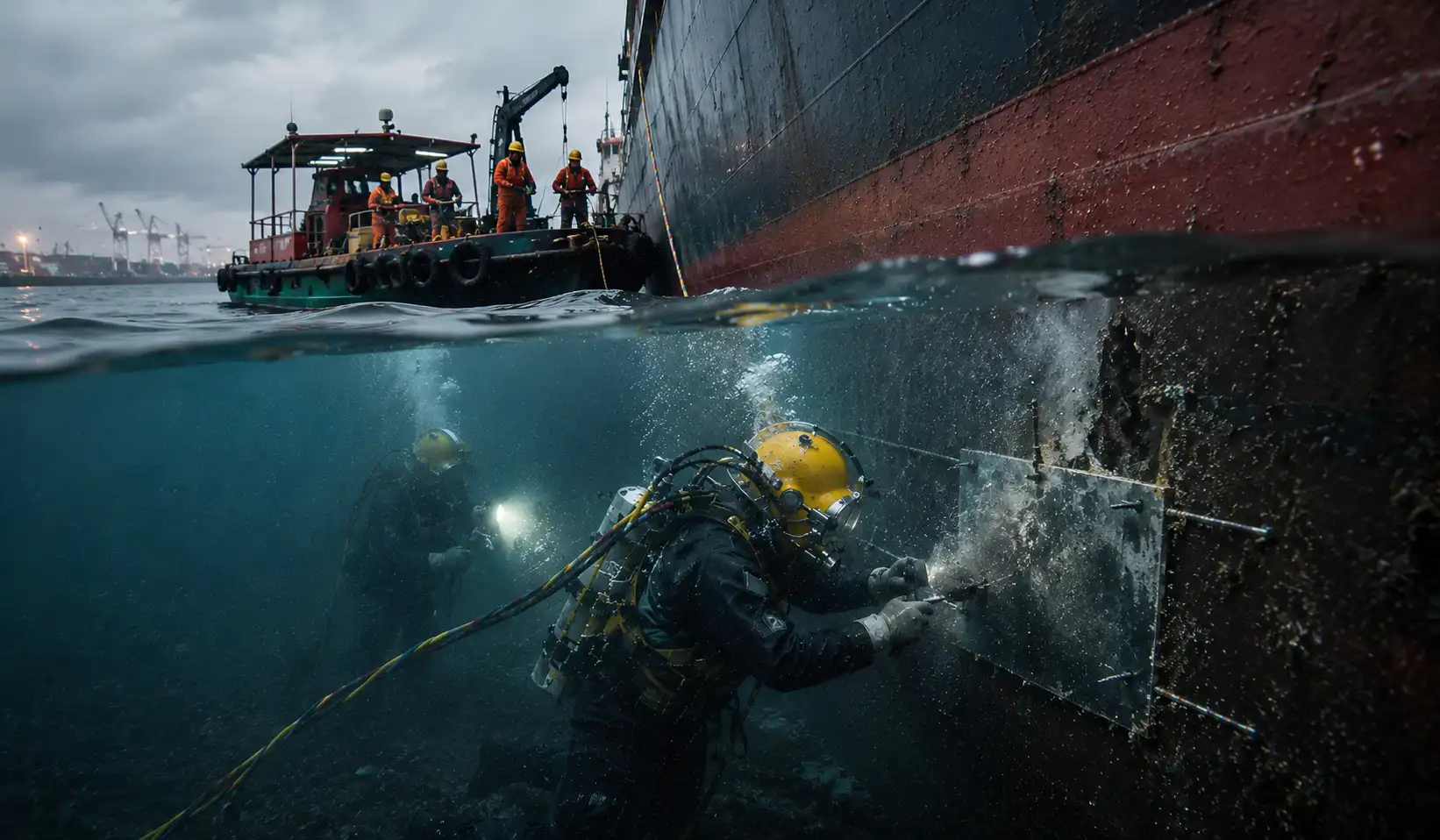
Groundings, collisions, and sudden leaks don’t wait for convenient scheduling. Emergency hull repairs require a contractor who can mobilize divers quickly, assess damage on short notice, and stabilize the vessel enough to continue safe operation or reach a dry dock for further work. Response time in these situations often determines whether an incident stays a manageable repair or turns into a costly detention.
Choosing the Right Underwater Repair Contractors
Given the technical demands and safety stakes involved, ship owners should look for a proven track record, ISO certification, and hands-on experience across multiple ports before committing to an underwater vessel repair partner. A Ship Chandler in Kandla & All Indian Ports with established relationships across major terminals can also help coordinate logistics, documentation, and surveyor communication far more smoothly than a contractor working in unfamiliar territory.
Aasutosh Marine has supported vessels calling at Indian ports since 2009, and that on-the-ground experience across multiple terminals is exactly what turns a difficult underwater job into a routine one.
Frequently Asked Questions
What are underwater hull repairs?
Underwater hull repairs are inspection, cleaning, welding, and structural repair services carried out on a ship’s submerged hull while the vessel remains afloat, avoiding the need to schedule dry docking for many types of damage.
What are the most common challenges in underwater hull repairs?
The biggest challenges include poor water visibility, unpredictable weather and currents, difficult access to recessed structural components, meeting classification society approval requirements, and ensuring diver safety while verifying repair quality underwater.
Can underwater hull repairs replace dry docking?
Not entirely. Underwater repairs handle a wide range of routine and emergency work, but major structural overhauls, full hull recoating, and certain classification surveys still require a full dry dock visit.
How is underwater welding performed on ships?
Certified commercial divers use specialized wet-welding electrodes and equipment designed to maintain a stable arc underwater, allowing them to patch or join steel structural components directly on the submerged hull.
How often should a ship’s hull be inspected for underwater damage?
Most operators schedule underwater hull inspections at regular intervals between dry dock cycles, with additional inspections after any grounding, collision, or suspected impact to catch structural issues before they escalate.