

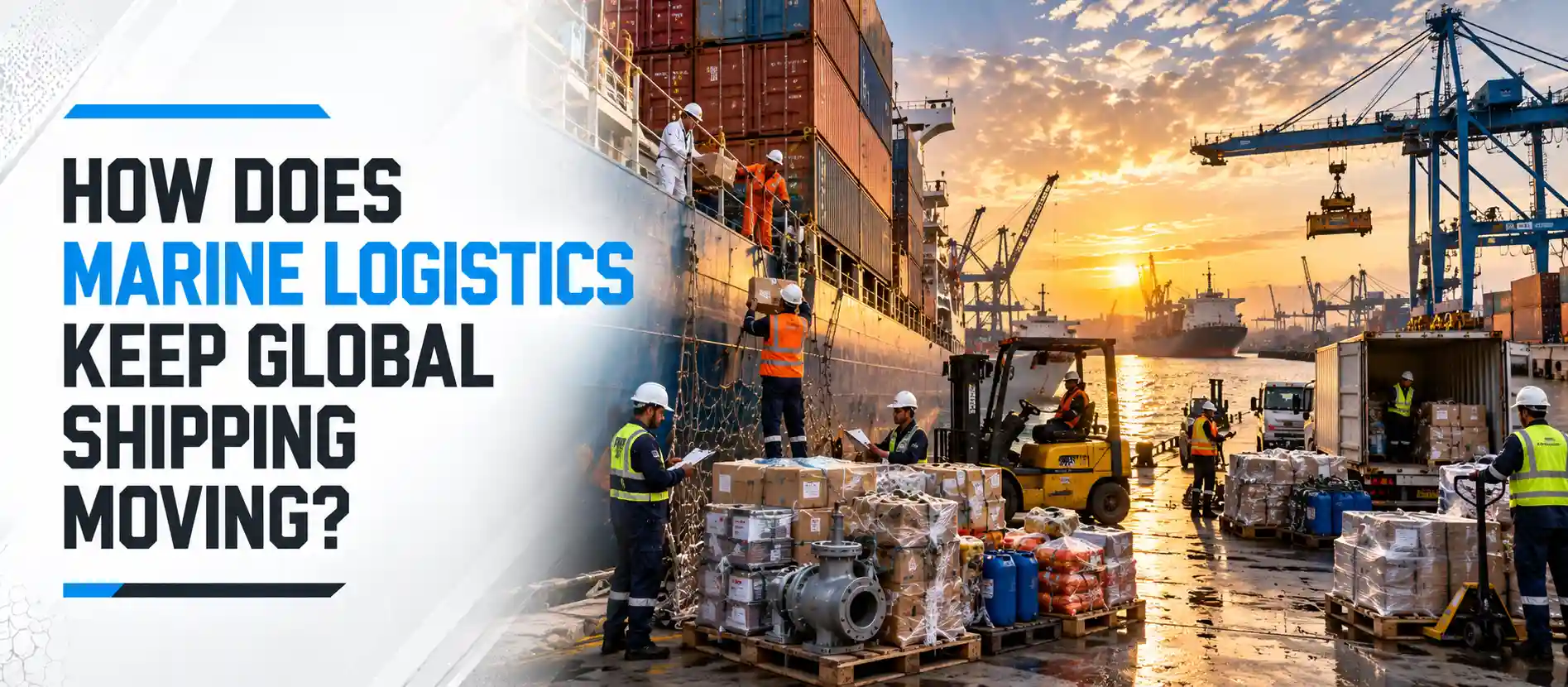
A container ship doesn’t stop moving because it’s tied up at a berth. Whenever a ship is in port, spare parts, provisions, safety equipment, and paperwork are processed quietly. This is marine logistics at work, and it’s one of the least visible but most essential parts of how global shipping actually functions.
Ships don’t just need fuel and a crew to keep moving. They need a constant, reliable flow of supplies, spares, and services delivered to the right port, at the right time, without slowing down the vessel’s schedule. A delayed part or missed provisioning run can leave a vessel at anchorage, costing money every hour.
Key Takeaways
- Marine logistics is the planning and organisation of all the things a ship needs, like repairs, food, safety gear, and services, so that they arrive at the right time for each port call.
- Over 80% of the world’s trade is carried by sea. For this reason, the shipping industry as a whole depends on a reliable marine supply chain.
- Core marine logistics services include ship supply logistics, marine procurement, spare parts sourcing, and port-based delivery coordination.
- Ship chandlers act as the operational hub of marine logistics, managing sourcing, delivery, and compliance for each vessel’s specific needs.
- Handling urgent requests quickly, without compromising on documentation or quality, is often what separates a reliable supplier from an average one.
- Efficient marine logistics directly reduces vessel turnaround time and supports overall fleet efficiency.
- Choosing a provider with broad port coverage and a strong supplier network lowers operational risk for ship owners and managers.
What Is Marine Logistics?
Marine logistics is the planning, getting, and delivering of all the things a ship needs to run, like spare parts for the engines and deck gear, food, safety gear, and technical supplies, all while making sure that they arrive and leave ports at the same time. It sits at the intersection of procurement, transportation, and timing, and it’s what allows a vessel to arrive, resupply, and sail again without unnecessary delay.
Unlike general cargo logistics, marine logistics services operate on a much tighter and less predictable schedule. A container ship may only know about a port call a few days in advance, and the supplier has just hours to get the right goods ready, clear customs, and deliver them to the ship, which may be at anchor or next to a berth.
Why Marine Logistics Matters in Global Shipping
Carrying goods by sea is an important part of global trade, not just an add-on. According to UNCTAD, the United Nations’ trade and development body, over 80% of the volume of international goods traded worldwide moves by sea, and that share is even higher for many developing economies. That scale is exactly why the marine supply chain supporting these vessels has to function without gaps. A single delivery problem can have an impact on the whole schedule of a shipping line, not just one ship.
This is where the role of marine logistics becomes clear. It’s the connective layer between a vessel’s operational needs and the global network of suppliers, ports, and freight routes that keep those needs met. Without it, the smooth movement of cargo, passengers, and trade that the shipping industry depends on simply wouldn’t hold together.
What Services Are Included in Marine Logistics?
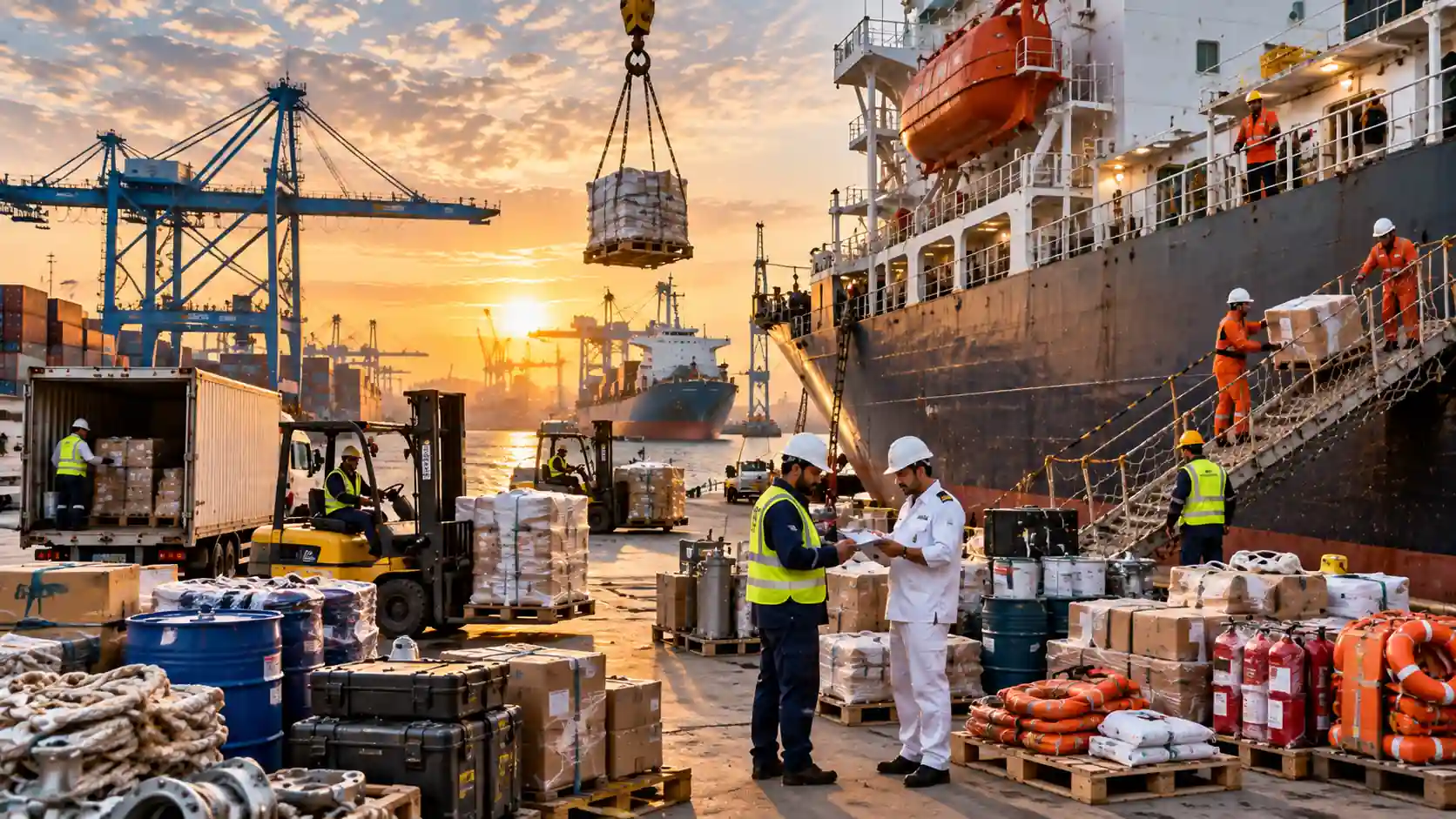
Marine logistics is not a single thing that you do; it’s a group of services that work together. The main parts usually consist of:
- Ship supply logistics: Sourcing and delivering provisions, deck stores, engine spares, and technical equipment to vessels in port
- Marine procurement services: Identifying, quoting, and purchasing the right parts and materials from a network of manufacturers and distributors
- Marine spare parts supply: Locating and expediting critical spares, sometimes on very short notice, to avoid vessel downtime
- Vessel support services: Coordinating deliveries, customs clearance, and documentation so supplies reach the ship without delay
- Port logistics services: Managing the on-the-ground handling of goods at the port, from warehousing to final delivery alongside the vessel
Each of these pieces has to work in sync. A perfectly sourced spare part is useless if it doesn’t clear customs before the ship sails, and a well-timed delivery means nothing if the wrong part was ordered in the first place.
The Role of Ship Chandlers in Marine Logistics
Ship chandlers sit at the center of this entire system. If a ship is in port anywhere in the world, including India, a ship chandler is its main point of contact for food, hardware, safety gear, spare parts, and general technical supplies. But the modern ship chandler’s role goes well beyond simply stocking a warehouse; it involves active coordination across suppliers, customs authorities, and transport networks to get the right goods to the right vessel on time.
This is why ship chandling services have become so tightly interwoven with marine logistics. A chandler doesn’t just fill an order; they also oversee a small, time-sensitive supply chain at every port call, and they often have to do this while juggling multiple ships with different schedules and needs at the same time.
How Marine Suppliers Manage Urgent Deliveries
Not every requirement can be planned weeks in advance. Ships sometimes arrive with an urgent need, like a broken part, a safety certificate that’s about to expire, or supplies that ran low because the trip took longer than planned. Handling these situations well is often what separates a dependable marine supply company from an average one.
Reliable marine logistics operations typically manage urgent deliveries by:
- Maintaining strong relationships with manufacturers and distributors to expedite sourcing
- Keeping commonly needed spares and consumables in local or regional stock
- Coordinating closely with port authorities to fast-track customs clearance for urgent shipments
- Running 24/7 or extended-hours operations so a request received late at night doesn’t wait until morning
- Having a dedicated logistics team that can re-route or re-prioritize deliveries as a vessel’s schedule shifts
This kind of responsiveness matters more than it might seem. The global ship chandling sector handles more than 50,000 port calls every year, and a lot of that work has to be done on short, sometimes last-minute notice schedules. That’s why being able to deliver quickly has become a basic expectation rather than an extra service.
How Marine Logistics Improve Vessel Operational Efficiency
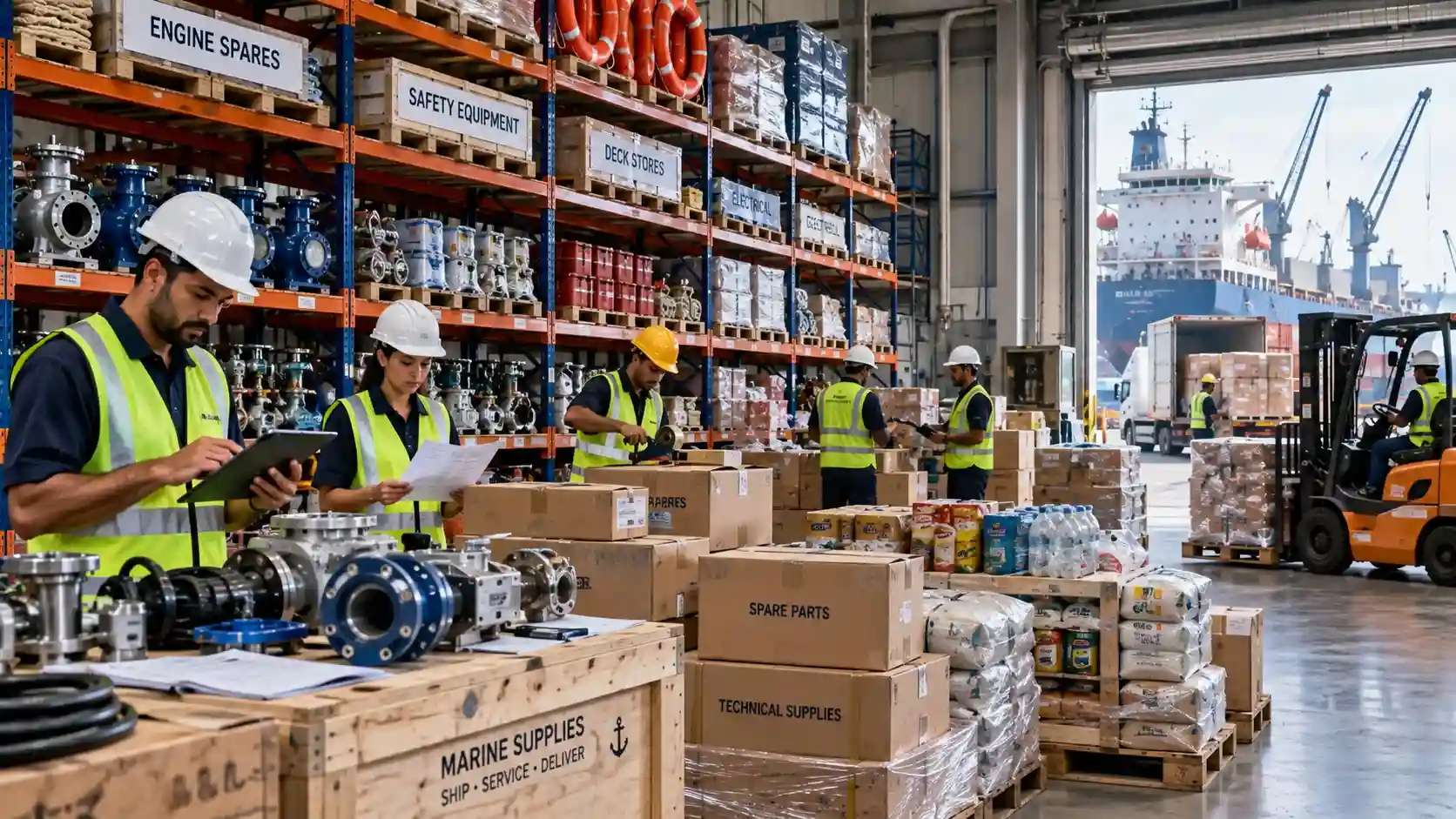
The connection between marine logistics and vessel efficiency is direct. Every hour a ship spends waiting on a delayed part, an incomplete provisioning order, or unresolved paperwork is an hour it isn’t earning its keep. Efficient maritime logistics reduces that idle time in a few concrete ways:
- Faster turnaround at port, since supplies are pre-arranged and ready for delivery the moment the vessel arrives.
- Fewer unplanned delays, because reliable suppliers anticipate needs rather than scrambling to react to them.
- Better inventory planning on board, so crews aren’t over- or under-stocked on critical items.
- Reduced risk of non-compliance, since safety and certification items are tracked and renewed on schedule.
For fleet operators managing dozens of vessels across multiple routes, this operational discipline adds up. When a shipping company knows its logistics partner will always deliver on time, it can run tighter schedules. This directly affects the fleet’s overall efficiency over a year of port calls.
Marine Logistics Beyond Supplies: Repairs and Safety Compliance
Marine logistics doesn’t stop at delivering provisions and spare parts. It also extends into coordinating the physical work a vessel needs while it’s in port. This includes arranging Underwater Ship Repairs for hull, propeller, or sea chest issues found during a routine inspection, so the repair team, spare parts, and vessel schedule align without adding extra days to the port call.
It also covers safety compliance, which can’t wait. Coordinating Life Saving & Fire Fighting Appliances Services, from life raft servicing to fire equipment certification, must happen within strict regulatory timelines, and a strong logistics operation ensures these renewals aren’t missed simply because they weren’t scheduled alongside everything else the vessel needed.
Managing the Paperwork Side of Marine Logistics
Physical delivery is only half the job. Spare parts and equipment moving in and out of a port also require documentation, customs declarations, and consolidation that can quickly become a bottleneck if not managed properly. This is where Spares Clearing and Consolidation fits into the broader logistics picture: grouping shipments, handling customs formalities, and ensuring nothing sits in a bonded warehouse longer than it needs to.
Good marine logistics providers treat this administrative layer with the same urgency as the physical delivery itself, because a cleared shipment sitting in a warehouse due to paperwork delays defeats the entire purpose of fast, reliable marine spare parts logistics.
What Makes a Reliable Marine Logistics Provider
Not every supplier can deliver consistently across all of these moving parts. A dependable marine logistics company typically stands out through:
- Port coverage: The ability to serve a vessel wherever it calls, not just at one or two home ports
- Supplier network depth: Strong relationships that allow fast sourcing of both common and hard-to-find items
- Responsiveness: Real capacity to handle urgent requests, not just scheduled ones
- Transparency: Clear quotations, tracked deliveries, and accurate documentation
- Track record: A history of on-time performance across different vessel types and cargo requirements
When ship owners and managers choose a logistics partner, they’re choosing how much operational risk they’re willing to carry. A provider with a genuine multi-port presence and a proven procurement network reduces that risk considerably compared to relying on smaller, single-port operators for each individual call. Supporting vessels with reliable Ship Chandling Services and coordinated Ship Spare Parts Supply across major Indian ports.
Working With a Trusted Marine Logistics Partner
Marine logistics works or doesn’t depend on small things that most people who aren’t in the shipping business never see: a spare part found a day early, a customs form filled out correctly the first time, or a provisioning order that includes exactly what the crew needs for the next leg of the trip. Get those details right consistently, across dozens of port calls a year, and a vessel’s operations run smoothly. Get them wrong even occasionally, and the costs show up fast in lost time and missed schedules.
As a trusted Ship Chandler in Kandla & All Indian Ports, Aasutosh Marine has built its operations around exactly this kind of consistency. For ship owners and managers who need a logistics partner that treats every port call with the same urgency as the vessel, that consistency makes the difference.
Frequently Asked Questions
What is marine logistics and why is it important?
Marine logistics is the coordinated sourcing, procurement, and delivery of everything a vessel needs while in port. It’s important because it keeps ships supplied and operational without unnecessary delays, directly supporting global trade.
How does marine logistics support global shipping?
By ensuring vessels can resupply quickly and reliably at each port call, marine logistics helps shipping lines maintain schedules, avoid costly downtime, and keep cargo moving across global trade routes.
What services are included in marine logistics?
Marine logistics typically covers ship supply, marine procurement, spare parts sourcing, provisioning, and port-based delivery coordination, along with supporting services like customs clearance and documentation.
How do ship chandlers contribute to marine logistics?
Ship chandlers act as the vessel’s primary point of contact in port, managing the sourcing and delivery of supplies, spares, and equipment, and coordinating with suppliers and authorities to keep everything on schedule.
Why is timely delivery important in marine supply?
A ship that’s waiting for a late delivery isn’t making money; it’s just sitting there. Timely delivery keeps port turnaround short and helps ship owners avoid the operational and financial costs of unplanned delays.