

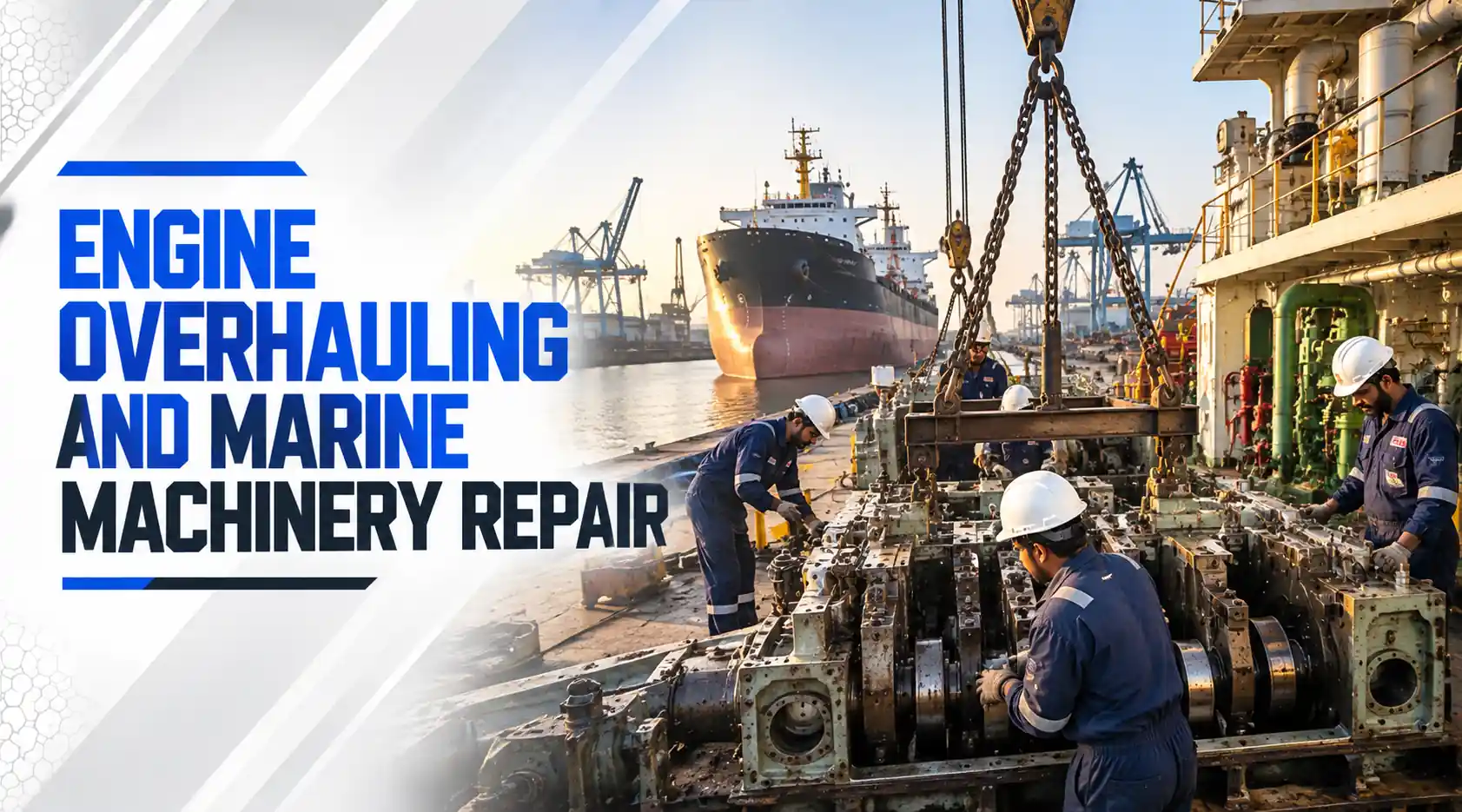
Marine vessels operate under demanding conditions, and engine reliability is central to safe, on-schedule operations. A single machinery failure can delay cargo operations, trigger port state control deficiencies, or compromise crew safety. Engine overhauling and marine machinery repair are among the most technically demanding services in ship maintenance, requiring qualified engineers, correct tooling, and access to genuine spare parts to restore a vessel’s machinery to the standard required for continued operation.
What Is Marine Engine Overhauling?
Marine engine overhauling is a planned, systematic reconditioning of a vessel’s main engine or auxiliary machinery. Unlike routine servicing, an overhaul involves partially or completely dismantling major components, including cylinder heads, pistons, piston rings, cylinder liners, crankshaft bearings, and the fuel injection system. Technicians inspect each component, measure it against original equipment manufacturer tolerances, and either recondition it or replace it before reassembling the engine and testing it under load. A properly executed overhaul restores engine performance, fuel efficiency, and operational reliability to a level close to the original specification, extending the engine’s working life and reducing the risk of unplanned failures.
What Does a Marine Engine Overhaul Include?
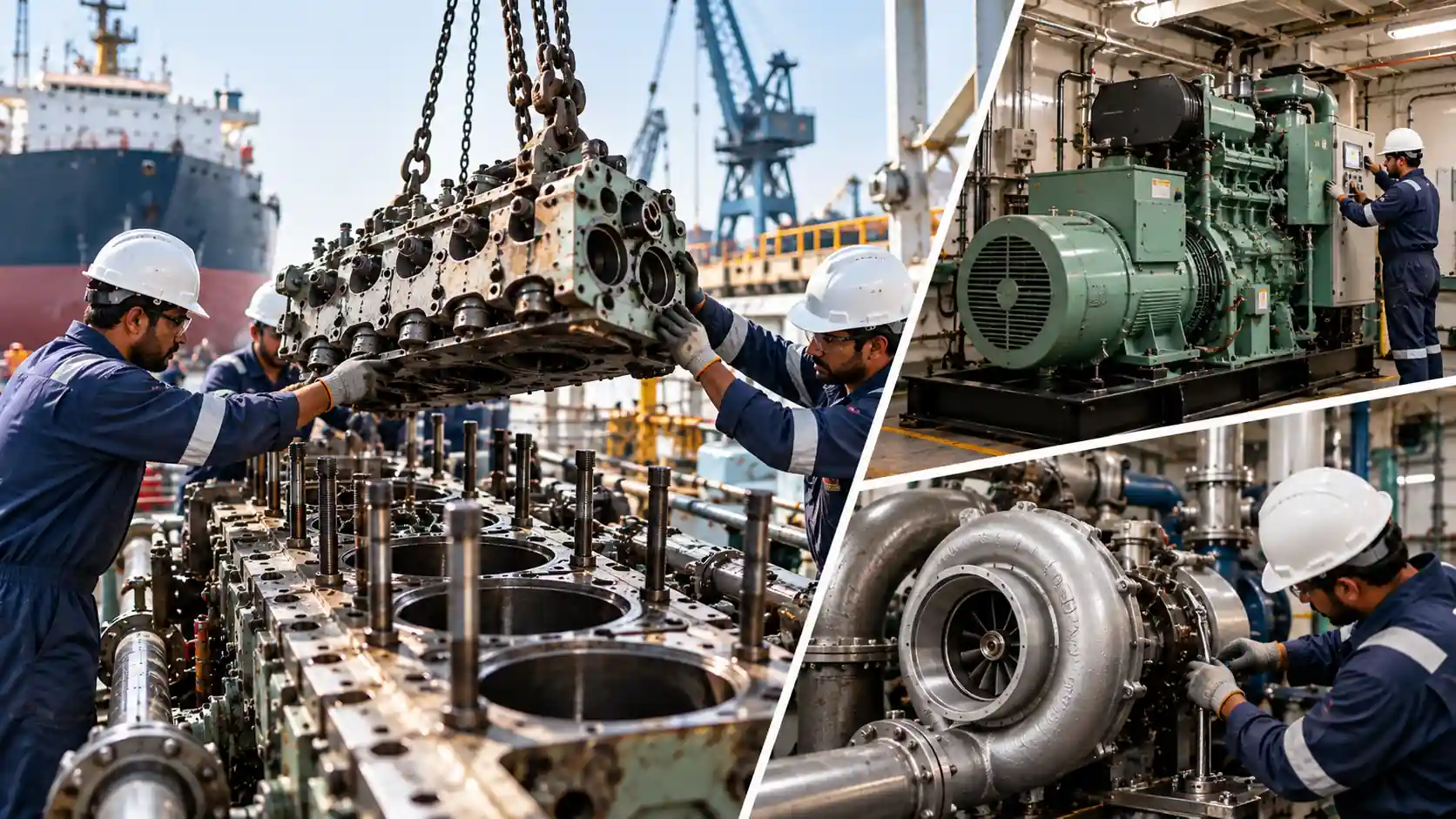
Here is what a marine engine overhaul includes:
Main Engine Overhaul
A main engine overhaul typically covers cylinder head removal and inspection, piston and liner assessment, crankshaft and bearing clearance measurement, fuel injector servicing, turbocharger inspection and cleaning, cooling system and lubrication system checks, and a full operational test on completion. The precise scope is determined by the engine’s running hours, its condition at inspection, and the manufacturer’s recommended intervals for each component. Vessels operating on extended voyages often schedule main engine overhauls during planned port calls to minimise disruption to trading schedules.
Auxiliary Machinery Overhaul
Auxiliary machinery, including generators, air compressors, pumps, and hydraulic systems, requires the same structured approach as the main engine. These systems support the vessel’s electrical supply, ballast management, and deck operations. Failures in auxiliary machinery can cascade across shipboard operations, making regular inspection and overhaul as operationally important as main engine maintenance. Vessels routinely carry out generator overhauls, compressor servicing, and hydraulic system reconditioning during port calls when qualified engineers and parts are available.
Common Marine Machinery Repairs
Beyond scheduled overhauls, vessels require corrective repairs when machinery develops faults between planned maintenance intervals. Common repairs include cylinder liner and piston ring replacement, bearing renewal, turbocharger servicing, fuel pump reconditioning, and heat exchanger cleaning. Port calls also often address hydraulic system faults, pump failures, and air compressor issues. For hull and propulsion work carried out without drydocking,
Underwater Ship Repair Services cover propeller inspections, rudder repairs, and hull cleaning, reducing the time and cost of taking a vessel out of service for structural work.
Why Regular Engine Maintenance Reduces Vessel Downtime
Unplanned machinery failures create delays, financial penalties, and potential safety incidents. A structured maintenance programme, with scheduled overhauling, timely component replacement, and accurate running-hours records, significantly reduces the likelihood of unexpected breakdowns. Prompt access to Marine Spare Parts Supply at port further supports rapid repair turnaround, eliminating the lead time associated with sourcing critical components from overseas suppliers. Maintaining a full record of overhaul history and component replacement dates also supports compliance with flag state requirements and simplifies class survey preparation.
Marine Machinery Repair Services at Indian Ports
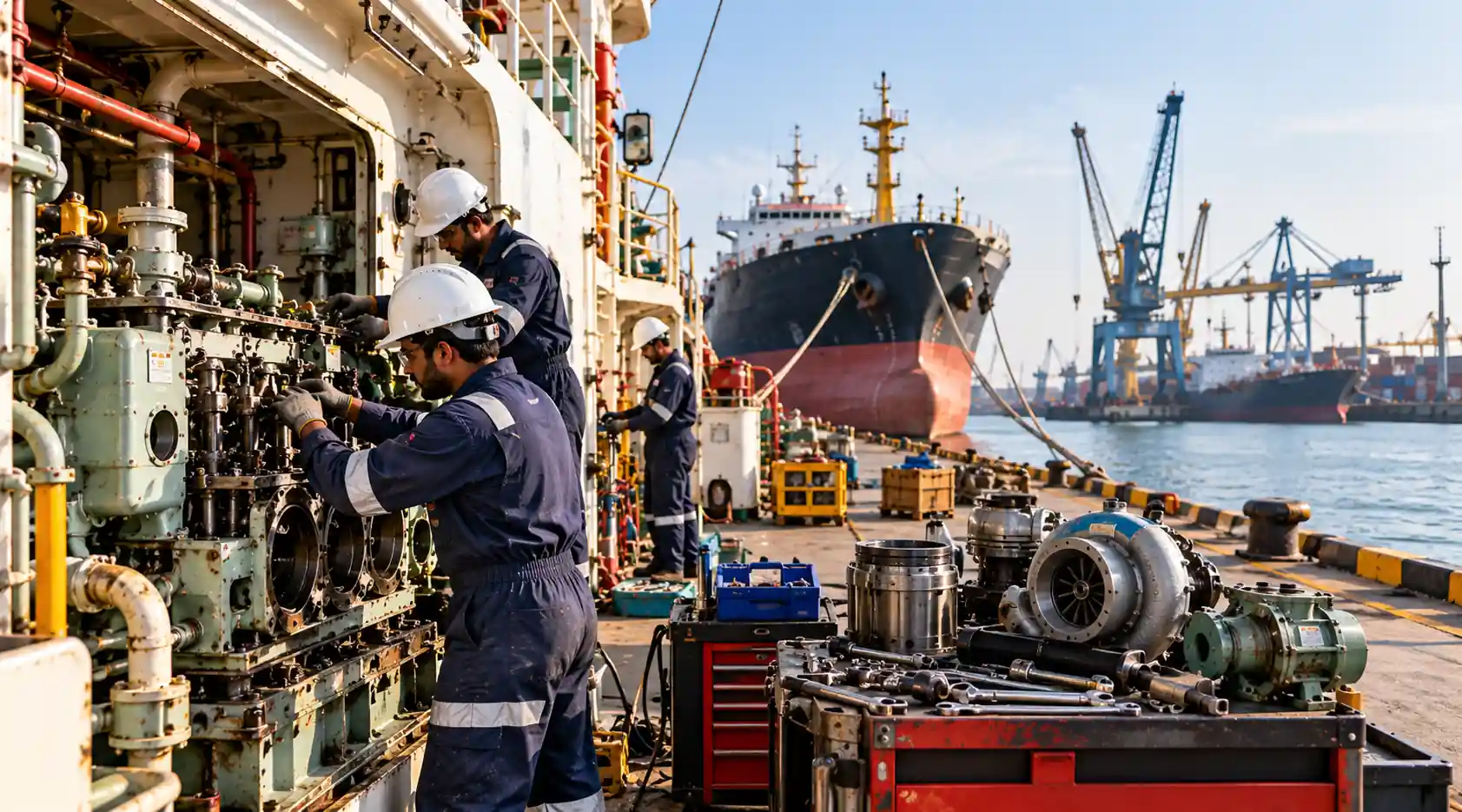
India’s major commercial ports handle significant volumes of vessel traffic from bulk carriers, tankers, container ships, and offshore support vessels. Marine Machinery Repair Services at these ports range from routine maintenance and corrective repairs to full engine overhauls carried out by qualified marine engineers with the tools and parts to work within tight port call windows. A repair company with established port presence can mobilise quickly, source components locally, and coordinate with the vessel’s chief engineer to minimise time alongside.
For vessels calling at Gujarat’s ports, access to a reliable Ship Chandler in Kandla & All Indian Ports that combines repair services with provisions, deck and engine stores, and spare parts support simplifies port call logistics considerably, reducing the number of service providers a vessel operator needs to coordinate during a single port visit.
Conclusion
Engine overhauling and regular marine machinery repair are not discretionary maintenance activities; they are the foundation of reliable vessel operations. Scheduled overhauls extend machinery life, protect operational continuity, and support compliance with class and flag state requirements. At Indian ports, where turnaround times are often tight and the consequences of extended delays are significant, working with a repair company that combines technical capability with genuine port presence makes a material difference to outcomes. Aasutosh Marine provides ship repair, spare parts support, and chandling services across Kandla, Mundra, Sikka, and other major Indian ports. Contact Aasutosh Marine to discuss your vessel’s repair and maintenance requirements ahead of your next port call.
Frequently Asked Questions
What is marine engine overhauling?
Engine overhauling and marine machinery repair refers to the systematic dismantling, inspection, reconditioning, and reassembly of a vessel’s main engine or auxiliary machinery.
When does a ship engine require an overhaul?
Engine overhauls are typically scheduled based on running hours, as specified by the engine manufacturer, or when condition monitoring indicates deterioration in performance metrics such as exhaust temperatures, fuel consumption, or compression pressure.
How does regular machinery maintenance reduce vessel downtime?
Planned maintenance programmes address component wear before it results in failure, reducing the frequency and severity of unplanned breakdowns. Engineers can predict servicing needs and schedule work during planned port calls rather than responding to emergencies at sea or in unfamiliar ports by keeping accurate records of running hours, overhauls, and component replacements.
Why should shipping companies use professional marine machinery repair services?
Marine engine overhauls require specialist knowledge of specific engine types, calibrated measurement tools, and access to genuine OEM or approved spare parts. Incorrect assembly or substandard components create reliability risks that can cost more than the original repair.
How can shipowners find reliable marine repair companies in India?
Vessel operators should look for repair companies with a documented track record, qualified and certified marine engineers, access to genuine spare parts, and established presence at the ports where their vessels regularly call.