

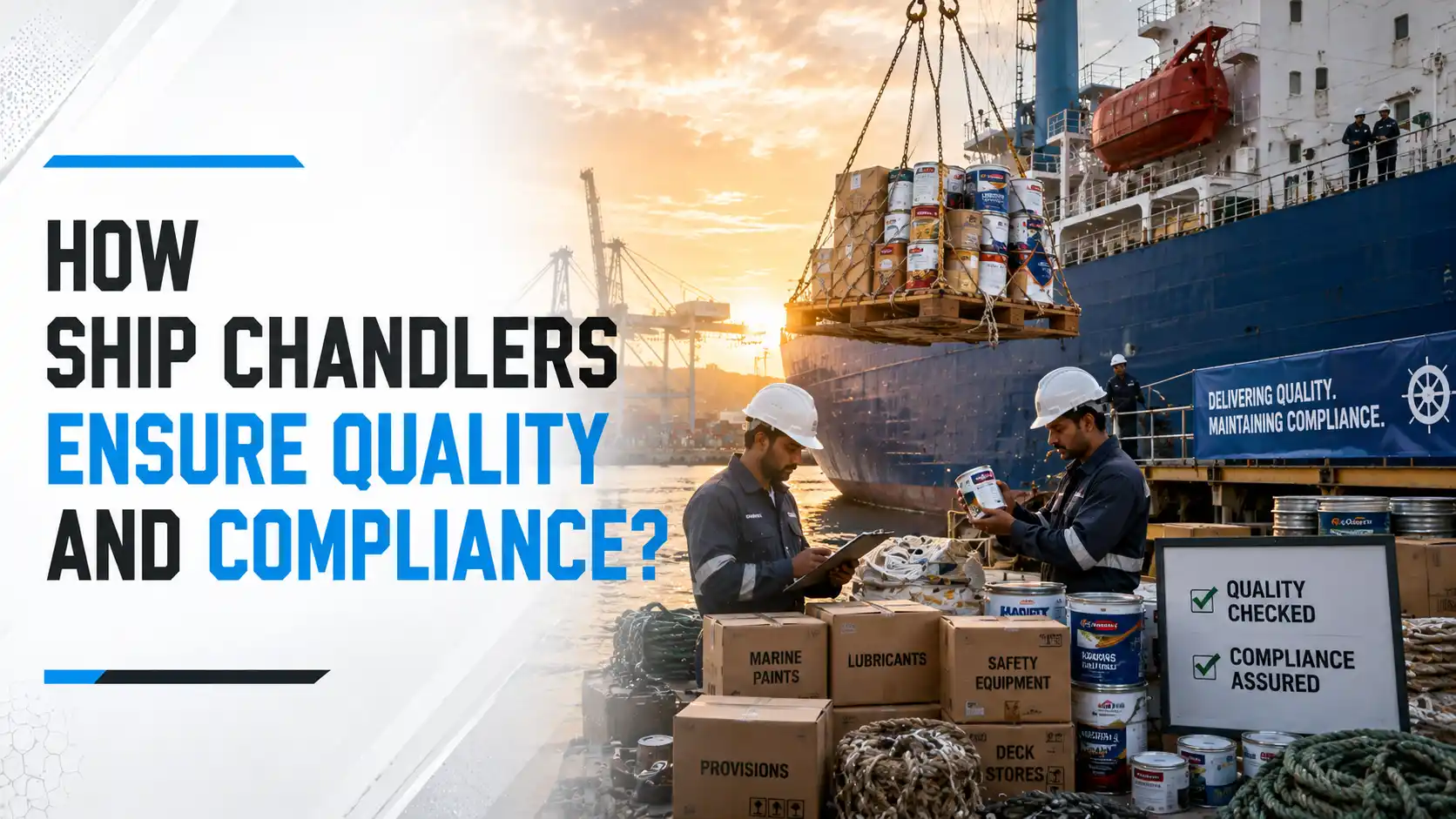
Every vessel that docks at a port depends on one thing before it sails again: supplies that meet strict international standards. This is where ship chandlers step in. A ship chandler is more than just a place to get food and spare parts. They are an important part of the maritime supply chain and are in charge of making sure that everything loaded onboard, from safety gear to engine parts, meets IMO and SOLAS standards. Understanding how ship chandlers ensure quality and compliance helps vessel operators, ship owners, and crew make informed decisions about who they trust with their supply needs.
Key Takeaways
- Ship chandlers play a direct role in maritime safety compliance by supplying certified, IMO- and SOLAS-compliant equipment and provisions.
- Quality assurance in ship chandling services involves vendor vetting, documentation checks, and regular internal audits.
- Marine supply chain management that works well is based on a structured quality control process that includes sourcing, inspection, reviewing certifications, storage, and delivery.
- Ship chandlers help with inspections and audits of ships by keeping accurate records of certifications and re-certifying safety gear.
- Timely delivery and regulatory compliance go hand in hand; a professional ship supply company won’t sacrifice one for the other.
- When choosing a ship chandler, prioritize certifications, transparent processes, and a proven track record across the ports you operate in.
What Is a Ship Chandler and Why Quality Matters
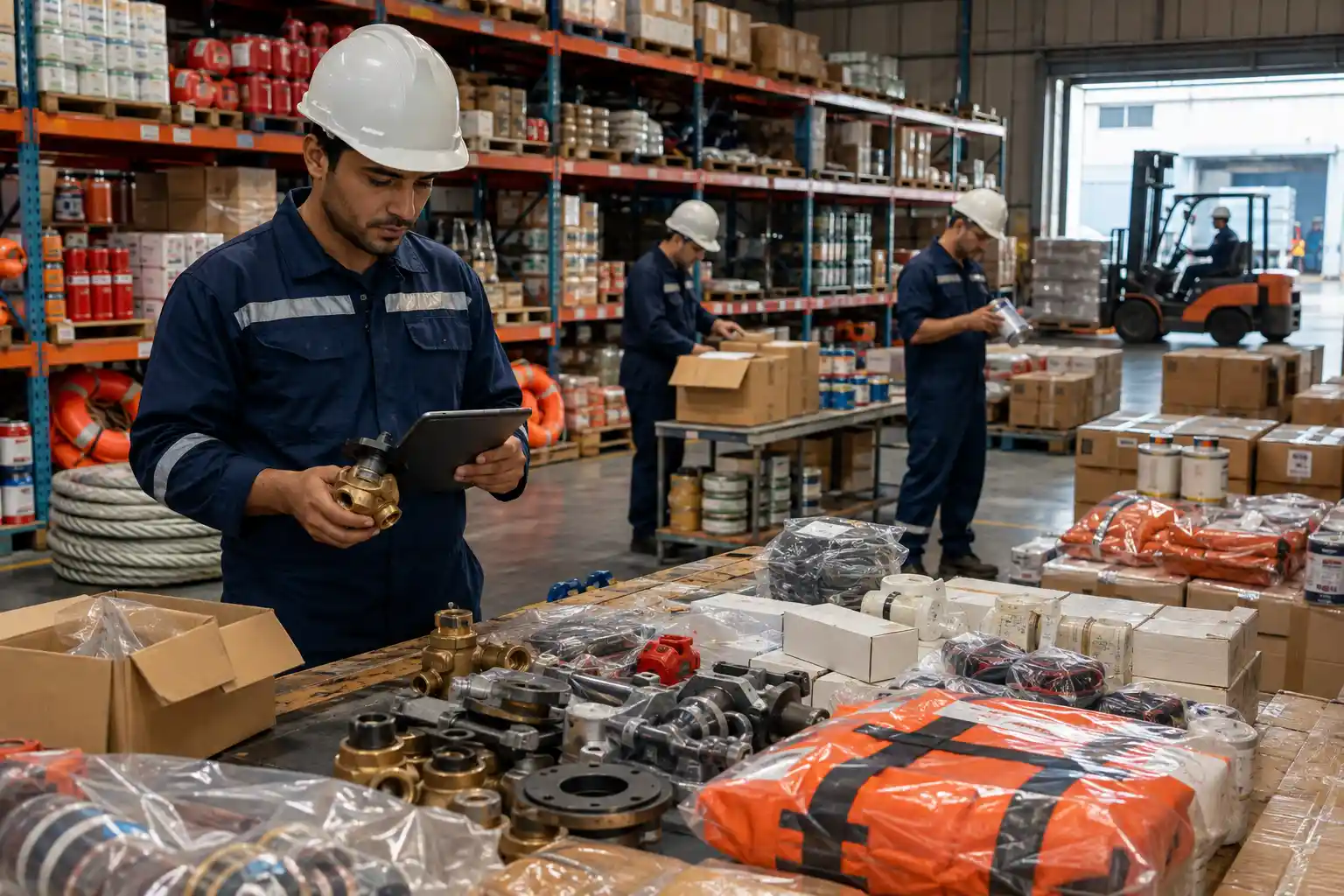
A ship chandler procures, inspects, and delivers marine stores, provisions, safety equipment, and technical spares to vessels calling at a port. Their role sits at the intersection of logistics and regulatory compliance. If you don’t have the right supplies or equipment, you might fail inspections, be detained by port state control, have to wait longer to leave, or even have a safety incident at sea. That’s why quality assurance in ship chandling services isn’t optional; it’s the foundation of the business.
A dependable ship chandler builds its reputation on consistency: the same rigorous checks applied to every consignment, every port, every time. This consistency is what separates a professional ship supply company from a casual vendor.
How Ship Chandlers Maintain SOLAS and IMO Compliance
Ship chandler compliance starts with a clear understanding of international maritime regulations. The International Maritime Organization (IMO) and the Safety of Life at Sea (SOLAS) convention set out detailed specifications for life-saving appliances (LSA), fire-fighting appliances (FFA), and other statutory equipment. A trustworthy ship chandler makes sure that everything they sell, from life jackets to CO2 fire suppression systems, is class-approved and meets the needs of the ship’s flag state.
This is achieved through:
- Checking out vendors and only buying from companies with valid type-approval certificates
- Checking certificates of conformity, test reports, and records of where goods have been before they leave the warehouse is called documentation checks.
- Regular audits to make sure that inventory and procedures are still in line with current SOLAS-compliant ship supplies standards
- Keeping up with changes to regulations. IMO circulars and amendments are kept track of so that equipment supplied never goes out of date
An established ship supply quality assurance provider treats compliance as an ongoing discipline, not a one-time checklist, unlike an average vendor.
The Quality Control Process Followed by Ship Chandlers
Marine supply compliance is built on a structured quality control process that runs from procurement to delivery:
- Sourcing: Products are purchased only from approved, certified manufacturers and distributors.
- Inspection: Incoming goods are checked for damage, expiry dates (in the case of provisions and pyrotechnics), and correct specifications.
- Certification review: Each safety-critical item is matched against its class certificate, IMO wheel mark, or ISSA/IMPA code.
- Storage: Goods are stored under conditions that preserve quality, particularly for perishable provisions and sensitive electronic components.
- Delivery and handover: Items are delivered on time, with full documentation handed to the vessel’s master or chief officer for the ship’s records.
This process ensures that whether a vessel needs deck stores, engine spares, or certified LSA and FFA equipment, everything supplied will withstand scrutiny during a port state control inspection or a flag state audit.
Supporting Vessel Inspections and Audits
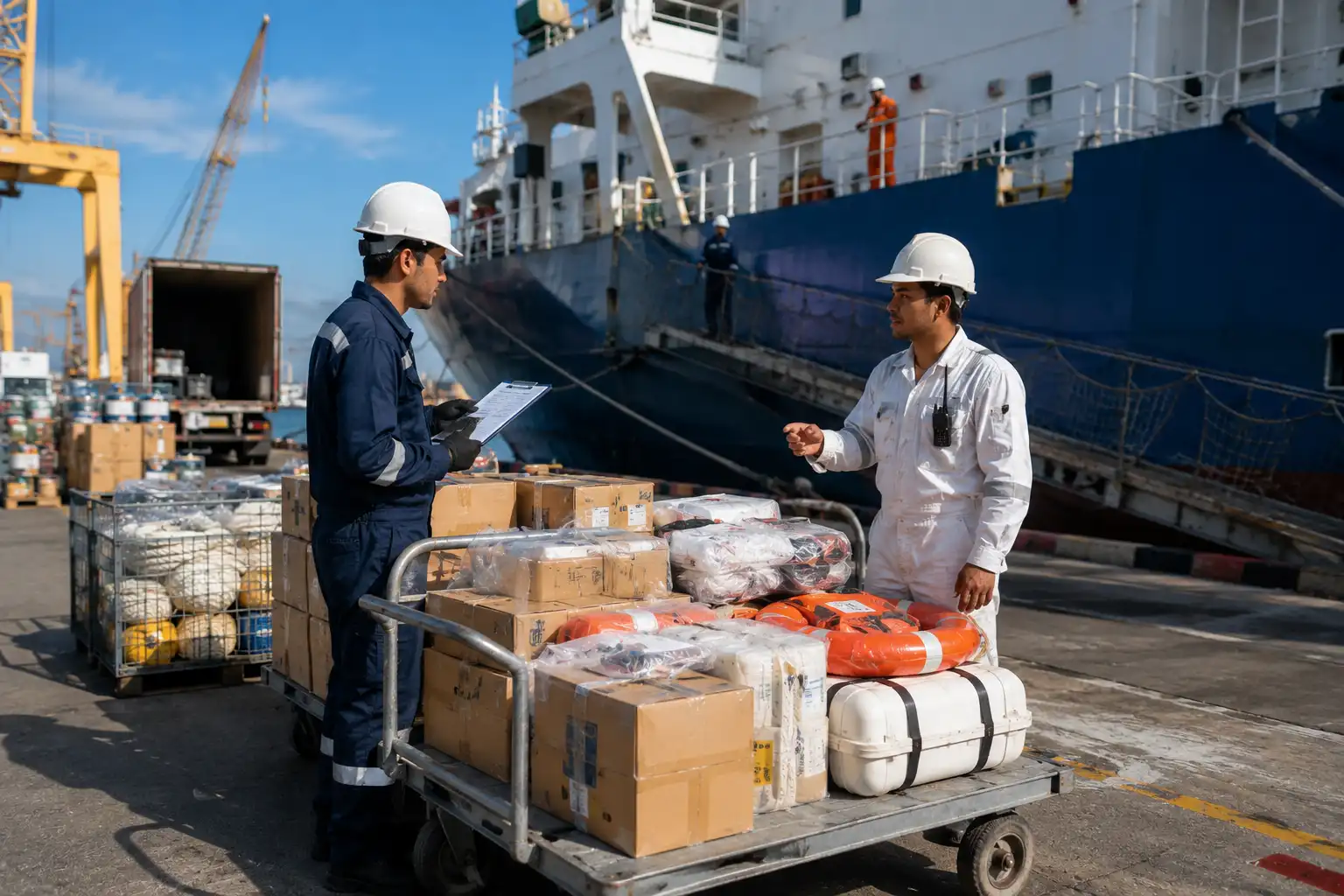 A significant part of a ship chandler’s compliance responsibility is helping vessels sail through inspections and audits without complications. Auditors and port state control officers routinely check that safety equipment onboard has valid certification and hasn’t expired. A capable marine safety equipment supplier keeps detailed records of every item delivered, so masters and superintendents can present accurate documentation instantly.
Many chandlers service and re-certify life rafts, fire extinguishers, and immersion suits, connecting supply and ongoing compliance. This proactive approach reduces the risk of deficiencies being logged during inspections, which can otherwise lead to costly delays.
Timely Delivery Without Compromising Compliance
Vessels operate on tight schedules, and delays at port can be expensive. A good ship supply company fulfills urgent orders quickly without skimping on quality. This requires strong coordination between procurement teams, warehouse staff, and port agents, along with efficient marine procurement services that can respond to last-minute requirements without cutting corners on documentation or certification.
Aasutosh Marine, a ship chandler in Kandla and at all major Indian ports, balances IMO-compliant marine supplies with reliable turnaround times for vessels calling at Kandla, Mundra, and Sikka ports.
Choosing a Reliable and Compliant Ship Chandler
When evaluating vessel supply services, ship owners and operators should look for:
- Valid ISO certification and membership with recognized marine trade bodies
- A transparent quality control process with documented inspection records
- Experience supplying certified marine equipment across multiple vessel types
- A track record of on-time delivery across the ports they serve
- Willingness to support documentation for inspections and audits
Choosing a certified marine equipment supplier isn’t just about ticking a compliance box. It directly affects a vessel’s operational efficiency and safety record. As a Ship Chandler in Kandla & All Indian Ports, Aasutosh Marine works within this framework, supplying provisions, deck stores, and safety equipment with an emphasis on documentation and regulatory accuracy.
Frequently Asked Questions
1. What is the role of a ship chandler in ensuring quality and compliance?
A ship chandler sources, inspects, and delivers marine provisions, spares, and safety equipment to vessels, making sure every item meets IMO and SOLAS requirements before it’s loaded onboard.
2. How do ship chandlers ensure marine supplies meet SOLAS and IMO standards?
They vet manufacturers for valid type-approval, verify certificates of conformity, conduct internal audits, and stay updated on IMO circulars and amendments affecting statutory equipment.
3. Why is certified marine equipment important for ships?
Certified equipment ensures the vessel passes port state control inspections and flag state audits, and more importantly, that safety gear like life rafts and fire-fighting systems will function correctly in an emergency.
4. What should you look for when choosing a ship chandler?
Look for ISO certification, a documented quality control process, experience across vessel types, reliable delivery timelines, and support for inspection-related documentation.
5. How do ship chandlers support vessel inspections and regulatory compliance?
They maintain accurate certification records for supplied equipment, offer re-certification and servicing for safety gear, and provide documentation that masters and superintendents can present during audits.