

The global maritime industry is entering a period of significant change. Ship design technology, environmental compliance requirements and digital transformation in shipping are reshaping how vessels are designed, operated and maintained. These maritime trends 2027 reflect where leading shipping companies, shipbuilders and maritime regulators are directing their attention and investment.
Key Takeaways
- Maritime trends 2027 include green ship design, AI-assisted navigation, digital twins, cybersecurity and smarter crew management tools.
- IMO decarbonisation targets are driving adoption of alternative fuels and wind-assisted propulsion in newer commercial vessel designs.
- AI and autonomous shipping technology is developing within the IMO MASS framework to support rather than replace qualified seafarers.
- Digital twin technology allows designers and operators to evaluate vessel performance and plan maintenance using real-time virtual models.
- Maritime cybersecurity is a formal IMO requirement as ships depend more heavily on connected and integrated digital systems.
- Marine suppliers must adapt to changing vessel equipment and safety requirements to support modern fleet operations at port.
5 Maritime Trends That Will Shape the Industry in 2027
Five developments are expected to influence ship design, data management, vessel maintenance and operations as 2027 approaches.
1. Green Ship Design and Alternative Fuel Technologies
Energy-efficient ship design is a central focus for shipowners responding to the IMO’s decarbonisation targets. Alternative fuels including methanol, ammonia and LNG are progressing alongside wind-assisted and hybrid propulsion systems as shipbuilders work toward lower emissions across commercial fleets.
2. Artificial Intelligence and Autonomous Shipping
AI in the maritime industry is expanding across navigation support, vessel performance monitoring and operational planning. AI systems within the IMO’s MASS framework support collision detection, route optimisation and remote monitoring, with human supervision remaining central to safe and compliant vessel operations.
3. Digital Twins and Data-Driven Vessel Operations
Digital twin technology creates virtual vessel models that allow designers and operators to evaluate performance before construction begins. Real-time sensor data updates the model during service, allowing Ship Maintenance Services teams and operators to identify potential equipment issues before they cause unplanned downtime.
4. Maritime Cybersecurity and Connected Ship Systems
Maritime digitalization means vessels now depend on integrated digital systems for navigation, cargo management and engine monitoring, increasing cybersecurity exposure. The IMO’s Maritime Cyber Risk Management guidelines require shipping companies to include cybersecurity within their safety management systems, driving investment in secure communication and data protection.
5. Human-Centred Technology and Smarter Crew Operations
Digital tools are designed to reduce crew administrative workload rather than add to it. Electronic logbooks, automated reporting and digital checklists simplify routine tasks, freeing seafarers for safety-critical responsibilities. Crew training for modern marine technologies is a growing priority as shipping companies invest in well-prepared crews.
Five Maritime Trends: At a Glance
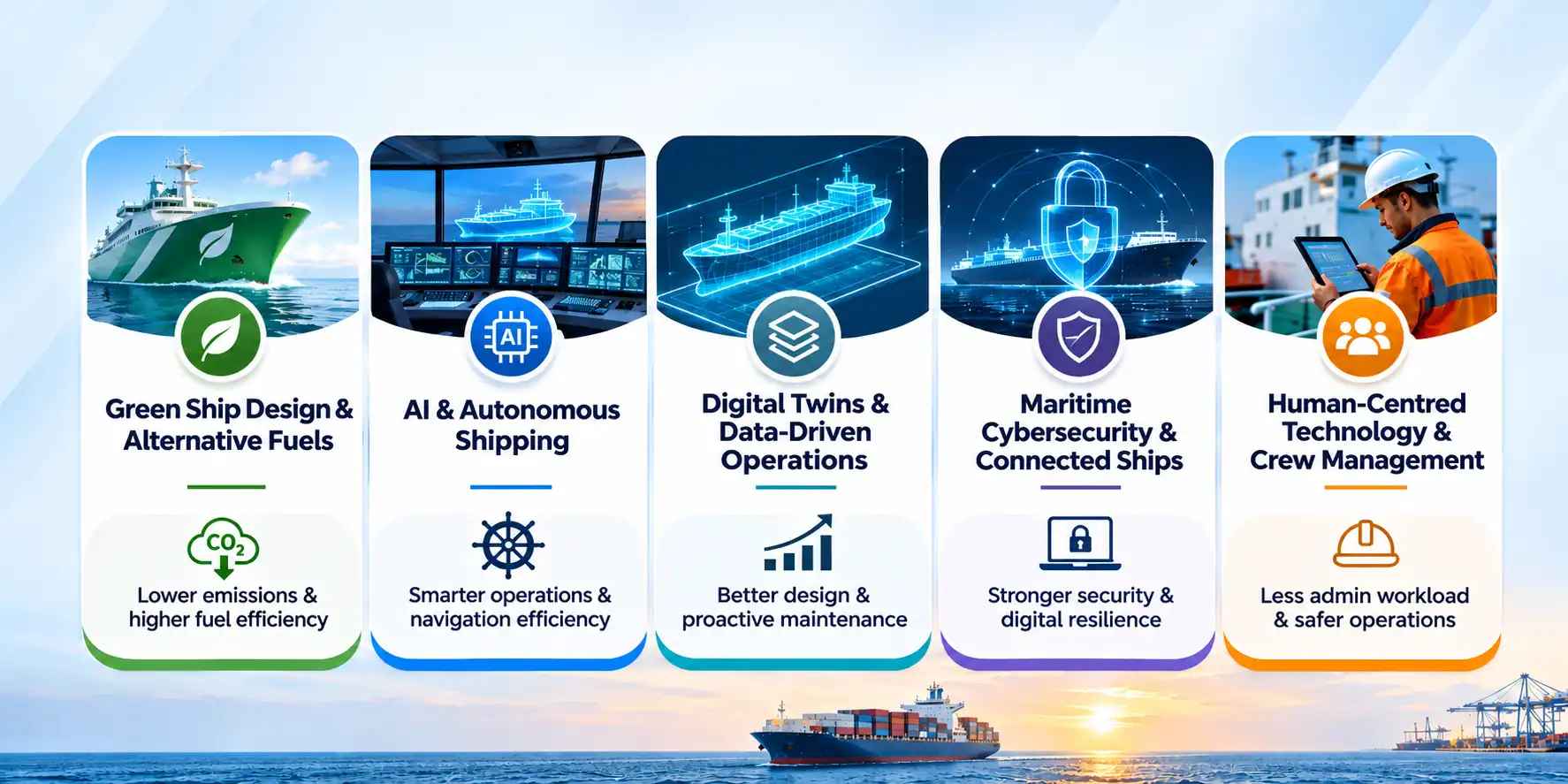
The table below summarises the five trends and their expected impact.
| Maritime Trend | Key Developments | Expected Industry Impact |
| Green Ship Design and Alternative Fuels | Energy-efficient hull design, alternative fuels and wind-assisted propulsion | Lower emissions and improved fuel efficiency |
| AI and Autonomous Shipping | AI navigation support, automation and remote vessel monitoring | Better operational decision-making and navigation efficiency |
| Digital Twins and Data-Driven Operations | Virtual vessel models, real-time sensor data and predictive analytics | Improved vessel design evaluation and maintenance planning |
| Maritime Cybersecurity and Connected Ships | Secure communication, data protection and integrated ship systems | Stronger digital resilience and reduced operational security risk |
| Human-Centred Technology and Crew Management | Digital workflows, electronic logbooks and automated onboard reporting | Reduced crew administrative load and improved onboard safety |
These are forward-looking trends based on current regulatory and technological developments, not guaranteed outcomes for every vessel.
How These Maritime Trends Will Impact Shipping Companies
Shipping companies will need to review maintenance requirements as these trends develop. Modern vessel equipment is increasingly sensor-integrated and software-dependent, changing how Marine Spare Parts Supply is sourced and maintenance is scheduled. Reliable relationships with experienced Marine Equipment Suppliers become more valuable as vessels adopt new technologies.
How Marine Suppliers Can Prepare for the Future of Shipping
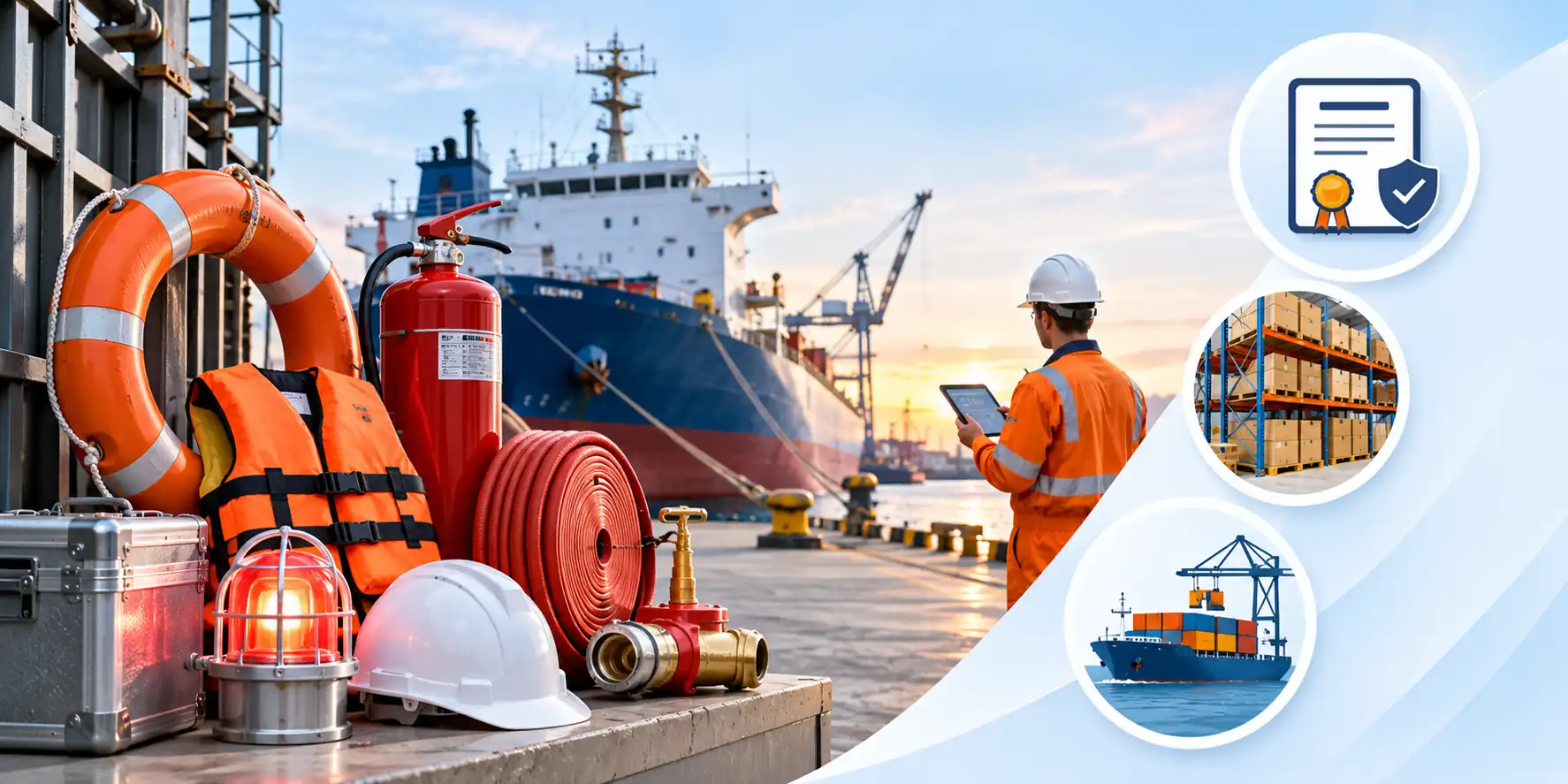
Marine suppliers must keep pace with changing vessel equipment requirements and updated safety standards. This includes Life Saving and Fire Fighting Appliances as new vessel types and operating regulations require updated safety certification. Maintaining a reliable stock of quality marine equipment and ensuring efficient Ship Supply Services at port remains the foundation of dependable vessel support.
Supporting Modern Vessel Operations with Aasutosh Marine
As these maritime trends 2027 reshape vessel requirements, the need for dependable marine supply services remains constant at every port call. Aasutosh Marine operates as a trusted Ship Chandler in Kandla & All Indian Ports, providing marine provisions, deck stores, engine stores and safety equipment to commercial vessels across major Indian ports.
Whether vessels require routine resupply or Underwater Ship Repair Services, Aasutosh Marine supports efficient port turnarounds and vessel readiness. Explore Aasutosh Marine’s vessel support services for your fleet.
Frequently Asked Questions
What are the biggest maritime industry trends expected in 2027?
Maritime trends 2027 focus on green ship design, AI and autonomous shipping, digital twins, maritime cybersecurity and human-centred crew management, all shaped by IMO regulations and the digital transformation of shipping.
How will green ship design and alternative fuels influence the shipping industry in 2027?
Shipbuilders are designing hulls for lower fuel consumption while methanol, ammonia and LNG advance alongside wind-assisted and hybrid propulsion systems across commercial shipbuilding.
How are artificial intelligence and autonomous shipping technology changing vessel operations?
AI systems support navigation, route optimisation and remote monitoring, with autonomous shipping developing within the IMO MASS framework under human supervision and professional maritime oversight.
What is digital twin technology, and how can it improve ship design and maintenance planning?
A digital twin is a virtual vessel model fed with real-time sensor data, allowing designers to evaluate performance before construction and operators to plan maintenance more accurately throughout a ship’s service life.
Why will maritime cybersecurity become more important for connected ships in 2027?
As vessels depend on integrated digital systems for navigation and operations, cybersecurity risk increases, making IMO-required cyber risk management a critical part of safe ship operations.