


Every vessel owner and ship manager eventually faces the same question below the waterline: how do you actually know what’s happening down there? A ship’s hull, propeller, rudder, and sea chests take a constant beating from marine growth, corrosion, and mechanical stress, but none of that is visible from the deck. The only way to know the real condition of these underwater components is through a proper underwater survey.
Traditionally, this meant sending a professional diver into the water with a camera and a torch. Instead of divers, more ships are using ROV underwater survey technology to inspect the hull without getting wet. Both approaches are still widely used, and both have a place in modern marine underwater inspection. The real question for a ship owner isn’t which one is “better” in the abstract, but which one is right for a specific vessel, port, and situation.
This guide breaks down how each method works, where each one shines, and how to decide between them.
Key Takeaways
- ROV underwater surveys use a remotely piloted vehicle with cameras and sensors, keeping divers out of the water while delivering fast, high-resolution video coverage of the hull, propeller, and sea chests.
- Diver-based underwater surveys rely on a trained commercial diver who can physically feel damage, access tight spaces, and carry out minor hands-on tasks during the same inspection.
- ROV inspections are generally safer, faster, and less weather-dependent, while diver-based inspections offer tactile precision and the ability to intervene on the spot.
- Both methods cover the same core components: hull, propeller, rudder, sea chests, and anodes.
- The right method depends on the vessel’s schedule, the port’s water conditions, and whether the survey needs to include physical repair work.
- Choosing an experienced provider for Underwater Services matters more than the technology alone, since interpreting what the camera or diver finds is what actually protects the vessel.
What Is an ROV Underwater Survey?
An ROV underwater survey uses a tethered, remotely operated vehicle equipped with high-definition cameras, lighting, and often sonar or thruster-mounted sensors to inspect submerged parts of a vessel. The ROV is lowered into the water and piloted from the surface by a trained operator, who watches a live video feed and directs the vehicle around the hull, propeller, rudder, sea chests, and other underwater structures.
Because the ROV is controlled from a control unit on deck or quayside, there is no diver in the water at all. The operator can pause on any section, zoom in on a suspicious patch of corrosion or fouling, and record continuous video and photographs that form the basis of the final report. This is essentially underwater video inspection carried out by a machine instead of a person, and it has become one of the most requested forms of ROV inspection services across major Indian ports.
What Is a Diver-Based Underwater Survey?
A diver-based underwater survey relies on a certified commercial diver who physically enters the water to examine the vessel’s submerged structures firsthand. Equipped with underwater lighting, cameras, and sometimes hand tools, the diver moves along the hull, propeller, rudder, and sea chests, visually assessing their condition and, where needed, performing minor tasks such as clearing debris or checking clearances by touch.
This is the older and more established method of underwater inspection, and it remains widely used because a diver brings something an ROV cannot: hands. A diver can physically feel pitting on a propeller blade, manually clear a fouled sea chest grating, or reach into a tight recess that a camera-equipped vehicle simply cannot access.

Difference Between ROV and Diver-Based Underwater Inspection
The core difference between these two approaches comes down to how the inspection is carried out, and what trade-offs that creates.
- Method of inspection: An ROV is piloted remotely, sending back live video and sensor data from the surface. A diver-based survey is a physical, in-water inspection carried out by a trained human.
- Safety: ROV underwater surveys eliminate the risks of diving in low-visibility harbours, near ship propellers, or in currents, which is especially useful in busy anchorages. Diver-based surveys, by contrast, depend on strict safety protocols, standby divers, and favourable water conditions to keep the diving team safe.
- Access and dexterity: This is where diver-based inspection often has the edge. A diver can physically manipulate parts, feel for subtle damage, and access confined spaces such as narrow sea chest recesses that an ROV’s thrusters and frame may not fit into.
- Speed and coverage: ROVs can typically cover large hull areas faster and can operate for longer stretches without fatigue, which matters on bigger commercial vessels. Research cited by the EU’s CORDIS project database found that a ship without proper antifouling protection can see fuel consumption rise by up to 40% within just six months, which is exactly why fast, repeatable inspection coverage matters for fleet operators trying to catch fouling early.
- Weather and water conditions: Diving operations are more sensitive to poor visibility, strong currents, and rough weather, all of which can delay or cancel a scheduled inspection. ROVs, being smaller and more maneuverable, can often work in conditions that would otherwise ground a dive team.
- Documentation: Both methods produce video and photographic records, but ROV footage tends to be steadier and easier to timestamp and geo-reference along the hull, which is useful when building a long-term hull condition monitoring file for a vessel.
Advantages of ROV Underwater Surveys for Vessels
For many commercial ship owners, the appeal of an ROV underwater survey comes down to a few practical benefits:
- No diver in the water, which removes exposure to propeller strikes, entrapment, and low-visibility hazards near a live vessel.
- Continuous, high-resolution video that can be reviewed frame by frame after the survey, rather than relying solely on a diver’s real-time verbal report.
- Faster turnaround for routine hull condition checks, especially on larger vessels where a full hull sweep would take a diver considerably longer.
- Operation in marginal weather, since a compact ROV can often be deployed when sea conditions would otherwise postpone a dive.
- Lower long-term operating risk, since there’s no need for standby divers, decompression planning, or diving medical clearances on every job.
This combination makes ROV inspection a strong fit for routine underwater ship inspection, pre-purchase surveys, insurance-driven condition checks, and situations where a vessel needs to stay on schedule without compromising on inspection quality.
Benefits of Diver-Based Underwater Surveys
Despite the rise of ROV technology, diver-based inspection hasn’t gone anywhere, and for good reason:
- Physical assessment, letting a diver feel corrosion, pitting, or looseness that a camera alone might miss.
- Hands-on minor intervention, such as clearing a blocked sea chest grating or freeing debris from around a propeller, during the same visit as the inspection.
- Access to tight, complex spaces where an ROV’s size and tether make maneuvering difficult.
- Judgment calls in real time, since an experienced diver can adapt their inspection route on the spot based on what they find.
Diver-based surveys are often the preferred choice for detailed propeller and rudder inspection, sea chest clearing, and situations that combine inspection with light underwater repair work in a single mobilisation.
What Can Be Inspected Underwater?
Whether carried out by ROV or diver, a professional underwater survey typically covers the same set of critical components:
- Hull plating: Checking for corrosion, coating breakdown, dents, and marine growth
- Propeller and rudder: Assessing blade condition, pitting, cavitation damage, and rudder clearances
- Sea chests and gratings: Inspecting for blockages, fouling, and structural damage
- Bow thrusters and other underwater fittings
- Anodes: Verifying wear rates to plan cathodic protection replacement
These findings feed directly into vessel maintenance planning, helping ship managers decide whether a hull needs cleaning, a propeller needs polishing, or a dry-docking should be brought forward. This is where a survey stops being just a report and becomes a practical input into scheduling Underwater Ship Repairs before a minor issue turns into an expensive one.
Choosing Between ROV and Diver-Based Underwater Survey
There’s no single correct answer here. The right choice depends on the vessel, the port, and the purpose of the inspection.
An ROV underwater survey tends to make more sense when:
- The inspection is routine or scheduled, without an expectation of physical intervention
- Water visibility or current conditions make diving riskier than usual
- The vessel needs a fast turnaround without waiting on weather windows
- A detailed, reviewable video record is required for insurance, class, or owner documentation
A diver-based underwater survey tends to make more sense when:
- The job combines inspection with hands-on tasks like clearing a sea chest or minor propeller work
- Tight spaces need to be physically accessed
- A detailed tactile assessment of surface condition is needed alongside the visual check
Growing Demand for Underwater Inspection Technology
The shift toward ROV-based inspection isn’t happening in isolation. According to market research published via GII Korea, the global underwater robotics market, which includes ROVs used for inspection, maintenance, and repair, was valued at roughly USD 7.03 billion in 2024 and is projected to reach USD 25.33 billion by 2033. That growth shows how quickly ports and fleet operators are adopting remote inspection technology alongside traditional diving. It doesn’t replace divers; it just gives ship owners more options.
Getting the Right Underwater Survey for Your Vessel
Choosing between a ROV and a diver is about matching the method to what the vessel needs now. A routine hull check ahead of a charter might call for a quick ROV pass, while a sea chest that’s showing signs of blockage might need a diver on the tools. What matters most is working with a team that understands both methods and can recommend the right one honestly, rather than defaulting to whichever service they happen to offer.
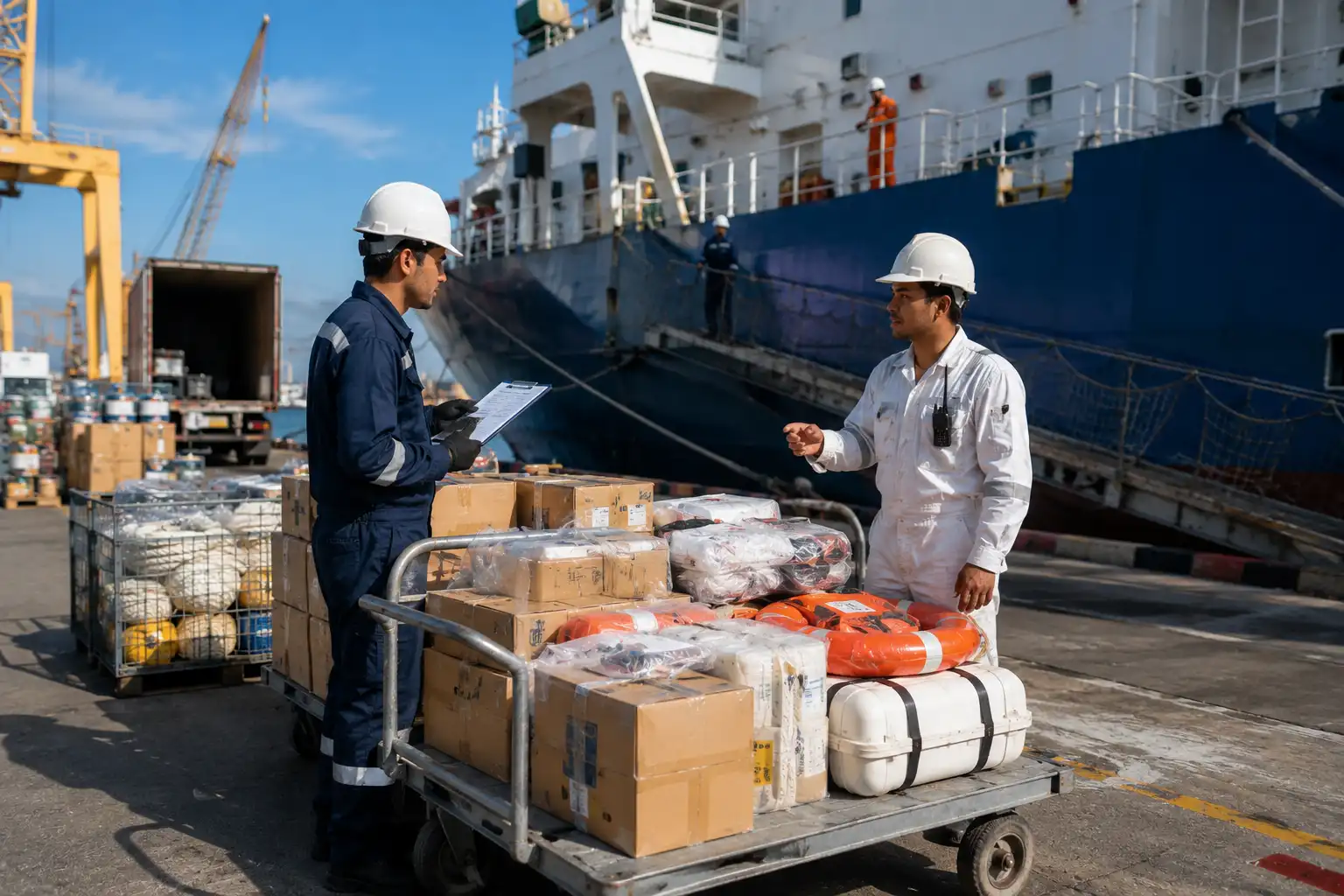
As a trusted Ship Chandler in Kandla & All Indian Ports, Aasutosh Marine coordinates underwater inspection and repair work alongside the rest of a vessel’s port call, so survey findings can move straight into action without losing time. From routine condition checks to more involved Ship Repairs, having one point of contact for the full inspection-to-repair cycle keeps a vessel’s turnaround at port efficient and its underwater components properly maintained between dry-dockings.
Frequently Asked Questions
What is the difference between an ROV underwater survey and a diver-based survey?
An ROV survey is carried out by a remotely piloted underwater vehicle with cameras and sensors, while a diver-based survey is conducted by a commercial diver who physically enters the water to inspect the vessel.
What are the main advantages of ROV underwater inspections?
ROV inspections keep personnel out of the water, offer continuous high-resolution video, and can often work in conditions that would delay a dive team, making them well suited to routine underwater inspection services.
When is a diver-based underwater survey preferred?
Diver-based surveys are preferred when the job needs hands-on assessment or minor intervention, such as clearing a sea chest, or when the diver needs to access very tight underwater spaces.
Can ROVs inspect ship hulls, propellers and rudders?
Yes. Modern ROVs are regularly used for hull condition assessment, propeller and rudder inspection, and sea chest checks, and are a core part of many ROV underwater inspection programmes.
Are ROV underwater surveys safer than diver-based inspections?
Generally, yes, since no personnel enter the water, which removes risks like low visibility, currents, and proximity to the vessel’s propeller. Diver-based surveys remain safe when carried out under proper protocols by certified commercial divers.