

The marine industry faces persistent operational pressures: maintaining vessel safety, controlling rising costs, managing maintenance across large fleets and improving efficiency in complex port environments. Autonomous technology in the marine industry is increasingly being applied to address these challenges through AI, sensor systems, automation and robotics.
Key Takeaways
- Autonomous technology in the marine industry applies AI, sensors and robotics to real operational challenges in modern commercial shipping.
- AI-assisted navigation systems support faster, more informed decisions for onboard and shore-based operating teams.
- Predictive maintenance tracks equipment data to identify potential failures before they cause unplanned vessel downtime.
- Remote monitoring gives fleet managers continuous vessel performance visibility across voyages and port calls.
- Cybersecurity, trained professional oversight and compliance with IMO MASS regulations remain essential alongside vessel automation.
What Is Autonomous Technology in the Marine Industry?
Autonomous marine technology covers AI-powered navigation systems, sensor-based monitoring, automated control platforms and robotics applied to vessel operations. It ranges from remotely operated vessels to partially autonomous systems that assist human operators with navigation, maintenance alerts and performance tracking. The International Maritime Organization (IMO) classifies these vessels under the category of Maritime Autonomous Surface Ships (MASS). Marine equipment suppliers keep vessels efficient, regardless of the level of onboard automation. Explore Aasutosh Marine’s vessel support services for your fleet.
Top 5 Ways Autonomous Technology is Solving Marine Industry Challenges
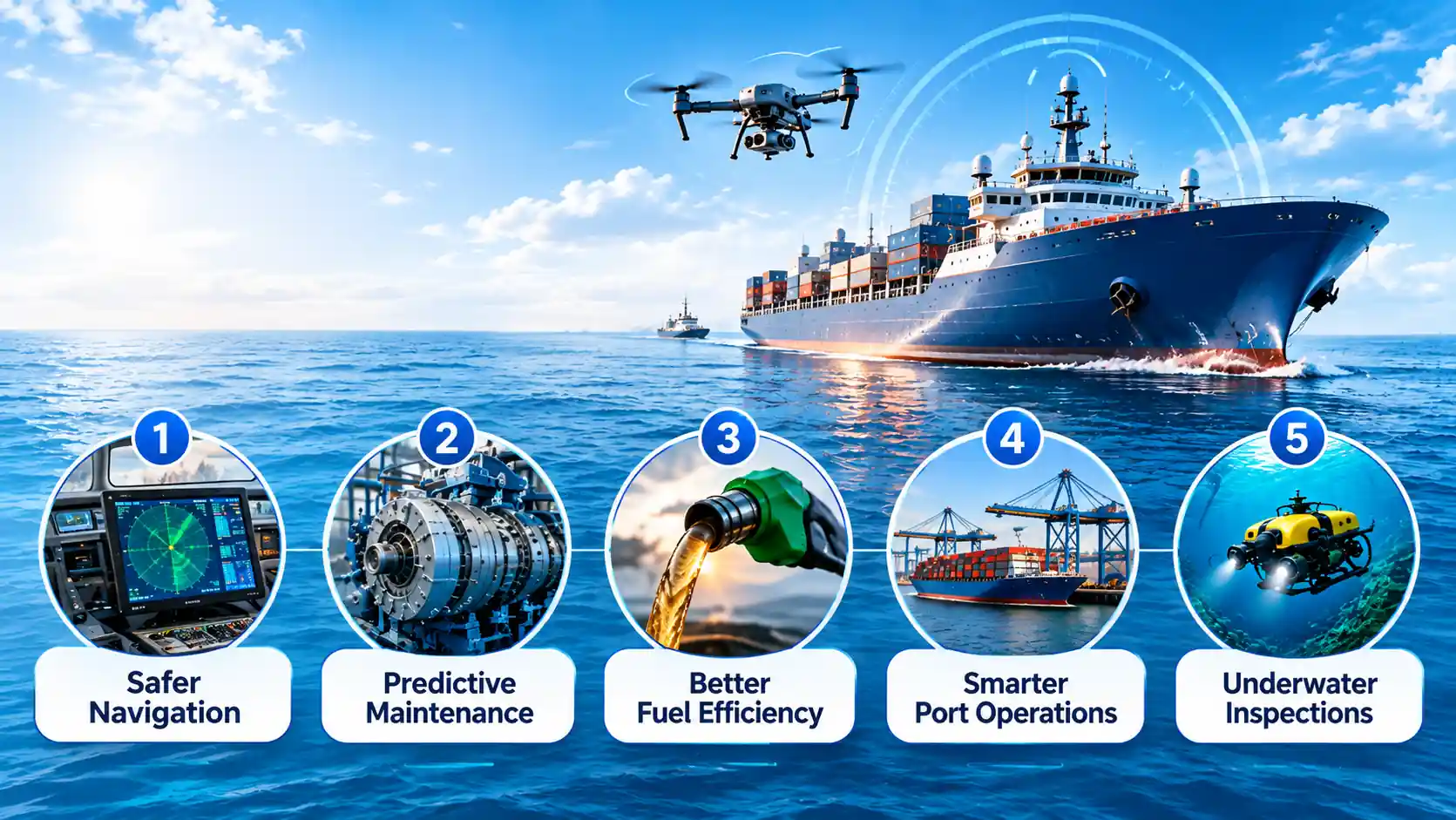
Here are five practical applications making a measurable difference in modern shipping operations.
1. Improving Vessel Navigation and Safety
AI-powered navigation systems process real-time sensor data to monitor surrounding vessels, identify potential obstacles and support collision avoidance. Automated alerts assist onboard and shore-based teams in making faster, more informed navigational decisions.
2. Reducing Equipment Failures Through Predictive Maintenance
Automated monitoring systems track engine performance, vibration levels and machinery data continuously. Predictive maintenance helps engineering teams address issues before they escalate into major failures, reducing unplanned vessel downtime.
3. Improving Fuel Efficiency and Reducing Operational Costs
Intelligent route optimisation systems use weather data, ocean current information and engine performance analytics to suggest more fuel-efficient passages. Continuous fuel monitoring supports data-informed adjustments that reduce operational costs across a fleet.
4. Enhancing Vessel Monitoring and Port Operations
Real-time vessel tracking and remote monitoring systems give shore-based teams continuous visibility of fleet status and vessel performance. At ports, automated coordination systems support more efficient turnaround by reducing manual communication between vessels, terminals and logistics teams.
5. Transforming Underwater Inspections Through Marine Robotics
Remotely operated vehicles (ROVs) and underwater drones inspect hulls, propellers and submerged components without requiring divers in every situation. This allows faster, safer assessment of vessel condition in operational ports where direct diver access is difficult.
Autonomous Marine Technology vs Traditional Marine Operations
The table below summarises key differences between conventional and autonomous marine operations.
Feature |
Traditional Marine Operations |
Autonomous Technology |
| Navigation | Primarily human-operated | AI-assisted navigation and monitoring |
| Vessel Monitoring | Manual and scheduled checks | Continuous remote monitoring |
| Maintenance | Often time-based or reactive | Predictive maintenance systems |
| Fuel Efficiency | Depends on operational decisions | Data-assisted route and engine optimisation |
| Safety | Relies heavily on onboard monitoring | Sensors and automated alerts support safety |
| Inspections | Manual inspection processes | Robotic and remote inspection technologies |
| Operational Efficiency | More manual coordination | Greater automation of selected tasks |
Autonomous systems are designed to assist qualified operators rather than replace professional maritime expertise.
Challenges in Adopting Autonomous Technology in Shipping
High implementation costs, the complexity of integrating new systems with existing vessel infrastructure and the need for maritime cybersecurity measures all require careful planning. International regulatory frameworks, including IMO guidelines on MASS, continue to evolve as autonomous vessel capabilities develop.
The Future of Autonomous Technology in Marine Industry
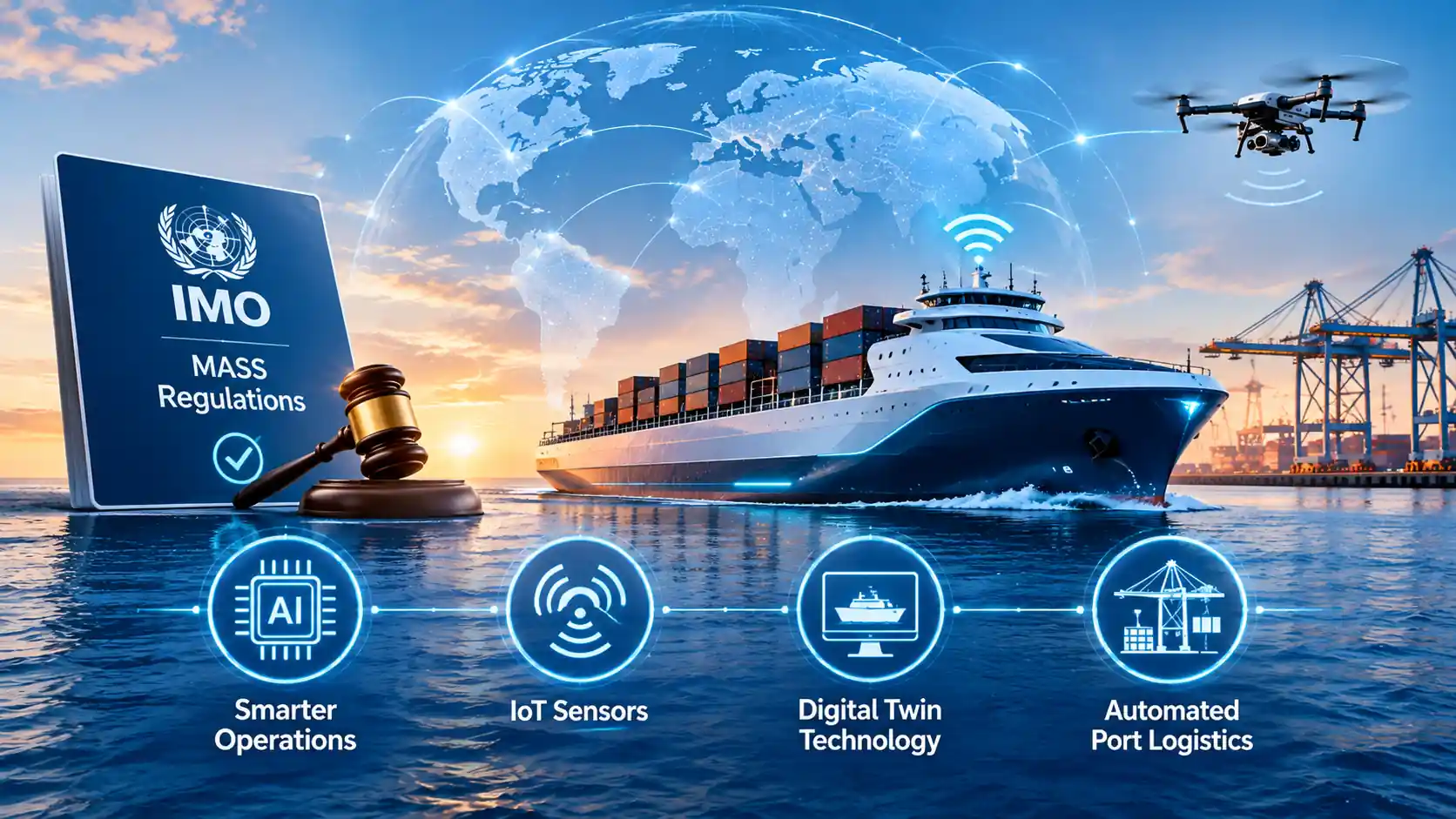
The IMO’s ongoing work on MASS regulations is shaping how autonomous vessels will operate commercially. As AI, IoT sensors and digital twin technology mature, shipping companies are exploring broader automation across fleet management, port logistics and vessel maintenance operations.
Aasutosh Marine provides Ship Supply Services, Ship Maintenance Services to commercial vessels at Indian ports.
Supporting Modern Vessel Operations with Aasutosh Marine
While autonomous technology reshapes maritime operations, the need for reliable marine supply services remains constant. As a trusted Ship Chandler in Kandla & All Indian Ports, Aasutosh Marine ensures vessels receive the provisions, deck and engine stores, safety equipment and spare parts needed to maintain operational readiness at every port call.
Frequently Asked Questions
What is autonomous technology in the marine industry, and how does it work?
Autonomous technology in the marine industry encompasses AI-powered navigation, sensor-based monitoring, automated control platforms and robotics, ranging from remote assistance tools to partially autonomous systems that support human operators.
How do autonomous ships and AI-powered navigation systems improve vessel safety?
AI navigation systems process real-time sensor data to monitor surrounding vessels and obstacles, providing automated alerts that support faster decision-making by onboard and shore-based operators.
How does predictive maintenance help reduce equipment failures and vessel downtime?
Automated monitoring tracks machinery performance data continuously, identifying deviations from normal parameters so engineering teams can address potential issues before they cause major failures.
Can autonomous marine technology help reduce fuel consumption and operational costs?
Intelligent route optimisation systems use weather, ocean current and engine performance data to suggest more fuel-efficient passages, supporting cost reduction across fleet operations.
How are underwater robots and remotely operated vehicles (ROVs) used for ship inspections?
ROVs and underwater drones inspect hulls, propellers and submerged components, reducing reliance on divers in many situations and allowing faster assessment of vessel condition at operational ports.