

Port congestion, vessel waiting time and cargo delays remain persistent challenges in global shipping. Smart ports integrate digital technologies to address these challenges directly. AI, IoT and automation are reshaping how vessels, terminals and shipping companies coordinate to move cargo efficiently in 2027.
Key Takeaways
- Smart ports use AI, IoT and automation to improve vessel scheduling, cargo handling and maritime logistics.
- AI-powered predictive analytics supports operational planning and reduces unplanned vessel downtime across commercial shipping.
- IoT sensors provide real-time monitoring of cargo, terminal equipment and vessel movements during port operations.
- Port automation improves cargo throughput and reduces manual handling for more efficient vessel turnarounds.
- India’s major commercial ports are investing in digital infrastructure to handle growing trade volumes.
- Reliable marine supply and timely vessel provisioning remain essential to efficient port operations.
What Are Smart Ports and How Do They Work?
Smart ports use connected digital systems to manage vessel scheduling, cargo handling and communication in real time. Sensors, automation and Marine Equipment Suppliers solutions link terminals, vessels and port authorities through integrated digital infrastructure, improving coordination across the supply chain.
Why Smart Ports Are Becoming Important in 2027
Growing shipping volumes and tighter delivery schedules are placing greater demands on port operations. Coordinating Marine Provisions Supply, vessel scheduling and cargo across busy commercial ports requires real-time data that traditional systems cannot reliably provide. Smart port technology helps reduce vessel waiting times and improve supply chain visibility.
Top Technologies Transforming Smart Ports and Maritime Logistics
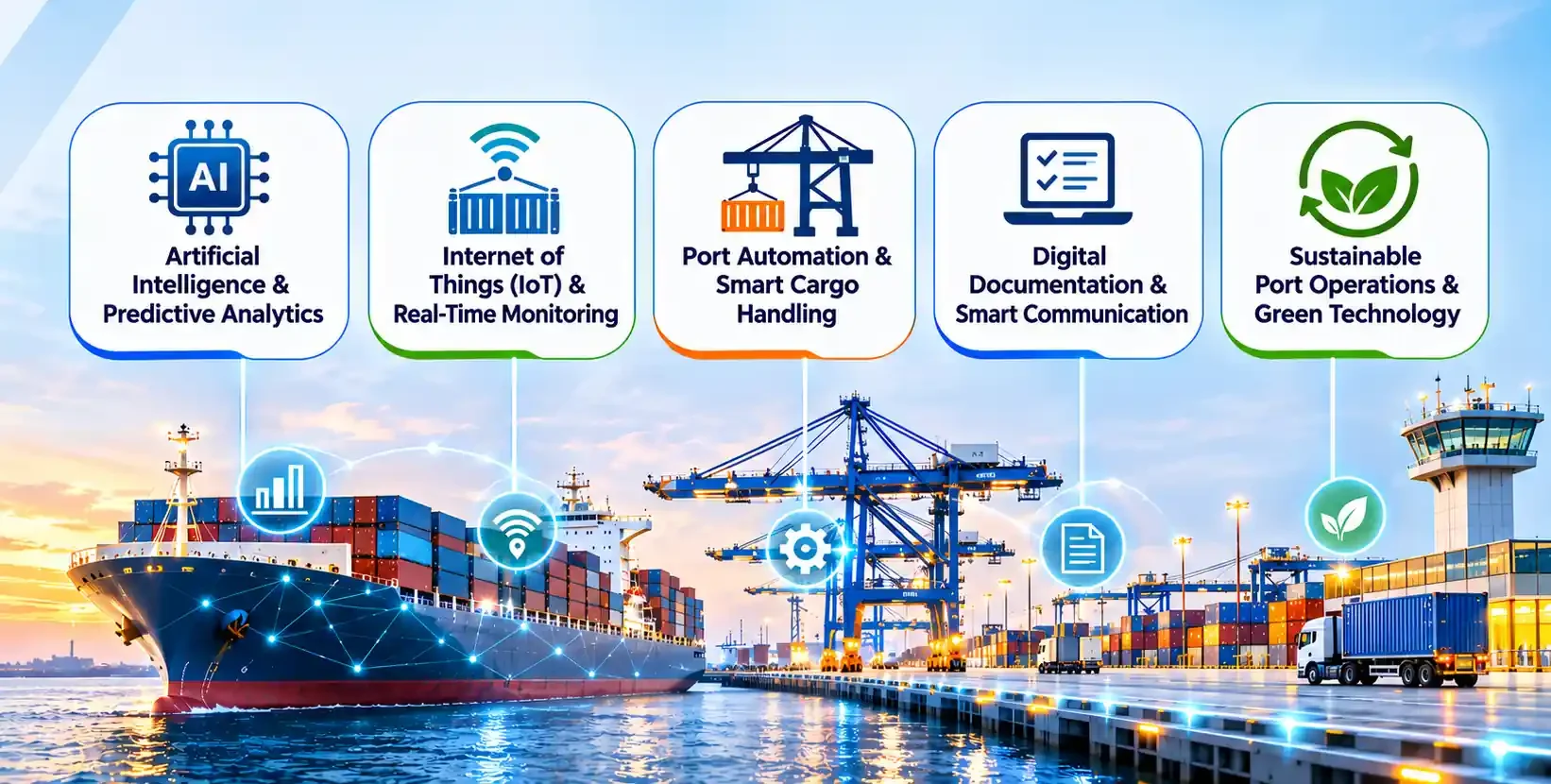 Five key technologies are driving smart port development and improving maritime logistics.
1. Artificial Intelligence and Predictive Analytics
AI systems analyse vessel arrival data and cargo records to support better operational planning. Predictive analytics improves scheduling for Ship Maintenance Services, helping operators identify equipment issues and reduce costly unplanned downtime.
2. Internet of Things (IoT) and Real-Time Monitoring
Connected sensors monitor cargo conditions, terminal equipment and vessel movements in real time. IoT systems support Spares Clearing and Consolidation workflows, giving procurement teams live visibility of onboard inventory before port arrival.
3. Port Automation and Smart Cargo Handling
Automated cranes and terminal management systems reduce manual handling and improve cargo throughput. Automation improves the loading and delivery of Deck and Engine Stores, reducing coordination time during vessel port turnarounds.
4. Digital Documentation and Smart Communication
Electronic documentation replaces paper processes for customs, manifests and port clearance. Digital platforms simplify Marine Spare Parts Supply coordination, allowing orders to be processed and tracked through integrated port and vessel management systems.
5. Sustainable Port Operations and Green Technology
Smart energy management systems monitor electricity consumption, fuel use and emissions across port facilities. Data-driven resource planning helps ports reduce environmental impact and supports IMO sustainability goals for shipping.
The table below compares traditional and smart port operations across key areas.
|
Feature |
Traditional Port Operations | Smart Port Operations |
|
Vessel Scheduling |
Manual coordination and planning | Digital scheduling and real-time updates |
|
Cargo Handling |
Labour-intensive processes | Automated cargo handling systems |
|
Vessel Monitoring |
Limited or periodic tracking | Real-time vessel monitoring |
|
Documentation |
Paper-based documentation |
Digital documentation and processing |
| Communication | Multiple manual communication channels |
Integrated digital communication systems |
| Cargo Tracking | Manual tracking and reporting |
Smart tracking and data integration |
| Port Management | Conventional management systems |
AI-assisted operational management |
| Sustainability | Limited energy optimisation |
Data-driven energy and resource management |
Challenges in Adopting Smart Port Technology
Implementing smart port infrastructure requires significant investment in digital systems and skilled technical staff. Cybersecurity risks increase as port and vessel systems become more networked. Smart infrastructure must integrate with existing services including Underwater Ship Repair Services and vessel support operations, requiring coordination between digital platforms and onshore teams.
The Future of Smart Ports and Maritime Logistics in India
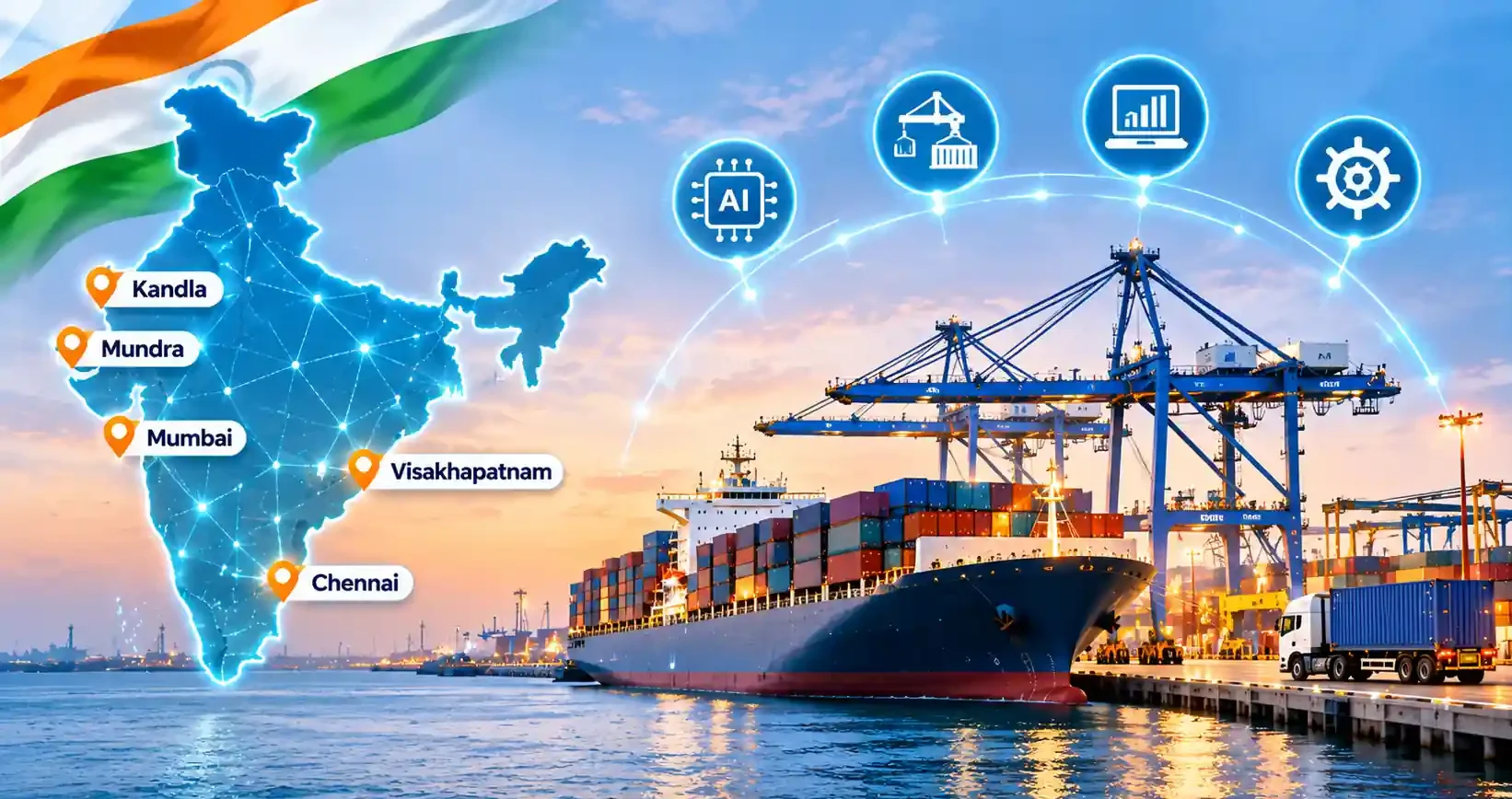 India’s major commercial ports including Kandla, Mundra, Mumbai, Chennai and Visakhapatnam are investing in digital infrastructure to handle growing trade volumes. This growth supports faster vessel turnarounds and more efficient Ship Supply Services at key Indian gateways. AI, automation and digital logistics adoption is expected to accelerate across Indian port operations through 2027 and beyond.
Supporting Modern Port Operations with Aasutosh Marine
As a trusted Ship Chandler in Kandla & All Indian Ports, Aasutosh Marine provides marine provisions, deck stores, engine stores, safety equipment and spare parts to commercial vessels across major Indian ports. Reliable vessel supply remains essential for smooth port operations alongside smart technology.
Explore Aasutosh Marine vessel supply services for your fleet’s port call requirements across India.
Frequently Asked Questions
What are smart ports and how do they work?
Smart ports use digital systems including AI, IoT and automation to manage vessel scheduling, cargo handling and communication in real time, improving operational efficiency across the maritime supply chain.
How is technology transforming maritime logistics in 2027?
AI, IoT sensors, automation and digital documentation are reducing delays, improving cargo visibility and enabling faster vessel turnarounds across commercial ports and maritime supply chains.
What are the main benefits of smart ports for shipping companies?
Smart ports reduce vessel waiting times, improve cargo tracking and streamline documentation, reducing delays and improving supply chain coordination for shipping companies.
How do AI and IoT improve port operations?
AI supports predictive operational planning, while IoT sensors provide real-time monitoring of cargo, vessel movements and terminal equipment, improving decision-making across port and vessel operations.
What is the future of smart ports and maritime logistics in India?
India’s major ports are investing in digital infrastructure to support growing trade volumes, with AI and automation expected to improve vessel turnaround times and supply chain efficiency.