

Modern commercial vessels rely on digital systems for navigation, cargo management and ship-to-shore communication. This connectivity introduces maritime cyber security risks. Phishing, malware and ransomware increasingly target shipping companies, making practical cybersecurity essential for safe vessel operations.
Key Takeaways
- Maritime cyber security protects vessel navigation, cargo and OT systems from phishing, malware and ransomware threats.
- IMO Resolution MSC.428(98) requires cyber risk management integrated into every vessel’s Safety Management System.
- Strong passwords, multi-factor authentication and restricted access reduce unauthorized entry to critical onboard networks.
- Separating OT systems from general IT networks limits the spread of cyber incidents across vessel infrastructure.
- Regular crew cybersecurity training is among the most effective defenses against human-related cyber incidents.
- A documented cyber incident response plan with assigned responsibilities and regular drills improves onboard resilience.
Why Is Maritime Cyber Security Important for Modern Vessels?
OT systems controlling navigation and Life Saving and Fire Fighting Appliances are now networked alongside business IT on modern vessels. A cyberattack can disrupt navigation, compromise cargo data and create safety risks. IMO MSC.428(98) requires cyber risk management integrated into Safety Management Systems.
8 Clever Tips to Improve Your Vessel’s Maritime Cyber Security
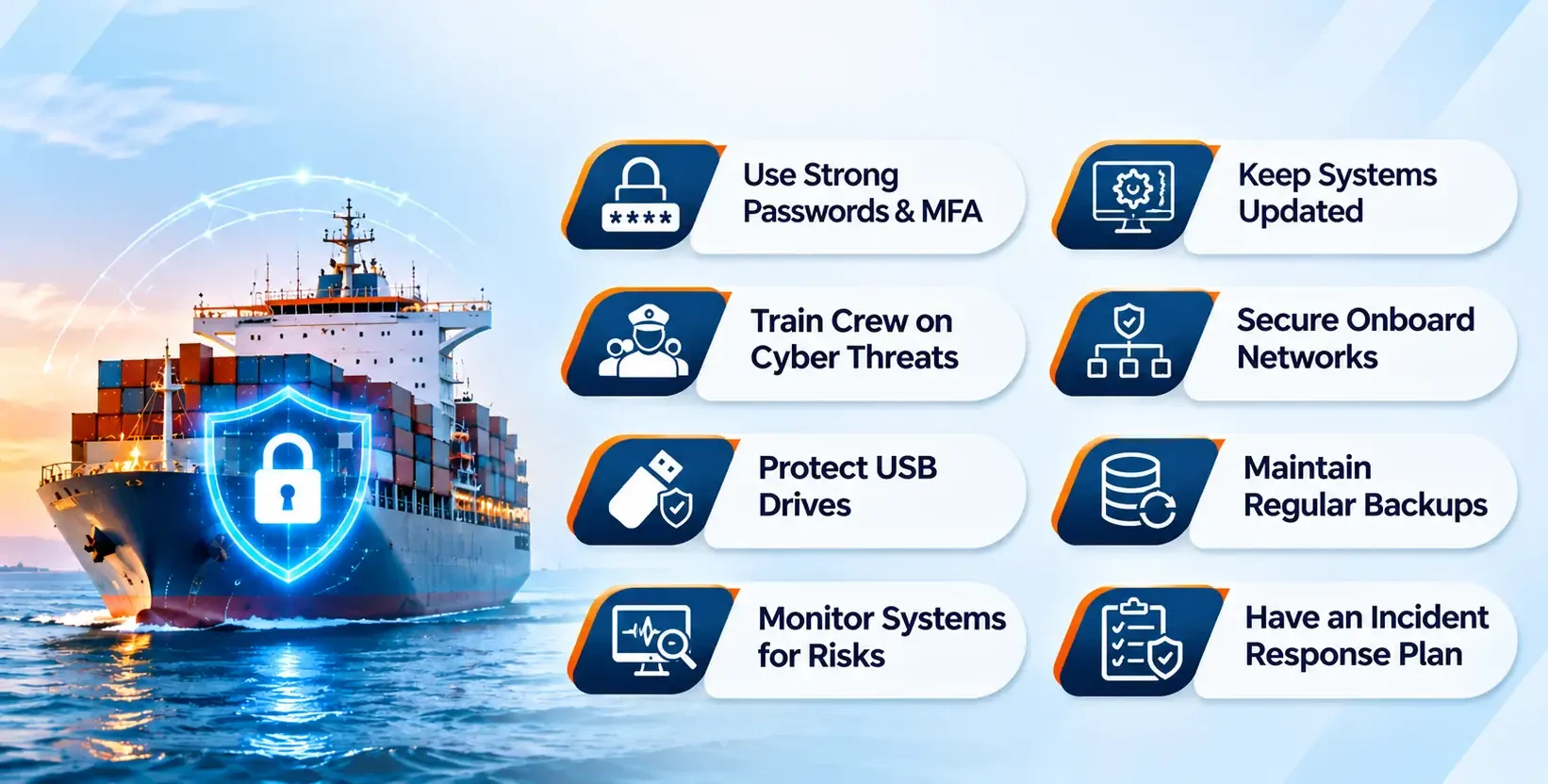 These eight measures help protect onboard IT and OT systems from cyber threats.
1. Use Strong Passwords and Multi-Factor Authentication
Create unique passwords for all onboard systems and avoid sharing credentials between crew. Enable multi-factor authentication where supported and restrict system access based on each user’s responsibilities.
2. Keep Software and Systems Updated
Source patches only from verified Marine Equipment Suppliers and approved manufacturers. Follow proper procedures before applying any changes to navigation or operational systems to avoid introducing vulnerabilities.
3. Train Crew Members to Recognise Cyber Threats
Human error remains a key entry point for cyber incidents. Train crew to identify phishing emails and suspicious links, and establish clear procedures for reporting unusual activity to shore-based teams.
4. Secure Onboard Networks and Connected Devices
Separate OT systems controlling navigation and Marine Safety Equipment from general crew internet access. Use firewalls, restrict unauthorised device connections and protect ship-to-shore communication from external interference.
5. Protect USB Drives and Removable Media
Removable media is a frequent source of onboard malware. Scan external storage before use, avoid unknown USB devices on shipboard computers and follow company-approved data transfer procedures.
6. Maintain Regular Data Backups
Secure backups protect records essential for Ship Maintenance Services teams and vessel compliance. Store copies separately and verify that critical data can be restored quickly following any system failure.
7. Monitor Vessel Systems for Suspicious Activity
Review access logs and Vessel Maintenance systems regularly for unusual behaviour. Unexpected login attempts or unfamiliar system changes may indicate a developing cyber incident requiring prompt reporting.
8. Develop a Maritime Cyber Incident Response Plan
Prepare clear steps for detecting, containing and recovering from cyber incidents. Assign responsibilities to onboard and shore-based teams, conduct regular drills and keep incident procedures current and accessible.
The table below summarises all eight cybersecurity practices and their benefits.
|
Cybersecurity Practice |
Recommended Action | Expected Benefit |
|
1. Strong Passwords and MFA |
Use unique passwords and enable multi-factor authentication | Reduces unauthorised access |
|
2. Regular Software Updates |
Install verified security patches and updates | Addresses known vulnerabilities |
|
3. Crew Cybersecurity Training |
Train crew to identify phishing and suspicious links | Reduces human-related cyber risks |
|
4. Secure Shipboard Networks |
Separate critical OT from general internet networks |
Limits spread of cyber incidents |
| 5. Protect Removable Devices | Scan USB drives and restrict unauthorised devices |
Reduces malware infection risks |
| 6. Backup Important Data | Maintain secure, regularly tested backups |
Supports data recovery after incidents |
| 7. Monitor Vessel Systems | Review system activity and access logs regularly |
Helps identify unusual activity |
| 8. Cyber Incident Response Plan | Establish reporting, containment and recovery steps |
Improves response and resilience |
Common Cyber Security Mistakes Shipowners Should Avoid
Weak passwords, ignored software updates and unrestricted USB access are common cybersecurity failures on vessels. Poor digital security affects vendor communications including Marine Spare Parts Supply orders. Operating without crew training or a documented response plan significantly increases onboard cyber risk.
Maritime Cyber Security Regulations and Industry Guidelines
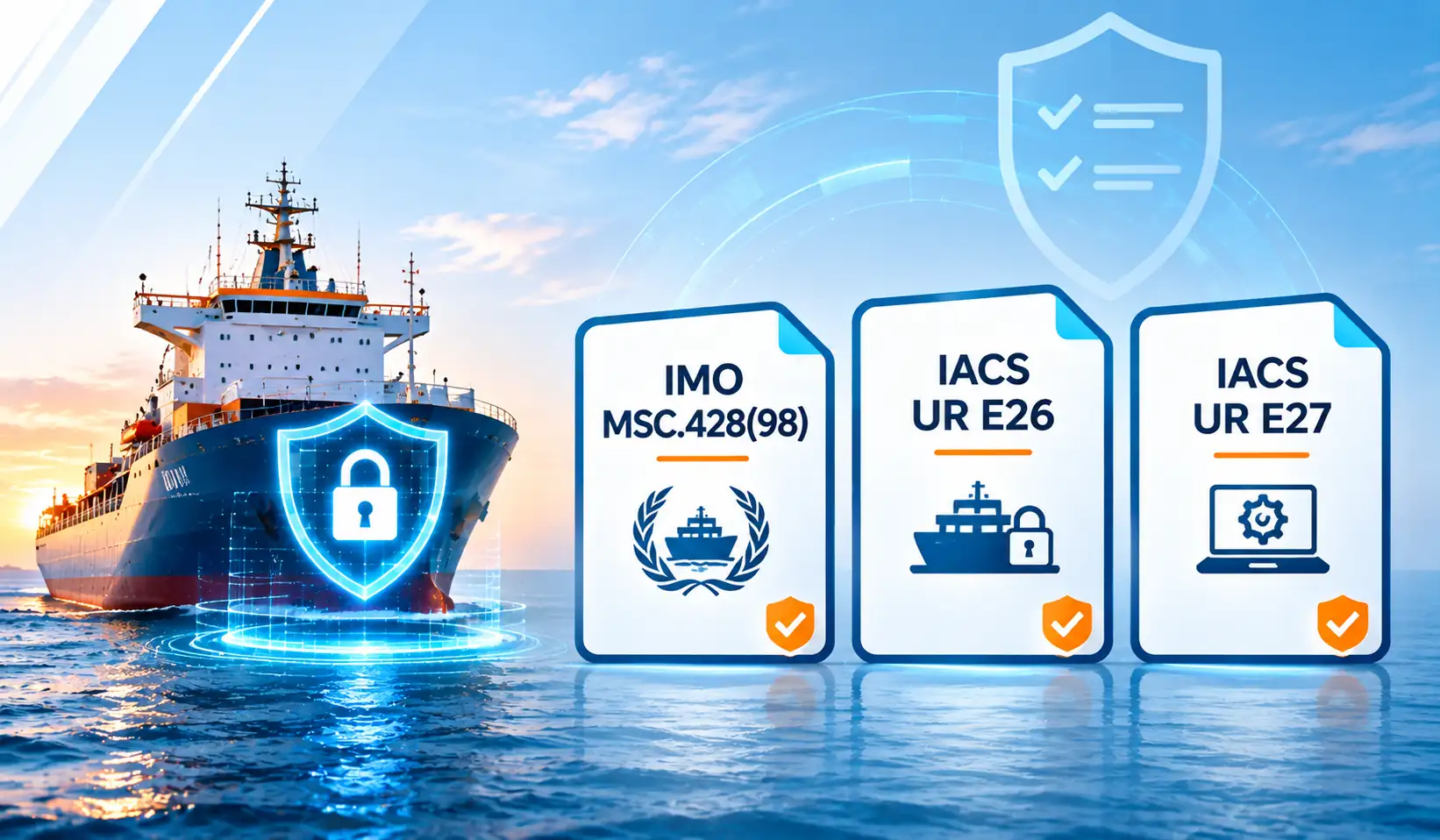 IMO Resolution MSC.428(98) requires cyber risk management integrated into Safety Management Systems. IACS UR E26 and UR E27 establish cyber resilience standards for vessels and onboard systems. Following this guidance alongside flag-state requirements supports compliance and reduces vessel cyber risk.
How Better Cyber Security Supports Safer Maritime Operations
Strong cybersecurity protects vessel systems and crew safety. Reliable digital infrastructure supports Vessel Maintenance, accurate cargo management and uninterrupted communication between vessels and ports, reducing costly operational disruptions.
Supporting Reliable Maritime Operations with Aasutosh Marine
As a trusted Ship Chandler in Kandla & All Indian Ports, Aasutosh Marine provides marine provisions, deck stores, engine stores, safety equipment and spare parts to commercial vessels across major Indian ports.
From Ship Supply Services to vessel equipment support, Aasutosh Marine ensures vessels receive the right provisions at every port call. Explore Aasutosh Marine’s services for your fleet.
Frequently Asked Questions
What is maritime cyber security, and why is it important for ships?
Maritime cyber security protects vessel IT and OT systems from cyber threats. A successful attack can disrupt navigation, compromise crew safety and cause significant damage to shipping companies.
What are the most common cyber threats faced by commercial vessels?
Common threats include phishing emails targeting crew, malware from infected USB devices, ransomware on vessel management systems and unauthorised access attempts on onboard networks.
How can shipowners protect onboard navigation and communication systems from cyberattacks?
Separating OT systems from general networks, applying security patches and restricting access to authorised personnel all help protect navigation and communication systems.
Why is crew cybersecurity training important for preventing maritime cyber threats?
Many incidents begin with crew clicking phishing links or connecting infected devices. Training helps seafarers identify suspicious activity and follow correct reporting procedures.
What cybersecurity measures should shipping companies follow to protect vessel data and onboard systems?
Shipping companies should implement strong passwords, maintain backups, segment networks, train crew, keep systems updated and prepare a cyber incident response plan aligned with IMO guidelines.