

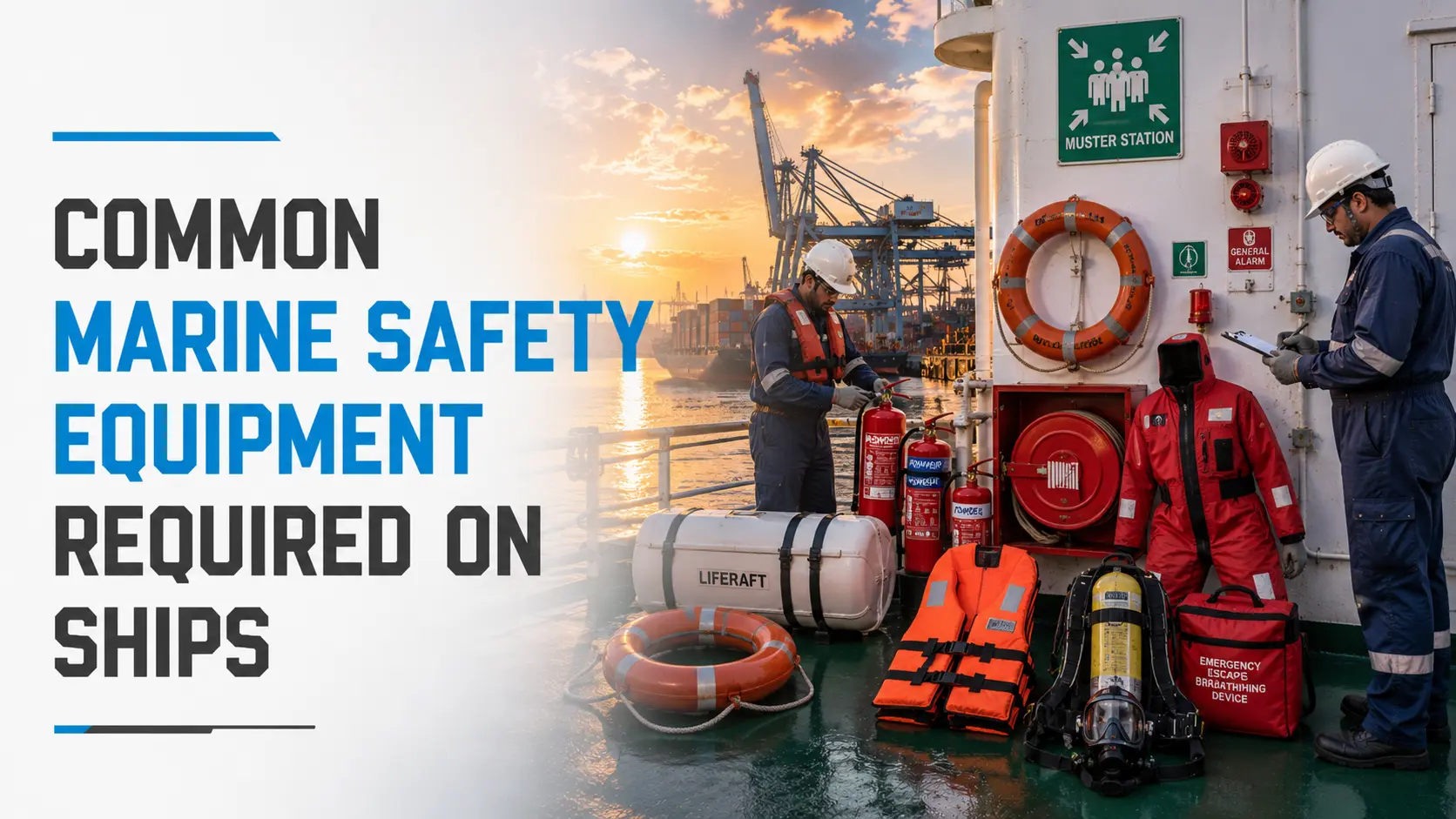
The ocean is one of the most unforgiving environments on Earth. Whether it’s a massive cargo vessel crossing international waters or a coastal patrol boat, every ship carries a set of critical tools designed to protect lives, prevent disasters, and ensure rapid response during emergencies. According to the International Maritime Organization (IMO), approximately 80% of maritime accidents are caused by human error. As a result, properly maintained marine safety equipment is the final safeguard when things go wrong.
This blog post talks about the important safety gear that all ships must have and why it’s important.
Key Takeaways
- 80% of maritime accidents are caused by human error, making well-maintained safety equipment the most critical backup system on any vessel.
- Fire is one of the biggest dangers at sea, killing about 9% of all mariners. You must have proper fire fighting systems and practice drills all the time.
- Cargo ships are the most at risk. Bulk carriers and cargo vessels are responsible for most ship losses around the world, so they need extra safety systems on top of what is required by law.
- Over 100,000 commercial ships operate around the world, carrying 90% of the world’s trade. Because of their size, making sure that all of these ships follow safety rules is a global priority.
- Partnering with a certified marine safety equipment supplier ensures all gear meets IMO, SOLAS, and ISO standards with proper servicing and replacements.
Why Is Marine Safety Equipment Important?
Maritime safety equipment exists to minimize risk in environments where help can be far away and conditions can deteriorate rapidly. This is very important because of how big global shipping is. The world’s merchant fleet carries more than 90% of all global trade, and there are always more than 100,000 commercial vessels in use.
International maritime law, mostly set by SOLAS (Safety of Life at Sea), requires all commercial ships to have certain safety equipment. According to the European Maritime Safety Agency (EMSA), there were 2,943 marine casualties and incidents reported in European waters alone in a recent annual reporting period. Non-compliance with safety equipment requirements can result in detentions, fines, or in the worst case, preventable loss of life.
Essential Marine Safety Equipment List for Ships
Here is a list of essential marine safety equipment that you should know about:
1. Life-Saving Appliances (LSA)
Life-saving appliances are the most critical category of maritime safety equipment. Data from the IMO’s Global Integrated Shipping Information System (GISIS) shows that inadequate or poorly maintained LSA has been a contributing factor in a significant proportion of fatal maritime accidents worldwide.
These include:
- Lifeboats and rescue boats that can hold the whole crew, can right themselves, and are fire-resistant.
- Life rafts are inflatable platforms that are used in emergencies when lifeboats can’t be launched.
- Every person on board is given their own personal flotation device (PFD).
- Immersion suits keep you from getting hypothermia in cold water emergencies. If you don’t have thermal protection, water below. 15°C can knock you out in 30 minutes .
- With lights and lines, lifebuoys make it easy to get help if you fall overboard.
These marine rescue equipment items are mandatory under SOLAS regulations and must be regularly inspected and serviced.
2. Marine Firefighting Equipment
Fire at sea is one of the most dangerous emergencies a crew can face. According to EMSA, fires and explosions accounted for around 9% of all reported marine casualties in a recent study period, making it one of the top causes of serious incidents at sea.
Ships must carry:
- Fixed fire detection and alarm systems
- CO₂, foam, and dry powder fire extinguishers
- Firefighter outfits and breathing apparatus (SCBA)
- Fire hoses, nozzles, and hydrant systems
- Sprinkler systems for passenger vessels and accommodation areas
Reliable marine firefighting equipment used on ships must meet IMO and flag state standards. Regular drills and inspections are compulsory.
3. Navigation Safety Equipment
Safe navigation prevents collisions, groundings, and other maritime accidents. Collisions and groundings together account for nearly 40% of all ship losses globally, according to Allianz Global Corporate & Specialty’s Safety and Shipping Review.
Standard navigation safety devices include:
- RADAR and ARPA (Automatic Radar Plotting Aid)
- AIS (Automatic Identification System) for vessel tracking
- GPS and ECDIS (Electronic Chart Display and Information System)
- Magnetic and gyro compasses
- VHF radio and GMDSS communication equipment
These tools are central to ship emergency equipment protocols and must be maintained in full operational condition at all times.
4. Distress Signaling Equipment
When disaster strikes, signaling for help can mean the difference between life and death. Since it began in 1982, the COSPAS-SARSAT satellite system, which picks up EPIRB and SART signals, has helped save more than 57,000 lives.
Mandatory distress signaling marine safety products include:
- Setting off on its own, the Emergency Position Indicating Radio Beacon (EPIRB) lets satellites know where you are.
- The SART (Search and Rescue Transponder) helps rescue workers find people who are still alive.
- Parachute flares, hand flares, and smoke signals are all types of pyrotechnic flares.
- DSC radio gear for MF/HF for long-range distress calls.
5. Cargo Ship Safety Equipment
Cargo vessels face unique hazards. The Allianz Safety and Shipping Review 2023 reported that bulk carriers and cargo ships accounted for the majority of total ship losses globally, underscoring the need for robust cargo ship safety equipment.
Essential equipment includes fixed gas detection systems for enclosed spaces, fall protection and harness systems for working at height, anti-pollution equipment such as oil spill containment kits, and bilge pumps and flooding alarms. Vessels must also carry chemical protective suits when transporting hazardous materials.
The Role of a Trusted Marine Safety Equipment Supplier
Sourcing certified, high-quality marine safety products is as critical as having them onboard. A reliable marine safety equipment supplier ensures that all gear meets international standards such as SOLAS, ISO, and IMO guidelines. They also provide calibration, inspection, and replacement services to keep equipment in compliance.
Companies like Aasutosh Marine have built a strong reputation as a comprehensive marine ship supplier, offering a wide portfolio of maritime safety equipment, ship chandlery, and ship repair services to vessels at Indian ports. The company Aasutosh Marine is well-known in the marine safety equipment business and offers a wide range of products, from life jackets to firefighting systems. This makes it the first choice for ship owners in India who want to find the best marine safety equipment supplier.
Conclusion
From life-saving appliances to sophisticated fire suppression systems and navigation aids, the marine safety equipment required on ships is a comprehensive and non-negotiable safety framework. With maritime incidents continuing to claim lives and cargo worldwide, the importance of compliance cannot be overstated.
Ship owners and operators can better understand the supply chain that supports maritime safety by learning what a ship chandler does. A ship chandler provides all of a ship’s needs, including important safety gear.
Whether you’re managing a single vessel or a fleet, partnering with a certified maritime safety equipment provider ensures your ship is always ready for whatever the ocean brings. Trust experienced suppliers like Aasutosh Marine can help with various ship repair services.
Frequently Asked Questions
What is marine safety equipment?
Marine safety equipment refers to all tools, devices, and systems carried onboard a ship to protect human life, prevent accidents, and facilitate emergency response at sea. This includes life-saving appliances (LSA), fire fighting gear, navigation aids, and distress signaling devices.
What safety equipment is mandatory on ships?
Under SOLAS regulations, mandatory ship safety equipment includes lifeboats, life rafts, life jackets, fire extinguishers, fire detection systems, EPIRBs, SARTs, VHF radios, and GMDSS equipment. The specific requirements vary based on vessel type, size, and trading area.
What are life-saving appliances on ships?
Life-saving appliances (LSA) are devices designed to preserve life in marine emergencies. Lifeboats, rescue boats, life rafts, life jackets, immersion suits, lifebuoys, EPIRBs, and SARTs are some of them. The LSA Code under SOLAS Chapter III governs all of them.
Why is marine safety equipment important?
Marine safety equipment is critical because the sea presents life-threatening risks including fires, floods, collisions, and extreme weather. Proper safety gear saves lives, ensures regulatory compliance, protects cargo, and reduces environmental damage from maritime accidents.