

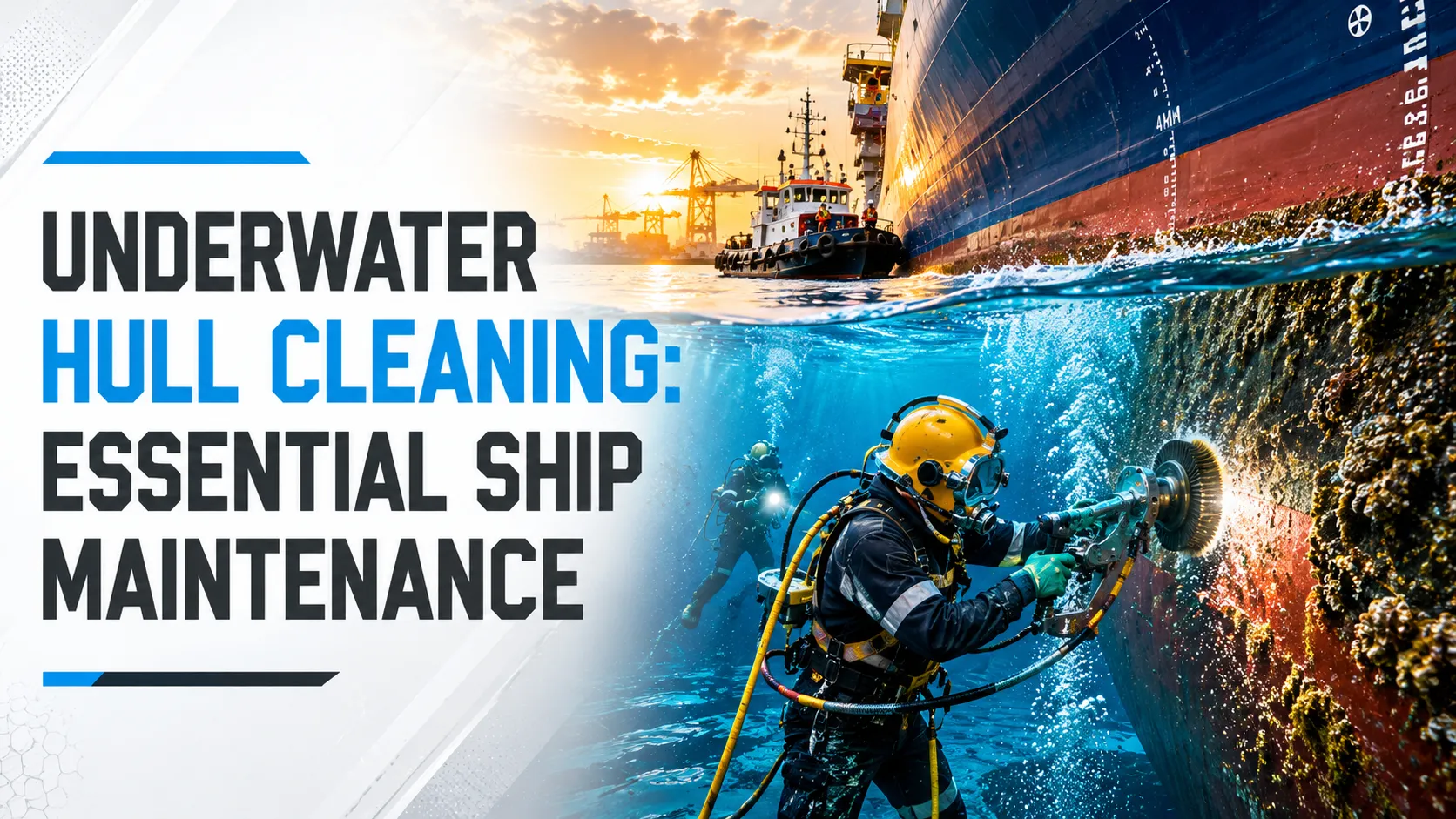
Every nautical mile a vessel travels, its hull is fighting an invisible battle beneath the waterline. As soon as a ship goes into the water, marine life like barnacles, algae, mussels, and slime stick to the surface of the hull. Left unchecked, this biological accumulation transforms a sleek, hydrodynamic surface into a rough, drag-heavy barrier that forces engines to work harder, burn more fuel, and cost shipowners significantly more money.
In modern maritime operations, this is one of the biggest problems that people don’t think about enough, but it’s a real problem. Regular underwater hull cleaning is the solution, and it is fast becoming a non-negotiable element of responsible ship management. Whether you operate a cargo vessel, tanker, or passenger ship, understanding why underwater hull cleaning matters for fuel efficiency could be the difference between profitable voyages and spiraling operating costs.
Key Takeaways
- Hull fouling can increase fuel consumption by 25–40%, making underwater hull cleaning one of the highest-ROI maintenance activities in maritime operations.
- Even a thin layer of slime can add 10–15% to fuel bills and reduce vessel speed by 2–3 knots.
- Propeller polishing, conducted alongside hull cleaning, can recover 3–6% of propulsive efficiency.
- Underwater hull cleaning services eliminate the need for expensive dry docking for routine hull maintenance.
- Regular cleaning provides opportunities for ship hull inspection, catching corrosion and coating damage early.
- Most commercial vessels should be cleaned every 6–12 months; tropical trading routes may require every 3–6 months.
- Neglecting hull maintenance invites higher fuel costs, shortened coating life, compliance risk, and elevated vessel operating costs.
What Is Underwater Hull Cleaning?
Underwater hull cleaning is the process of removing marine growth, fouling organisms, and debris from a vessel’s submerged surfaces without taking the ship out of the water. This work is usually done while the ship is at anchor or in port by skilled commercial divers or remotely operated underwater vehicles (ROVs) with special brushes and pressure-cleaning systems.
Unlike traditional dry docking, underwater hull cleaning services eliminate the need to take a vessel out of operation for extended periods. This makes them both cost-effective and operationally efficient. Aasuthosh Marine, a leading underwater maintenance company, offers ship hull cleaning and inspection packages that include propeller polishing, sea chest cleaning, and underwater ship repairs without a dry dock.
The Science of Hull Fouling and Its Impact on Fuel Efficiency
Marine biofouling begins almost immediately after a vessel is launched. Within hours, a thin biofilm of bacteria forms on the hull. Within days, algae follow. Within weeks, barnacles and mussels begin colonizing the surface. The result is a progressively rougher hull surface that dramatically increases hydrodynamic drag.
The numbers are striking. Research consistently shows that a heavily fouled hull can increase fuel consumption by 25–40% compared to a clean hull. An invisible slime layer can slow a vessel by 2–3 knots and increase fuel burn by 10–15%. Even a 10% increase in ship fuel consumption for a large cargo vessel consuming 50–100 tonnes per day adds thousands of dollars per voyage.
The mechanism is straightforward: a rough hull surface creates greater water resistance, requiring the ship’s engines to exert more power to maintain speed. The ship burns more fuel to meet this additional power demand. The longer fouling remains unaddressed, the worse hull resistance becomes, and the greater the cumulative impact on vessel operating costs.
Why Underwater Hull Cleaning Matters Beyond Fuel Savings
The benefits of vessel hull cleaning extend well beyond fuel cost reduction. Here is a comprehensive look at why regular ship hull maintenance is essential:
- Vessel Performance Optimization
A clean hull allows a vessel to achieve its designed speed at optimal engine load. This means faster voyage times, better schedule adherence, and reduced wear on propulsion systems. Vessel performance optimization through regular cleaning directly improves a ship’s commercial competitiveness.
- Propeller Polishing and Propulsion Efficiency
The propeller is as critical as the hull itself. Fouling and surface pitting on propeller blades significantly reduce propulsive efficiency. Propeller polishing, usually done with underwater hull cleaning, can save 3–6% of propulsive efficiency and fuel. This is one of the highest-return maintenance activities available to ship operators.
- Hull Coating Protection
Modern anti-fouling coatings are expensive to apply and are designed to last. If fouling accumulates and hardens, especially barnacles with calcified shells, aggressive removal can damage the coating. Regular, timely underwater cleaning extends hull coating life and protects steel.
- Invasive Species Prevention
Marine biofouling is one of the leading vectors for the transfer of invasive aquatic species across oceans. Many ports and national authorities, including those in Australia, New Zealand, and the United States, now require hull cleanliness certifications before vessels can enter certain waters. Maintaining a clean hull through regular underwater hull cleaning services ensures regulatory compliance and avoids costly delays or fines.
- Ship Hull Inspection and Early Problem Detection
Every cleaning dive provides an opportunity for a ship hull inspection. Qualified divers can spot corrosion, coating failure, structural damage, and anode depletion early, making repairs cheaper. Trusted providers like Aasuthosh Marine integrate detailed underwater inspection reports with their cleaning operations, giving shipowners actionable intelligence about hull condition after every service.
How Often Should Ships Undergo Underwater Hull Cleaning?
There is no single answer, but several factors determine the best cleaning frequency for each vessel:
- Operating Region: Tropical and subtropical waters have higher biological activity and accelerate fouling growth. Vessels trading in these regions typically require cleaning every 3–6 months.
- Port Idling Time: Ships that spend significant time at anchor or in port are more vulnerable to heavy fouling than vessels in continuous deep-sea transit.
- Anti-Fouling Coating Type: The quality, age, and type of anti-fouling coating on the hull affect how quickly organisms can establish themselves.
- Performance Monitoring: Modern ship performance monitoring systems can detect increases in fuel consumption that may indicate hull fouling, enabling data-driven cleaning decisions.
As a general guideline, most commercial vessel operators schedule underwater hull cleaning every 6–12 months, with more frequent cleans for vessels operating in biologically rich tropical waters. Over a vessel’s operating life, proactive ship hull maintenance outperforms reactive cleaning only at dry docking in fuel and cost.
Underwater Hull Cleaning Without Dry Docking
The widespread availability of in-water hull cleaning without the cost, delay, and operational disruption of dry docking is a major advance in ship maintenance. This is possible through professional underwater diving services and ROV-based cleaning technology.
Aasuthosh Marine, a trusted underwater maintenance company, offers hull cleaning, propeller polishing, and underwater ship repairs at anchorage or berth. Their experienced dive teams and modern equipment ensure thorough barnacle removal and fouling clearance while the vessel remains fully operational, minimizing downtime and preserving charter commitments. For shipowners seeking Under Water Repairs in India, Aasuthosh Marine offers inspection, cleaning, coating, and minor structural repairs by certified divers.
Conclusion
Evidence shows that underwater hull cleaning is essential to a vessel’s operational efficiency and commercial viability. Regular cleaning pays for itself several times in fuel savings, and downstream benefits like extended coating life, regulatory compliance, and early damage detection compound those returns.
For ship operators committed to managing vessel operating costs, meeting environmental standards, and keeping their fleets commercially competitive, partnering with skilled providers of hull cleaning services is essential. Explore guidance on Marine Safety Equipment Required on Ships and learn about ship chandlers.
Whether you manage a single cargo vessel or a large commercial fleet, Aasuthosh Marine brings the expertise, equipment, and certified personnel to keep your hull clean, your engines efficient, and your voyages profitable. Avoid fouling and lower your bottom line by scheduling an underwater hull cleaning today.
Frequently Asked Questions
What is underwater hull cleaning?
Certified commercial divers or ROV systems clean a ship’s submerged hull and appendages of marine growth, biofouling, and sediment while it is in water. It also often includes propeller polishing and ship hull inspection as part of a complete underwater maintenance service.
Why is underwater hull cleaning important?
It is important because hull fouling increases hydrodynamic drag, which drives up fuel consumption, reduces vessel speed, accelerates hull coating degradation, and creates risks for port compliance related to invasive species transfer. Regular cleaning protects vessel profitability, hull integrity, and environmental performance.
How does hull fouling affect fuel consumption?
Hull fouling creates surface roughness that increases water resistance as the vessel moves through the sea. The propulsion system must work harder to overcome this added drag, requiring more fuel to maintain the same speed. Studies show that severe fouling can increase ship fuel consumption by 25–40%, making hull fouling one of the most significant drivers of elevated vessel operating costs.
How often should ships undergo underwater hull cleaning?
This depends on vessel type, operating region, coating quality, and time spent at anchor. Most commercial vessels benefit from cleaning every 6 – 12 months. Vessels operating in warm tropical waters, or those with extended port stays, may need cleaning every 3 – 6 months. Performance monitoring data and fuel consumption trends are the best guides for timing.