

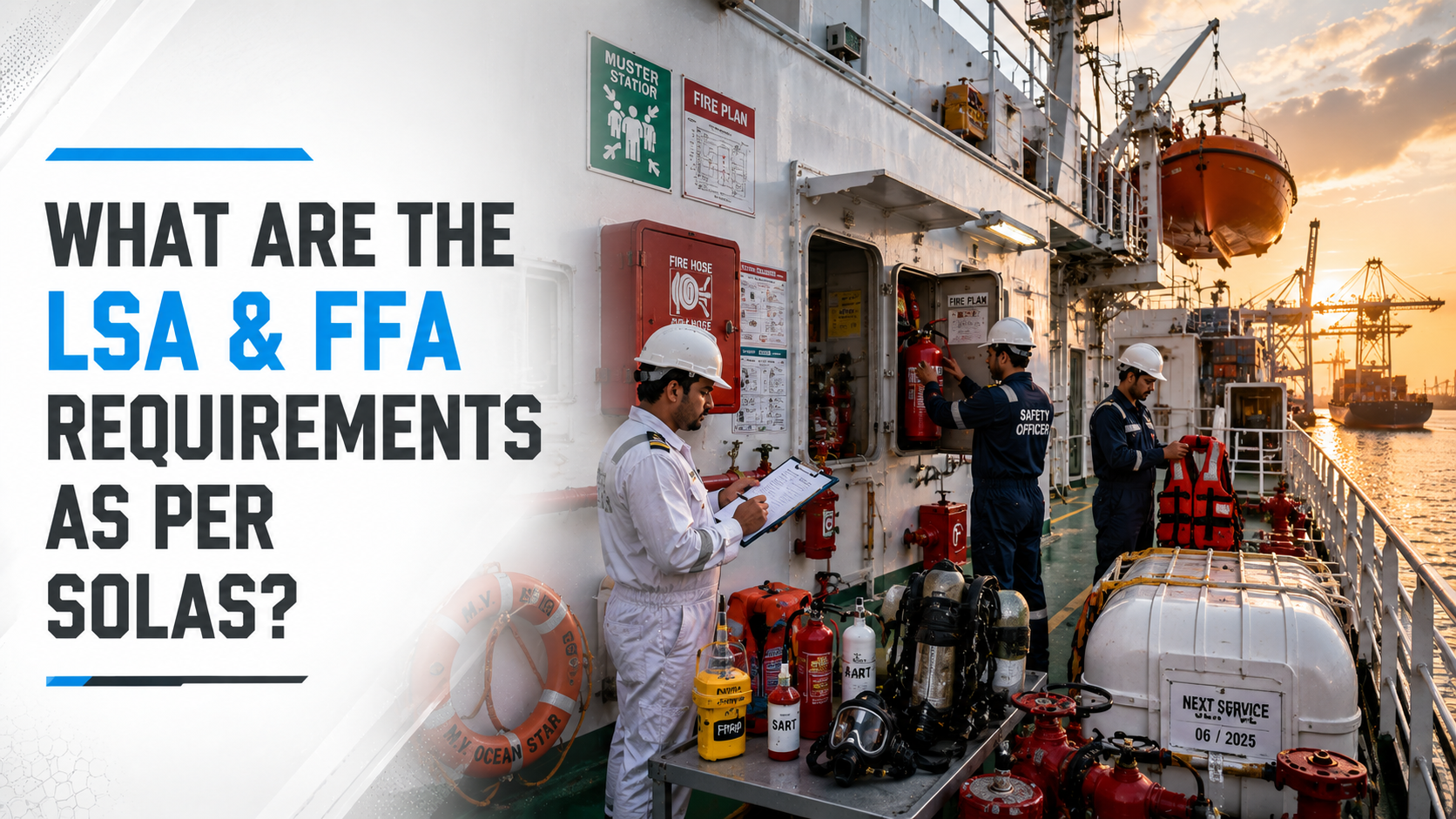
Safety at sea is required by strict international rules that are meant to keep crew, passengers, and ships safe in case of an emergency. Among the most critical of these are the SOLAS LSA and FFA requirements, which set out exactly what life-saving and fire-fighting equipment every vessel must carry, maintain, and test.
Understanding these requirements is essential for ship operators, crew members, and anyone involved in maritime safety compliance.
Key Takeaways
- SOLAS Chapter III governs life-saving appliances, including lifeboats, life jackets, immersion suits, and rescue equipment.
- SOLAS Chapter II-2 governs fire-fighting appliances, covering detection systems, extinguishers, and fire pumps.
- Requirements vary by vessel type, size, and voyage area, with additional standards often set by flag states.
- Regular inspection and maintenance are just as important as having the equipment onboard in the first place.
- Non-compliance can lead to detentions or fines during port state control inspections.
What Are LSA and FFA Equipment?
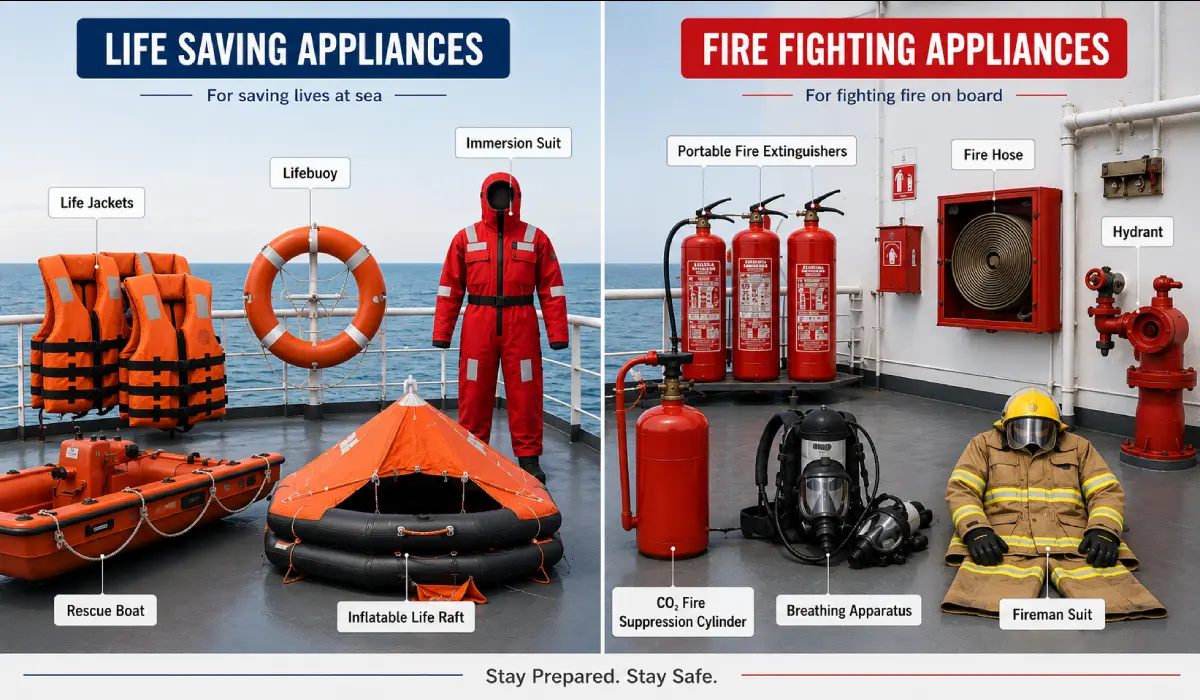
LSA stands for “Life-Saving Appliances,” while FFA refers to “Fire Fighting Appliances.” Together, they form the backbone of onboard emergency preparedness. LSA and FFA equipment requirements as per SOLAS are outlined under the International Convention for the Safety of Life at Sea (SOLAS), which establishes minimum safety standards for ships operating internationally.
Both LSA and FFA equipment are essential to the overall safety of the vessel. LSA equipment is designed to save lives during evacuation and survival situations, while FFA equipment is designed to find, control, and put out fires on board.
SOLAS Chapter III: Life-Saving Appliances Requirements
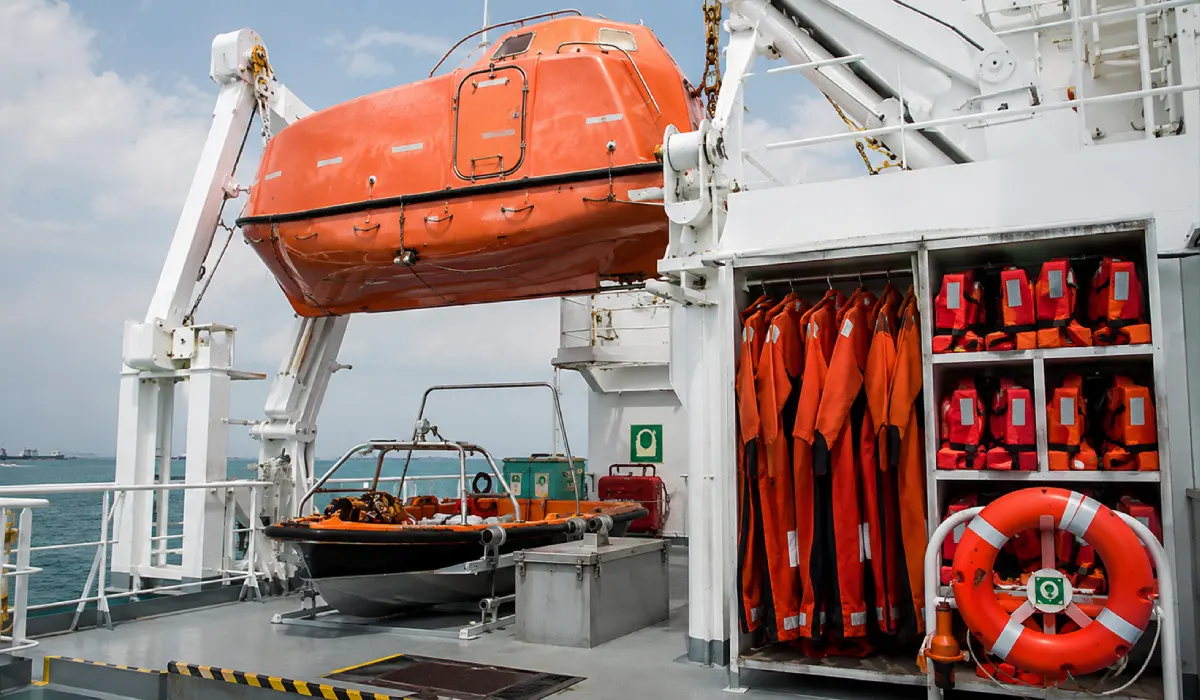
SOLAS Chapter III requirements cover all aspects of life-saving appliances and arrangements onboard ships.
Key components mandated under this chapter include the following:
- Lifeboats and Life Rafts: Vessels must carry an adequate number of lifeboats and life rafts based on ship type and passenger/crew capacity, along with davits and launching systems.
- Life Jackets: Every person onboard must have access to an approved life jacket, with additional jackets stored in accessible locations.
- Immersion Suits: Required for certain vessel types and voyage areas, particularly those operating in colder waters, to protect against hypothermia during abandon-ship situations.
- Rescue Boats: Fast rescue boats must be available to retrieve individuals from the water during emergency situations.
- Emergency Signals and Pyrotechnics: Flares, smoke signals, and other distress signaling equipment are mandatory for alerting nearby vessels or rescue teams.
- Line-Throwing Appliances: Used to establish connections during rescue operations.
These requirements for life-saving appliances under SOLAS are designed to ensure that, regardless of vessel type, crew and passengers have a reliable means of survival and rescue in an emergency.
SOLAS Chapter II-2: Firefighting Appliances Requirements
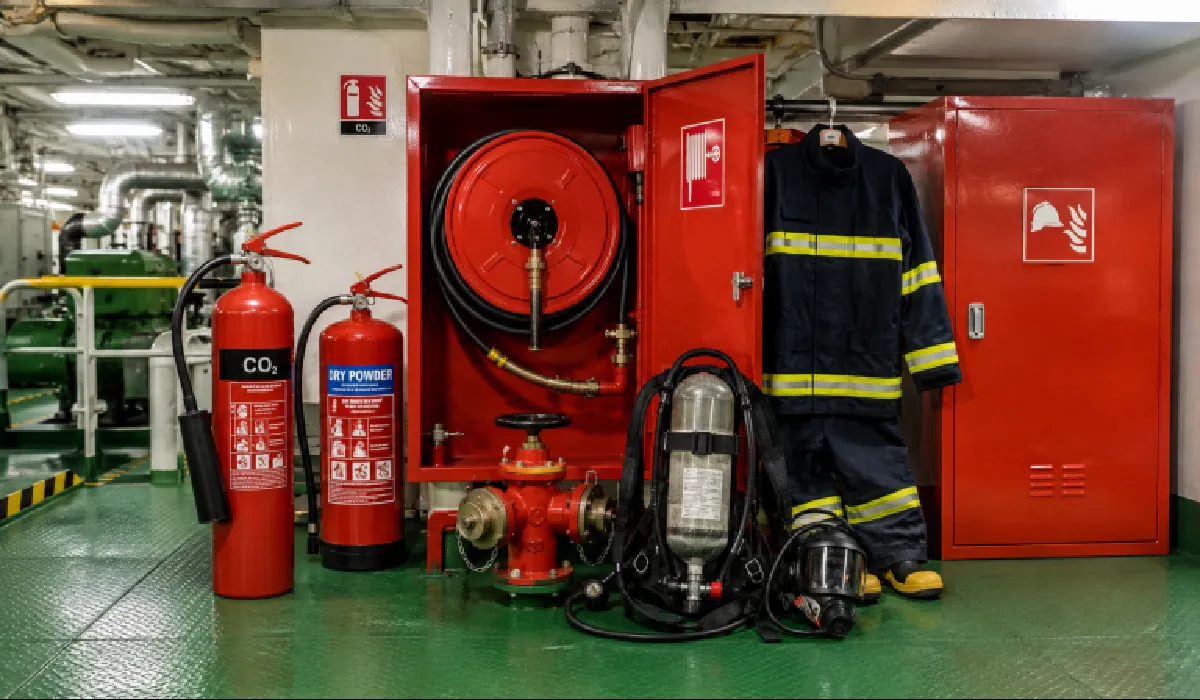
SOLAS Chapter II-2 requirements govern fire safety systems onboard, covering both prevention and active fire-fighting capability.
Key mandated FFA equipment includes the following:
- Fire Detection and Alarm Systems: Automated systems to detect smoke or heat and alert crew immediately.
- Portable Fire Extinguishers: Positioned throughout the vessel according to risk zones, including engine rooms, galleys, and accommodation areas.
- Fixed Fire Extinguishing Systems: Such as CO₂ or foam systems installed in machinery spaces and cargo holds.
- Fire Pumps and Hydrants: Ensuring adequate water pressure and hose access throughout the vessel for active fire suppression.
- Fire Hoses and Nozzles: Strategically located for quick crew response.
- Personal Fire-Fighting Equipment: Including fireproof suits, breathing apparatus, and protective gear for designated fire teams.
These firefighting appliances under SOLAS are designed with redundancy in mind, ensuring multiple layers of protection in case one system fails during an emergency.
Also Read:- How to Choose the Best Marine Service Provider in India
It’s not enough to have LSA and FFA equipment on board; SOLAS also requires that the equipment be inspected, tested, and maintained on a regular basis to make sure it works when it’s needed most.
- Lifeboats and rescue boats must undergo regular launching drills and servicing according to manufacturer and flag state guidelines.
- Fire extinguishers require periodic pressure testing and servicing, typically on an annual basis.
- Life jackets and immersion suits must be inspected for damage or degradation at scheduled intervals.
- Fire detection systems require routine functional testing to confirm sensors and alarms are operating correctly.
Maintaining accurate records of inspections is equally important, as these logs are reviewed during maritime safety audits and port state control inspections.
Are LSA and FFA Requirements the Same for All Ships?
Not entirely. While SOLAS establishes baseline requirements, specific equipment quantities and specifications can vary based on:
- Vessel type (cargo ship, passenger ship, tanker, offshore vessel)
- Voyage area (unrestricted, coastal, or specific climate zones)
- Passenger and crew capacity
- Flag state and classification society requirements, which may impose additional standards beyond the SOLAS baseline
This is why fire fighting equipment requirements for passenger ships often differ significantly from those for smaller cargo vessels, reflecting the higher occupancy and evacuation complexity involved.
Why LSA and FFA Compliance Matters
Beyond regulatory compliance, properly maintained LSA and FFA equipment can be the difference between a manageable incident and a maritime tragedy. Port state control authorities routinely inspect vessels for compliance, and deficiencies in safety equipment can lead to detentions, fines, or restricted vessel operations until issues are resolved.
Ensuring your vessel is properly equipped with certified Life Saving Appliances & Fire Fighting Appliances isn’t just about passing inspections. It’s about protecting the lives of everyone onboard.
Sourcing and Servicing LSA and FFA Equipment
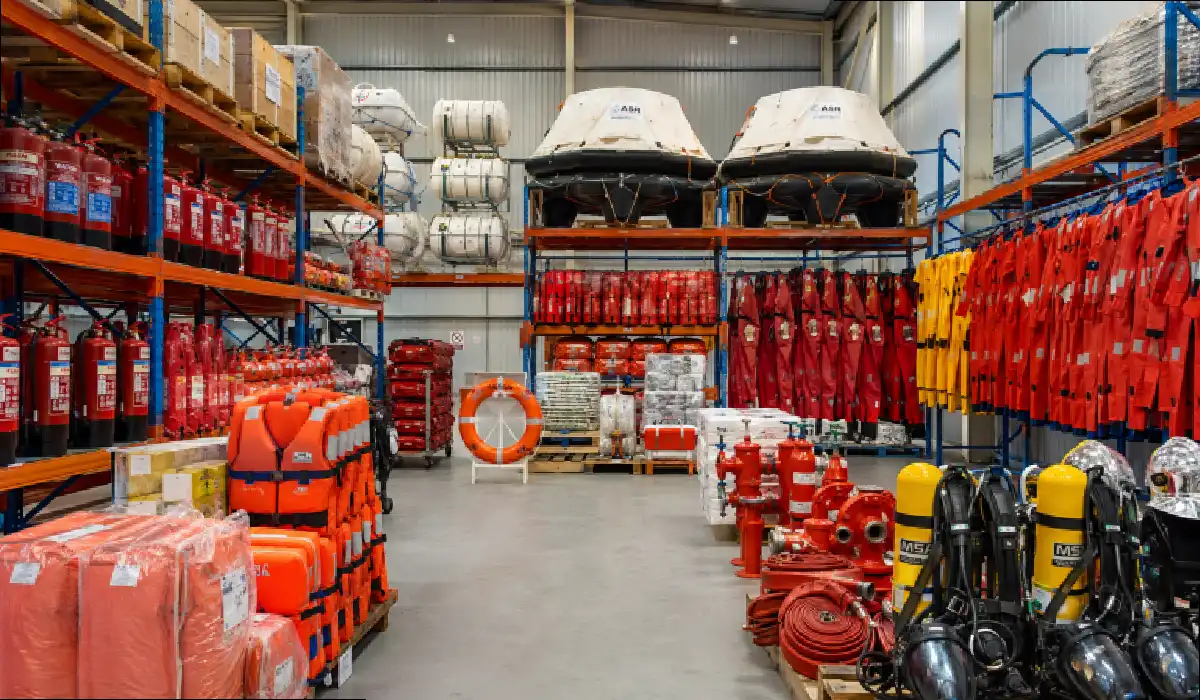
Given the strict compliance standards involved, sourcing certified equipment from experienced suppliers is critical. Reliable providers, including those offering Ship Chandler in Kandla & All Indian Ports, play an important role in ensuring vessels have access to approved LSA and FFA equipment, along with timely servicing and replacement when needed.
Maritime safety experts like Kuldeep Lalchandani often say that proactive maintenance, not scrambling at the last minute to meet compliance requirements, is the best way to make sure that safety equipment doesn’t have problems during inspections.
For related insights on maritime compliance and vessel safety, check out our earlier blog covering ship safety equipment and inspection best practices.
Conclusion
SOLAS LSA and FFA requirements form the foundation of onboard emergency preparedness, covering everything from lifeboats and life jackets to fire detection systems and extinguishing equipment. Staying compliant requires not just having the right equipment onboard but also maintaining and testing it according to strict schedules.
For shipping companies looking for dependable sourcing and support, partners like Aasutosh Marine help ensure vessels remain equipped with certified, compliant safety equipment ready for any emergency.
FAQs
What are LSA and FFA equipment under SOLAS?
LSA refers to Life-Saving Appliances like lifeboats and life jackets, while FFA refers to Fire Fighting Appliances such as extinguishers and fire pumps, both mandated under SOLAS.
What is the difference between LSA and FFA?
LSA equipment supports survival and evacuation during emergencies, while FFA equipment is used to detect and extinguish fires onboard.
Are LSA and FFA requirements the same for all ships?
No, requirements vary based on vessel type, size, voyage area, and passenger capacity, along with additional flag state or classification society standards.
What are mandatory LSA equipment onboard ships?
Mandatory LSA equipment includes lifeboats, life rafts, life jackets, immersion suits, rescue boats, and distress signaling devices.
What are mandatory FFA equipment onboard ships?
Mandatory FFA equipment includes fire detection and alarm systems, portable and fixed extinguishers, fire pumps, hoses, and personal fire-fighting gear.
How often should LSA and FFA equipment be inspected?
Inspection frequency varies by equipment type but generally includes regular drills, annual servicing, and periodic functional testing as required by SOLAS and flag state regulations.
What safety equipment is required on merchant vessels?
Merchant vessels must carry SOLAS-compliant LSA and FFA equipment appropriate to their size, type, and voyage area, along with required certification and documentation.