

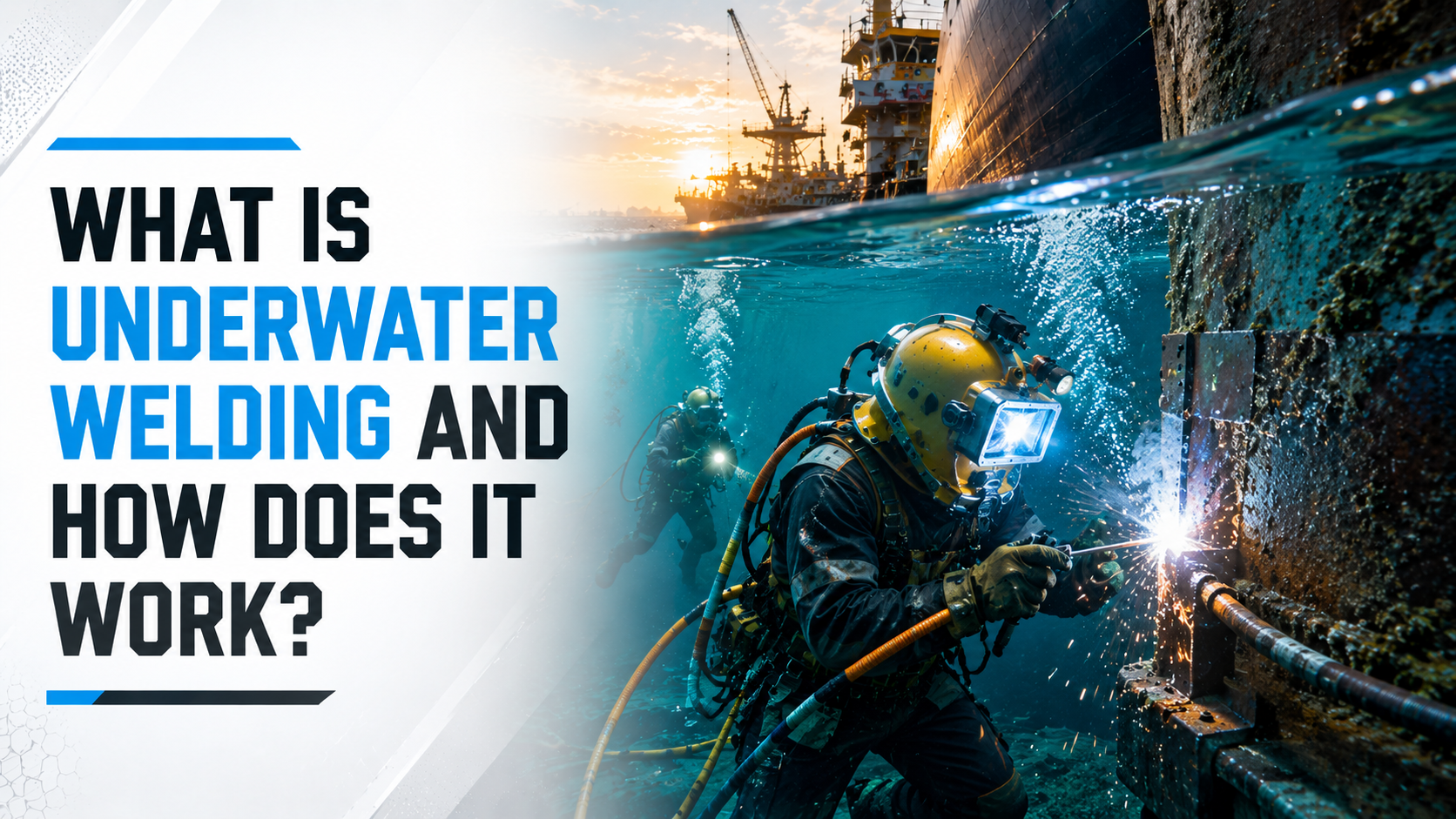
Underwater welding maintains ports, offshore platforms, and shipping lanes worldwide. From repairing ship hulls without dry docking to maintaining offshore pipelines, underwater welding plays a critical role in the maritime and offshore industries. But how exactly does welding happen underwater, and what makes it such a demanding profession? Let’s break it down.
Key Takeaways
- Underwater welding combines diving and welding expertise to repair submerged marine and offshore structures.
- Wet and dry welding serve different purposes: speed and cost-efficiency versus stronger, controlled repairs.
- Managing this trade’s risks requires specialized equipment and strict safety protocols.
- Applications range widely, from ship hull repair to offshore pipeline and platform maintenance.
- Technology continues to improve underwater welding precision, safety, and efficiency across the marine industry.
What is Underwater Welding?
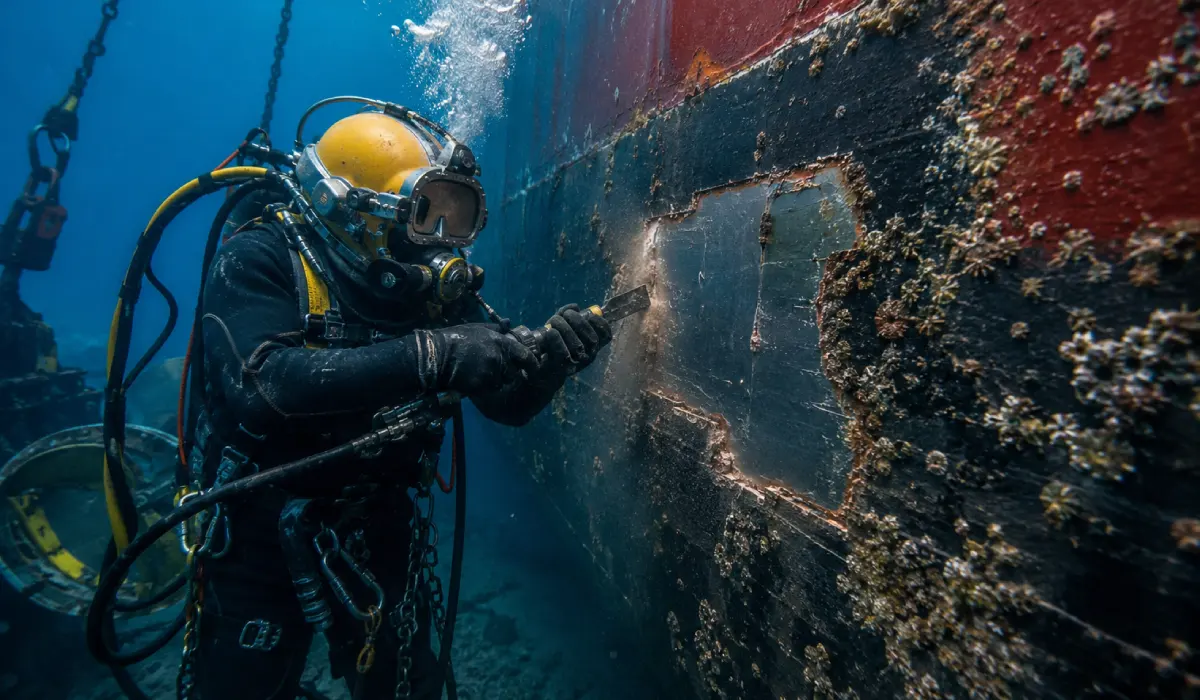
Underwater welding is the process of joining or repairing metal structures submerged in water, using specialized techniques that combine commercial diving skills with welding expertise. It’s widely used for ship hull repair, offshore platform maintenance, pipeline repair, and other underwater infrastructure work where removing a structure from water isn’t practical or cost-effective.
Underwater welders are trained professionals who combine deep-sea diving certification with advanced welding skill, working in challenging, often low-visibility environments to perform precise structural repairs.
How Does Underwater Welding Work Step by Step?
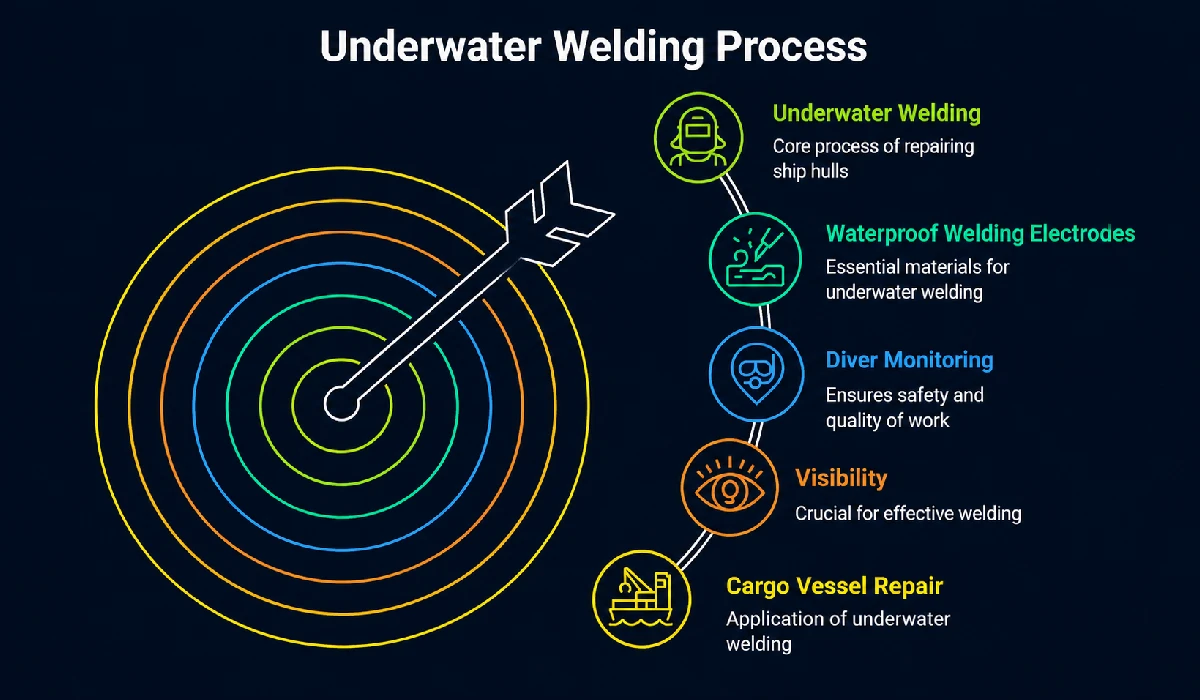
Understanding how does underwater welding work step by step helps clarify just how technical this process really is:
- Site Assessment and Inspection: Before any welding begins, divers conduct an underwater welding inspection to assess damage, water conditions, and structural integrity.
- Preparation of the Area: The area to be welded is cleaned of marine growth, rust, and debris to ensure a strong weld bond.
- Selecting the Welding Method: Depending on the depth, environment, and repair type, welders choose between wet or dry underwater welding techniques.
- Welding Execution: Using specialized electrodes and equipment designed to function underwater, the welder performs the joint or repair.
- Post-Weld Inspection: Once complete, the weld is inspected for quality, strength, and compliance with marine safety standards.
Also Read: Why Underwater Ship Repairs Are the Smartest Investment You Can Make at Indian Ports
Types of Underwater Welding Techniques
There are two primary underwater welding techniques used across the industry, each suited to different conditions and project requirements.
Wet Welding
Wet welding is performed directly in water, with the diver-welder using waterproof electrodes and specialized equipment. This method is faster and more cost-effective, making it popular for underwater welding for ship repair and emergency fixes. However, it generally offers slightly lower weld strength compared to dry welding.
Dry Welding
Dry underwater welding, also known as hyperbaric welding, involves creating a dry chamber around the work area, allowing the welder to work in a controlled, water-free environment despite being submerged. This method produces higher-quality, stronger welds and is often used for critical structural repairs on offshore platforms and pipelines, though it’s more expensive and complex to set up.
When comparing wet welding vs dry welding, the choice largely depends on the depth of the repair, the criticality of the structure, and project budget and timeline.
Underwater Welding Equipment and Tools
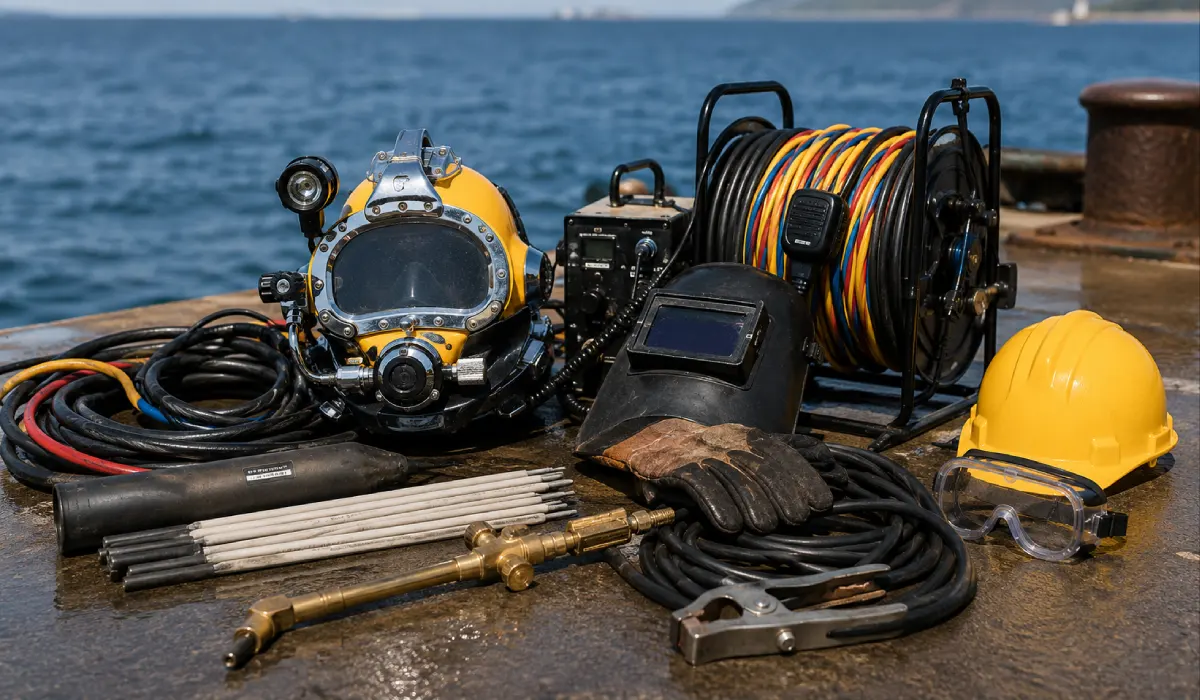
Specialized underwater welding equipment is essential to ensure both safety and weld quality.
Common tools include:
- Waterproof welding electrodes
- Underwater welding power sources with safety cutoffs
- Diving helmets with integrated communication systems
- Hyperbaric welding habitats (for dry welding)
- Underwater cutting torches
- Personal protective diving gear
This equipment must meet strict underwater welding safety standards, given the inherent risks of combining electrical current with underwater environments.
Applications of Underwater Welding in Marine Industries
Underwater welding applications span a wide range of marine and offshore needs:
- Ship hull repair without the need for dry docking
- Offshore oil and gas platform maintenance
- Pipeline repair and underwater structure reinforcement
- Port and harbor infrastructure repair
- Repair of underwater support structures for bridges and docks
This versatility makes marine underwater welding and offshore underwater welding indispensable across commercial shipping, energy, and infrastructure sectors.
Is Underwater Welding Safe for Divers?
For good reason, safety is one of the most frequently asked questions about this trade. Underwater welding combines two inherently risky activities: diving and welding with electrical current.
Key underwater welding safety measures include:
- Rigorous certification and training requirements
- Insulated equipment to prevent electric shock
- Controlled gas management to avoid hydrogen embrittlement or explosive gas buildup
- Strict depth and decompression protocols
- Continuous communication between divers and surface support teams
While risks exist, professional underwater welding companies follow strict safety protocols to minimize hazards, making it a viable and well-regulated profession when performed by certified experts.
How Underwater Welding Supports Ship and Offshore Repair
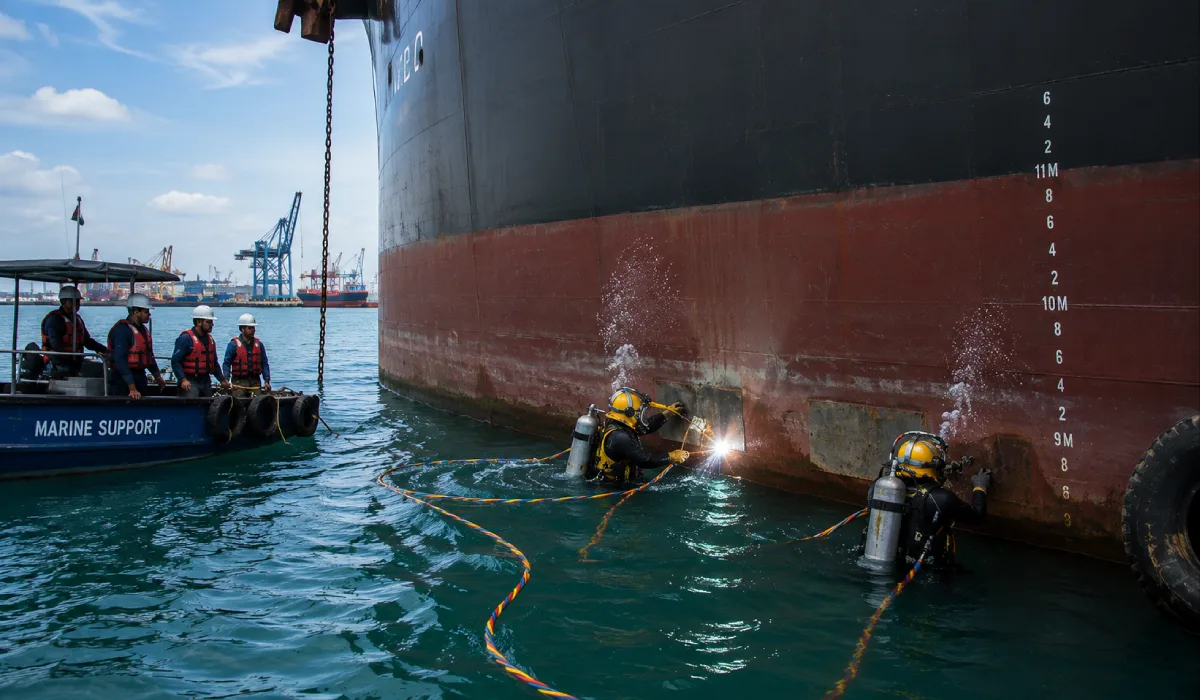
Underwater welding is a useful alternative to dry docking for ships that need to fix their hulls right away. It saves a lot of time and money. This is especially valuable for commercial shipping companies that can’t afford extended vessel downtime. Reliable Underwater Ship Repair services allow structural issues to be addressed quickly, keeping vessels operational and minimizing disruption to shipping schedules.
The Growing Role of Technology in Underwater Welding
Advancements in underwater welding technology continue to improve efficiency and safety. Better real-time inspection tools, remote-controlled welding systems, and better hyperbaric chamber designs are helping underwater welding companies make repairs that are more accurate and reliable, even in conditions that are getting deeper and harder to work in.
Industry experts, including Kuldeep Lalchandani, have highlighted how integrating modern diving technology with traditional welding expertise continues to expand what’s possible in underwater repair work, particularly for vessels operating through busy ports like ship chandler in Kandla & all Indian ports.
For more on how marine repair services support vessel operations, check out our earlier blog covering ship maintenance and repair solutions.
Conclusion
Underwater welding is a highly specialized, technically demanding trade that plays an essential role in keeping ships, offshore platforms, and marine infrastructure operational without costly downtime. From wet welding for quick repairs to advanced dry welding for critical structural work, this field continues to evolve alongside new technology and safety standards. For shipping companies seeking dependable marine repair support, partners like Aasutosh Marine help connect vessels with experienced underwater welding and repair services when it matters most.
FAQs
What is underwater welding?
Underwater welding is a specialized process of joining or repairing submerged metal structures, combining commercial diving and welding expertise.
How does underwater welding work step by step?
It involves site inspection, surface preparation, selecting wet or dry welding methods, performing the weld, and conducting a post-weld quality inspection.
What are the different types of underwater welding?
The two primary types are wet welding, performed directly in water, and dry welding, performed in a hyperbaric chamber for a controlled, water-free environment.
What is the difference between wet welding and dry welding?
Wet welding is faster and more cost-effective but slightly less strong, while dry welding produces higher-quality welds but is more complex and expensive.
Is underwater welding safe for divers?
When performed by certified professionals following strict safety protocols, underwater welding is a well-regulated and manageable profession, though it does carry inherent risks.
What equipment is used for underwater welding?
Equipment includes waterproof electrodes, specialized power sources, diving helmets with communication systems, hyperbaric habitats, and underwater cutting tools.
How is underwater welding used in ship repair?
It allows hull and structural repairs to be performed without dry docking, saving time and reducing vessel downtime.
How deep can underwater welders work?
Depth capabilities vary by technique and equipment, with wet welding typically used at shallower depths and dry welding suited for deeper, more complex repairs.
What are the risks involved in underwater welding?
Electric shock, decompression sickness, and gas-related hazards are risks that strict safety protocols and certified training manage.