

Marine supply keeps the global shipping industry moving, but the process of getting the right provisions, spares, and safety equipment onto a vessel on time is rarely simple. Ports operate on tight windows, regulations shift, and a single missed delivery can throw off a vessel’s entire schedule. Ship owners and operators can choose partners who keep their vessels moving by understanding marine supply challenges and how experienced suppliers overcome them.
Key Takeaways
- Marine supply challenges typically fall into five categories: delivery delays, inconsistent quality, compliance gaps, poor inventory management, and rising costs.
- Delivery delays are best avoided by working with suppliers who have local warehousing and infrastructure at the ports vessels actually call at.
- Marine supply compliance requires suppliers who actively track IMO and SOLAS updates, not just react to them.
- Strong marine inventory management prevents both overstocking and costly last-minute emergency orders.
- Consolidating supply needs with a single reliable provider across multiple ports reduces communication breakdowns and keeps documentation consistent.
- When choosing a marine supply partner, prioritize track record, documented processes, and port coverage over the lowest quoted price.
Why Marine Supply Is More Complex Than It Looks
On the surface, marine supply looks like a straightforward logistics task: a vessel needs stores, someone delivers them.
In practice, it involves coordinating customs clearance, port authorities, warehousing, quality checks, and last-minute schedule changes within hours. Add in the requirement that many items must meet IMO and SOLAS specifications, and it becomes clear why marine supply chain management is a specialized discipline, not a generic delivery service.
Common Marine Supply Challenges
Here are some of the common marine supply challenges that you need to keep in mind:
1. Delivery Delays and Tight Vessel Windows
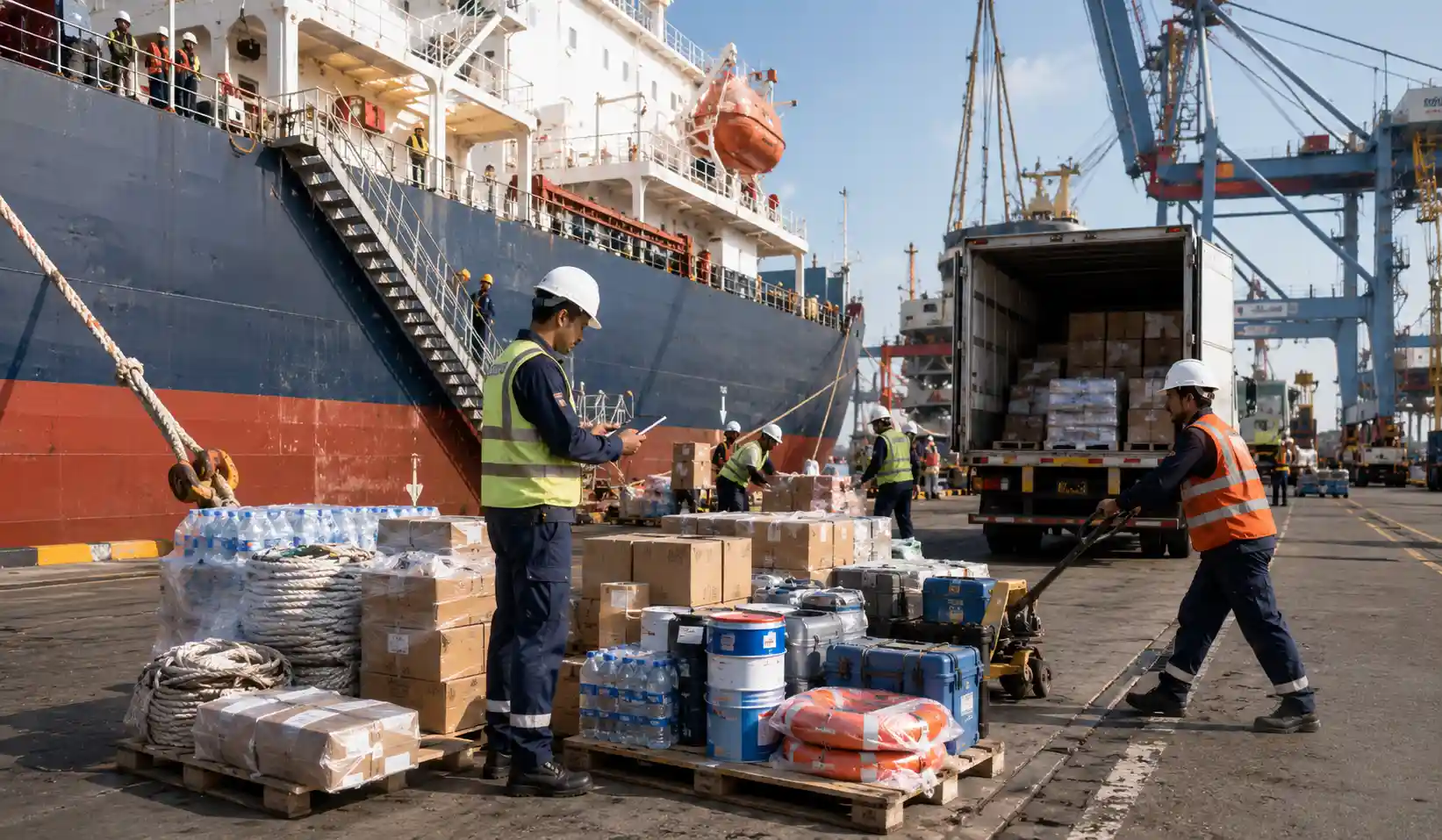
Vessels often have only a few hours in port before departure. If provisions, spare parts, or safety equipment don’t arrive in that window, the ship either sails without them or faces a costly delay. Most of the time, delays happen because the supplier, port agent, and customs don’t work together well, or the supplier doesn’t have the right equipment at the port.
How to avoid it: Work with a supplier who has an established presence and warehousing at the relevant ports, with processes built specifically for tight vessel turnaround times. A dependable ship supply company plans deliveries around the vessel’s actual schedule, not a generic timeline.
2. Inconsistent Quality Across Suppliers
Not all marine equipment suppliers apply the same standard of quality control. Substandard provisions, mismatched spare parts, or safety equipment without proper certification can lead to failed inspections or, worse, safety risks at sea.
How to avoid it: Choose suppliers with documented sourcing and inspection processes, and who can provide certification for every safety-critical item. Consistency is key to building trusting relationships with marine suppliers. This means that the same quality checks are done at every port, every time.
3. Compliance Gaps with IMO and SOLAS Standards
Marine supply compliance is one of the most overlooked risk areas. Suppliers who aren’t rigorous about tracking regulatory updates can unknowingly deliver equipment that no longer meets current SOLAS requirements, putting the vessel at risk during a port state control inspection.
How to avoid it: Confirm that your supplier actively tracks IMO circulars and amendments, and that every certificate provided is current and traceable. This is a core part of professional ship chandling services, not an optional add-on.
4. Poor Marine Inventory Management
Overstocking wastes money and storage space; understocking leads to emergency orders at inflated prices. Both of these problems are signs of bad marine inventory management, which is a problem for both suppliers and shipping companies.
How to avoid it: Work with suppliers who track consumption patterns and help plan provisioning in advance, rather than reacting to last-minute requests. Good marine procurement solutions anticipate needs instead of scrambling to meet them.
5. Communication Breakdowns Between Ports
When a ship stops at several ports in different areas, it can be hard to make sure that the quality of the supplies and the paperwork are the same at each stop, especially if each port uses a different local vendor.
How to avoid it: Consolidating supply needs under a single provider with reach across multiple ports reduces miscommunication and keeps documentation consistent. This is one of the reasons Aasutosh Marine operates across Kandla, Mundra, and Sikka ports rather than limiting service to a single location.
6. Rising Costs Without Corresponding Value
Shipping companies are always trying to keep their operating costs low. Marine supply is one area where costs often go up for no clear reason, because of bad logistics, wasted stock, or large emergency orders.
How to avoid it: A transparent supplier with efficient marine logistics services can often reduce costs simply by improving planning and delivery efficiency, without cutting corners on quality.
How Reliable Ship Chandlers Solve These Problems
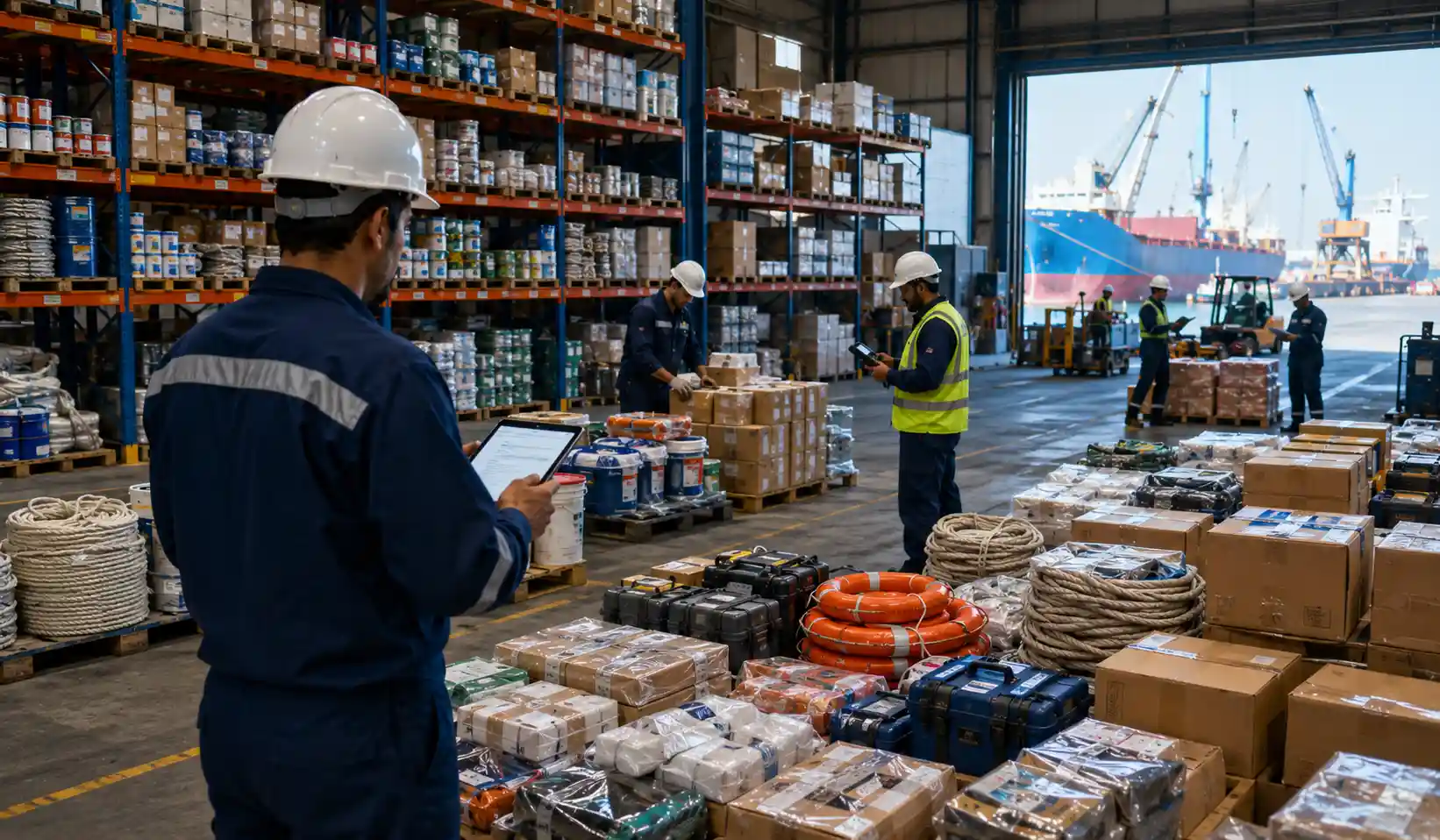
A well-established ship chandler addresses these challenges through a combination of local presence, structured processes, and proactive communication. This typically includes:
- Dedicated warehousing near major ports to reduce delivery delays
- Documented quality control processes for every category of supply
- Ongoing compliance tracking against IMO and SOLAS updates
- Inventory planning support for repeat customers
- A single point of contact across multiple ports to reduce communication gaps
Aasutosh Marine is a Ship Chandler in Kandla & All Indian Ports. They have built their business around fixing these problems by combining local infrastructure with structured processes. This way, ships that call at Indian ports can get what they need, when they need it, without taking shortcuts for compliance.
Choosing the Right Marine Supply Partner
When evaluating a marine supplier, look beyond price alone. Ask about their track record on delivery timelines, their quality control documentation, and their experience with the specific ports your vessels call at. Reliable ship supply services are built on repeat business, not one-time deals. A supplier that has always delivered on time and in accordance with the rules on multiple voyages is a much safer bet than one that offers the lowest price.
A lot of well-known ship chandler services do more than just supply goods. They often help with vessel inspections, keep records of certifications, and clear and organise spare parts, which adds value well after the initial delivery.
Frequently Asked Questions
1. What are the most common challenges in marine supply?
The most frequent issues are delivery delays, inconsistent product quality, compliance gaps with IMO/SOLAS standards, poor inventory management, and rising costs without added value.
2. How can shipping companies avoid marine supply delays?
By partnering with suppliers who have established warehousing and infrastructure at the relevant ports, and who plan deliveries around actual vessel schedules rather than generic timelines.
3. Why is choosing a reliable ship chandler important?
If you work with a trustworthy ship chandler, you can be sure of consistent quality, valid certification, and on-time delivery. This lowers the risk of failed inspections, delays, and unexpected costs.
4. How does inventory management improve marine supply efficiency?
Proper inventory management prevents overstocking and understocking, helping shipping companies plan provisioning in advance and avoid costly emergency orders.
5. What factors should be considered when selecting a marine supplier?
Look at their track record on delivery timelines, documented quality control processes, port coverage, and their approach to regulatory compliance.
6. How do marine suppliers ensure compliance with international regulations?
They track IMO circulars and SOLAS amendments closely, verify certification for every safety-critical item, and conduct regular internal audits of their supply processes.
7. What are the benefits of an efficient marine supply chain?
An efficient marine supply chain reduces vessel turnaround time, lowers operating costs, minimizes compliance risk, and improves overall shipping reliability.