

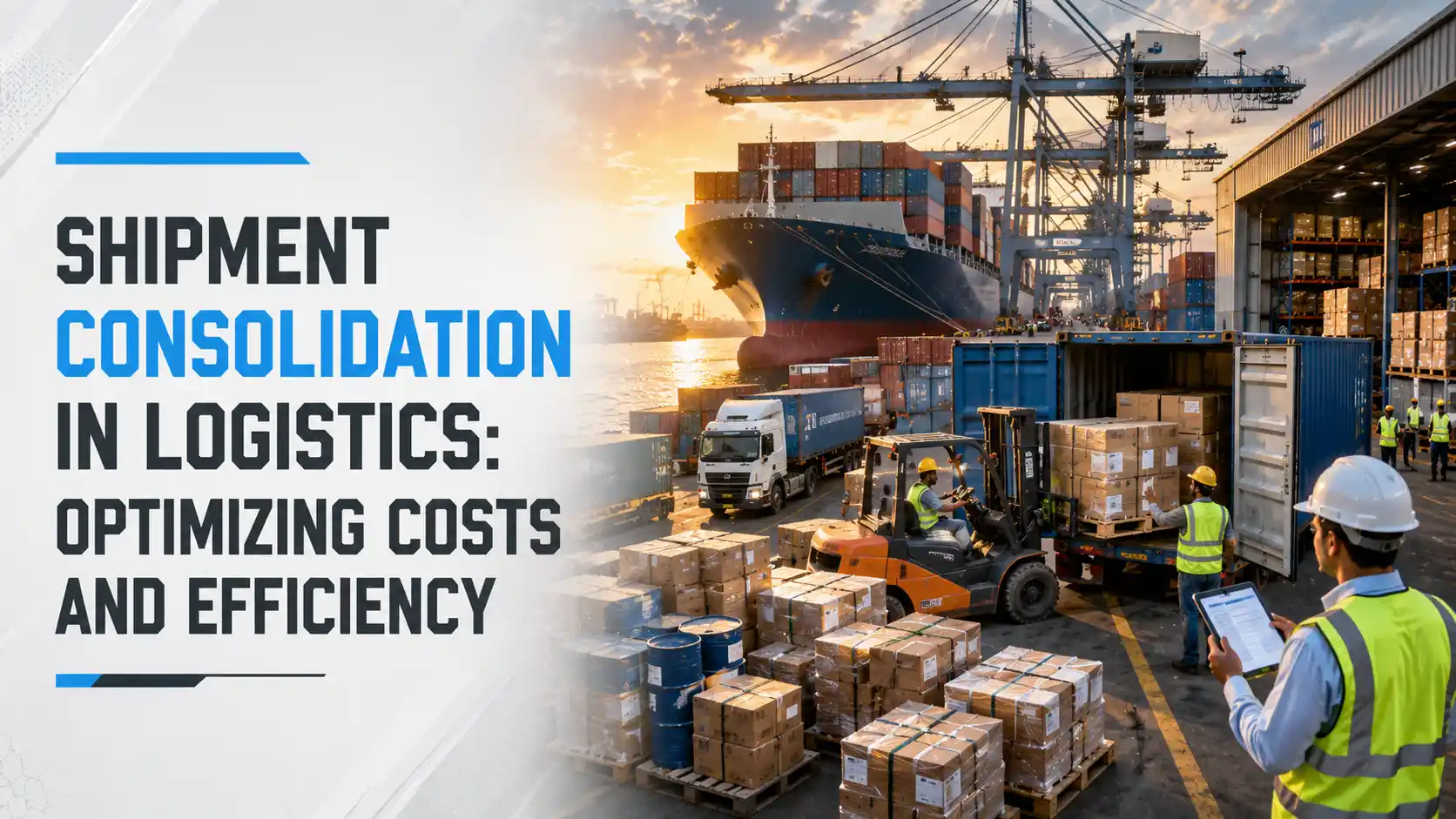
Global trade runs on timing and margins, and few strategies protect both as well as shipment consolidation. If you own a ship and need spare parts from more than one supplier, you are an exporter working with more than one supplier, or your business is sending smaller loads overseas, consolidation with dependable freight forwarding services is one of the easiest ways to save money on freight without sacrificing service.
For businesses on India’s western coast, which has some of the busiest cargo ports in the country, knowing how shipment consolidation works can mean the difference between a supply chain that wastes money and one that doesn’t. That’s why services like Ship Spares Clearing & Consolidation have become essential for vessels and exporters moving cargo through these ports.
In this guide, we break down what shipment consolidation in logistics actually means, how it works, why it matters for businesses shipping through Indian ports, and how to apply it well.
Key Takeaways
- Shipment consolidation combines multiple smaller shipments into one load, cutting transportation, handling, and customs costs.
- Freight consolidation can lower shipping costs by an estimated 10–50% compared to shipping loads separately, depending on cargo class and volume.
- In FY 2025–26, Kandla (Deendayal) Port handled a record 160.11 million metric tonnes of cargo, with 54% more containers than the previous year. This shows how much consolidation is happening along India’s western coast.
- LCL consolidation suits smaller, multi-supplier shipments, while FCL and direct shipping remain better for large, single-source, time-critical cargo.
- For ship spares and marine equipment, working with a consolidation partner familiar with Indian port procedures reduces delay risk and simplifies customs clearance.
What Is Shipment Consolidation in Logistics?
Shipment consolidation is the process of putting together several smaller shipments, usually from different suppliers, vendors, or locations, into one bigger shipment that can be sent. Instead of sending several partial loads separately, a logistics consolidation services provider groups compatible cargo together, moves it as one unit, and separates it again for final delivery at the destination.
This approach is especially common in LCL (Less than Container Load) shipment consolidation, where cargo that doesn’t fill an entire container is combined with other shippers’ goods to fill the space efficiently. It is also widely used in warehouse consolidation services, multi-supplier shipment consolidation, and Cargo Consolidation Services that handle ship spares, machinery parts, and project cargo.
Also Read: What is Underwater Welding and How Does it Work?
How Does the Shipment Consolidation Process Work?
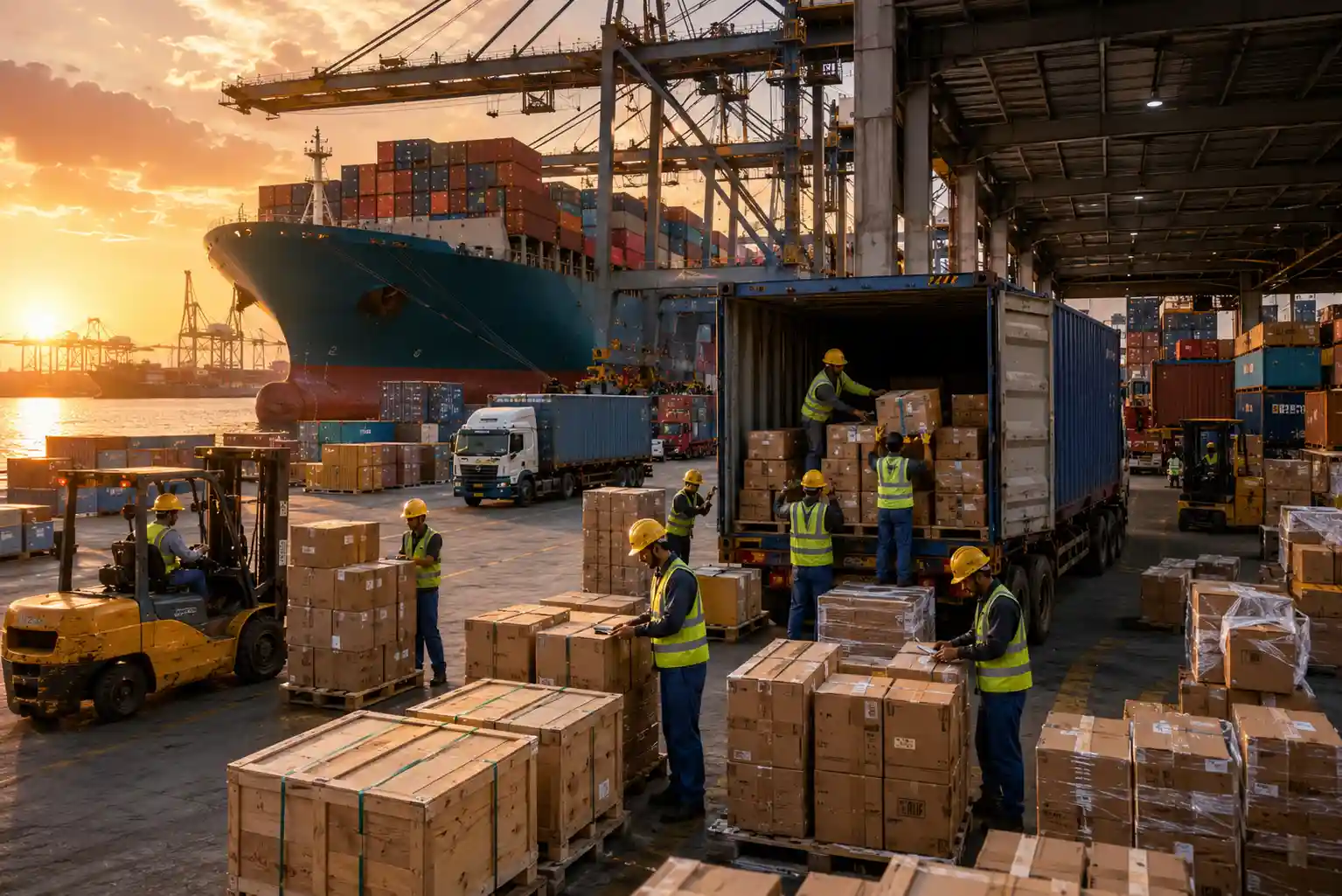
A typical consolidated shipping workflow follows a few consistent steps:
- Collection: Cargo from multiple suppliers or shippers is received at a consolidation warehouse or CFS (Container Freight Station).
- Sorting and Grouping: Shipments heading to the same destination or port are grouped together based on compatibility, weight, and volume.
- Documentation and Customs Clearance: A single set of consolidated documentation is prepared, and customs clearance is handled collectively rather than shipment by shipment.
- Loading and Transport: The combined cargo moves together via ocean freight, air freight, or road transportation, depending on urgency and destination.
- De-consolidation and Final Delivery: On arrival, the shipment is broken down again and delivered to individual recipients or directly onboard vessels.
For time-sensitive cargo like ship spares, this process needs a partner offering genuine Logistics Solutions, one who understands port procedures, customs timelines, and vessel schedules, not just freight rates.
Key Benefits of Shipment Consolidation
Here are some of the key benefits of shipment consolidation:
1. Lower Shipping Costs
By combining loads, businesses share transportation costs instead of paying full rates for partially filled containers or trucks. Industry research shows that freight consolidation can cut shipping costs by about 10% to 50% on similar freight, depending on the type of cargo and the amount shipped. This is a big savings for companies that ship a lot of freight.
2. Reduced Handling and Storage Fees
Fewer individual movements mean fewer opportunities for damage, loss, or delay, and lower warehouse consolidation charges overall.
3. Better Supply Chain Optimization
Consolidated cargo shipping allows businesses to plan around fixed schedules rather than waiting for individual shipments to reach economical volumes, improving planning accuracy across the wider Supply Chain Management process.
4. Improved Customs and Documentation Efficiency
A single consolidated customs filing is faster to process than several fragmented ones, reducing the risk of clearance delays at the port.
5. Environmental and Space Efficiency
Fewer partially loaded containers and trucks on the road means better use of cargo space and a smaller carbon footprint per unit shipped, which is becoming an increasingly important part of environmentally friendly logistics.
Shipment Consolidation vs. Direct Shipping
Direct shipping makes sense when cargo volume already fills a container or truck (Full Container Load, or FCL) and speed to a single destination matters more than cost per unit. Shipment consolidation, on the other hand, is the better fit when:
- Cargo volume is too small to justify a full container or truckload
- Goods are coming from multiple suppliers headed to the same destination
- Cost efficiency matters more than being the fastest possible option
- Shipments can tolerate a short wait to be grouped with compatible cargo
Most businesses use a mix of both, choosing FCL for large, urgent, single-source shipments and LCL consolidation for smaller, multi-supplier, or lower-priority cargo.
Why Location Matters: Consolidation at India’s Western Ports
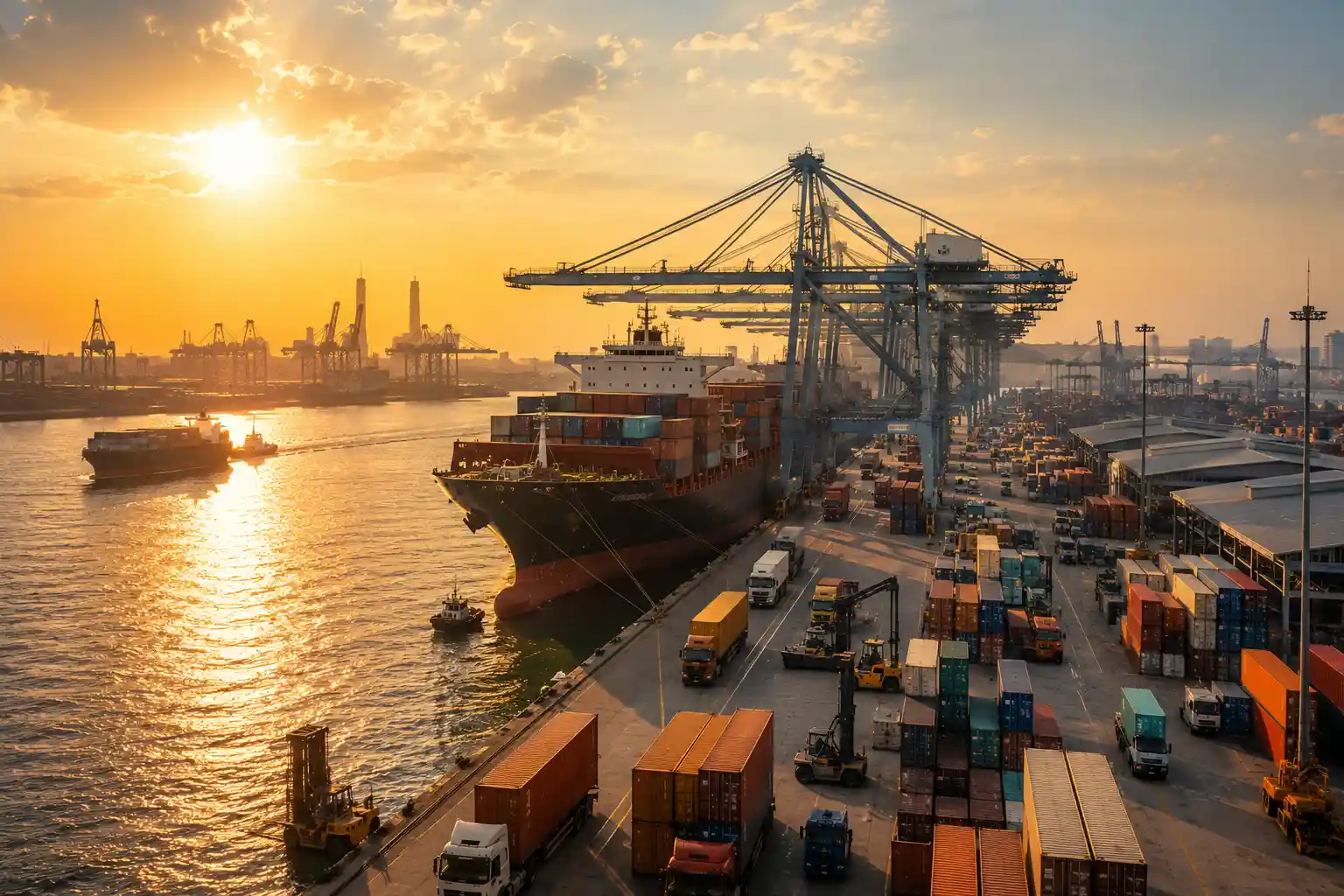
It’s just as important where consolidation takes place as it is how it happens. India’s Gujarat coast, which is made up of Kandla (Deendayal Port), Mundra, and Sikka, has become one of the busiest cargo corridors in the country. It is a natural hub for logistics consolidation services that serve both coastal and international trade, and it’s where well-known companies like ours, Ship Chandler in Kandla & All Indian Ports, are based.
Deendayal Port Authority, Kandla, recently handled a record 160.11 million metric tonnes of cargo in FY 2025–26, a 7% year-on-year increase that made it India’s top-performing major port, with container cargo volumes alone climbing 54% over the previous year. Scale like this gives businesses and ships that call at these ports more ways to combine their shipping, more sailings, and better prices. But it also means that shipments can get lost if they don’t have an experienced local partner managing clearance, storage, and delivery dates.
This is precisely where a marine-focused consolidation partner adds value. Ship spares and equipment sourced from multiple manufacturers or vendors, sometimes across different countries, need to reach the vessel on schedule, regardless of port congestion or documentation complexity.
Shipment Consolidation for Ship Spares and International Freight
For the marine industry specifically, multi-supplier shipment consolidation looks a little different from standard commercial freight. A vessel calling at Kandla, Mundra, or another Indian port may need spares sourced from several manufacturers, each shipping from a different origin. Instead of clearing each package individually, which increases the amount of paperwork needed, the costs of handling at the port, and the chance of a delay, a consolidation partner can:
- Receive spares from multiple vendors at a bonded warehouse
- Consolidate them into a single shipment or delivery run
- Handle customs clearance for delivery onboard the vessel at any Indian port
- Forward spares onward to foreign destinations through dependable International Shipping Services
- Provide warehousing for ship spares and offshore equipment awaiting shipment
This end-to-end logistics solution reduces the number of touchpoints between supplier and vessel, which directly lowers the chance of delay when a ship is working to a tight port schedule.
Best Practices for Effective Shipment Consolidation
Here are some of the best practices for effective shipment consolidation:
- Plan around sailing schedules, not just supplier readiness, so cargo isn’t left waiting for the next consolidation window
- Choose a forwarder with local port relationships at your specific gateway, since customs and handling practices vary by port
- Early on, separate cargo that doesn’t go together, dangerous materials, temperature-sensitive goods, and regular cargo should never be thrown together without thinking.
- Track consolidated shipments individually even after grouping, so each supplier’s cargo remains accounted for
- Use warehousing strategically to buffer against supplier delays without holding up the entire consolidated load
Consolidation, Handled at the Port
Shipment consolidation works best when it’s managed by people who know the ports, not just the paperwork. Aasutosh Marine, a ship chandler and supplier in Gandhidham (Kandla) that serves vessels at all Indian ports, provides Spares Clearing and Consolidation services, including customs clearance for onboard delivery, forwarding spares to foreign destinations, and warehousing for ship spares and offshore equipment.
If your vessel or business needs reliable shipment consolidation at Kandla, Mundra, Sikka, or any Indian port, get in touch with Aasutosh Marine to keep your spares and cargo moving on schedule.
Frequently Asked Questions
What is shipment consolidation in logistics?
It’s the practice of combining multiple smaller shipments into a single load to reduce per-unit shipping costs and improve efficiency.
How does shipment consolidation reduce shipping costs?
By sharing container, truck, or vessel space across multiple shippers, consolidation spreads transportation costs and reduces individual handling and customs fees.
What are the benefits of freight consolidation?
Lower shipping costs, reduced handling and storage fees, faster customs processing, better space utilization, and a smaller environmental footprint.
What is the difference between shipment consolidation and direct shipping?
Direct shipping moves a single shipper’s full load directly; consolidation groups smaller loads from multiple shippers to share space and cost.
How does LCL shipment consolidation work?
Cargo too small to fill a container is combined with other compatible shipments heading to the same destination, then separated for final delivery on arrival.
What industries benefit most from shipment consolidation?
The industries that benefit the most are e-commerce, manufacturing, retail, and marine, especially those that buy from multiple suppliers or vendors and ship their goods to one location or vessel.